
I have certainly covered this topic in one fashion or another in earlier blogs but none that have addressed the Sabbath specifically. I feel that I should take some time to publish my studies on the Sabbath since Leaving Adventism.
It is not enough to simply prove that the Old Covenant Sabbath is obsolete, this is because Hebrews 4:9 clearly says the following:
“So then, there remains a Sabbath rest for the people of God” Heb 4:9 ESV
The logical questions one is left with when reading that verse are the following:
- What is this Sabbath rest that remains for the people of God if not any of the Old Covenant Sabbaths?
- How do we receive this new Sabbath?
To answer these I am going to build from Genesis and work my way to Hebrews.
| Sabbath in Creation |
Sabbatarians at one point or another will argue that the weekly Sabbath is an eternal ordinance because it began at creation. The problem with this argument is that we don’t see the Sabbath being given to man here.
“Thus the heavens and the earth were finished, and all the host of them. And on the seventh day God finished his work that he had done, and he rested on the seventh day from all his work that he had done. So God blessed the seventh day and made it holy, because on it God rested from all his work that he had done in creation. These are the generations of the heavens and the earth when they were created, in the day that the Lord God made the earth and the heavens.” Gen 2:1-4 ESV
The first thing to point out is that there is no verse anywhere in Genesis where God commands any man to keep the Sabbath. Since inferring such would be practicing Eisegesis that view is simply not an option. That said, what do we see going on in Gen 2:1-4? To pull this out of the text we have to take a closer look at the preceding chapter. If you want to take a moment of read all of Genesis 1 please click HERE. I will only be posting a selection of those verses below.
“5...And there was evening and there was morning, the first day…..”
8….And there was evening and there was morning, the second day…..
13…And there was evening and there was morning, the third day….
19…And there was evening and there was morning, the fourth day….
23…And there was evening and there was morning, the fifth day….
31… And there was evening and there was morning, the sixth day.”
The word for day here in Genesis is the Hebrew word “Yom“. I am no Hebrew scholar, but from my studies I would argue that the meaning of Yom in ancient Hebrew seems to be very similar to the English word “day”. By that I mean that just as the word “day” can mean 24 hours, the period of daylight, or an undetermined length of time so it is with the Hebrew word Yom. That said, I believe that the Bible is clear that the first six days of creation are 24 hour days and this is due to the following reasons.
- Though Yom can mean an undetermined amount of time it can also mean 24 hours, the question of which is determined by context.
- In the context we see that the words “evening” and “morning” are associated with the word “day”.
- The use of Cardinal Numbers in conjunction with day implies a closed set or series. This literary technique can be seen in other writings by Moses and usually refers to 24 hour days. (Lev 23:5)(Lev 23:6)(Lev 25:9)(Lev 23:24)(Lev 23:27)(Exo 12:3)(Num 29:1)
When we get to the “Seventh Day” we see a few things stand out.
- There is no association of “evening” and “morning” with the “seventh day”.
- There is no mention of an eighth day.
- The only thing that God seems to be resting from is creating a universe.
- We see no mention of other universes being created in scripture until the age to come (Rev 21:1).
To me the above imply the ending of the series with nothing that follows until the next age. Since “yom” can also mean an undetermined amount of time I believe we are still in the Seventh Day now.
For forty years I loathed that generation and said, “They are a people who go astray in their heart, and they have not known my ways.” Therefore I swore in my wrath, “They shall not enter my rest.” Psa 95:10-11 ESV
We see above that the Psalmist is speaking of the 40 year sojourn through the wilderness and how they could not “enter” the rest. In Heb 4 when this verse is quoted we see that this is named as the Sabbath rest. My point is though that the Sabbath rest is something that can be entered into or entrance can be forbidden.
| Sabbath in the Old Covenant |
There is more than just a weekly Sabbath of (Exo 20:11) in the old covenant. In fact there are many Sabbaths with none lifted above any other in preeminence:
- Weekly feast of the Sabbath (Exo 20:11)
- New Moon Feasts (Num 28:11-15)
- Sabbath Year Feasts (Deu 15:1-11)
- Jubilee Feasts (Lev 25:9-52)
In several verses old testament and new all of the above including the weekly Sabbath are summarized as “festival, new moon, Sabbath day” to refer to the system as a whole. For a full listing and exegesis of Col 2:16 please click HERE. That said, in each Sabbath day, new moon, or feast the Israelites were to “enter into” the rest of God. I see no reason to believe that this rest ended in between each period of time like peaks and valleys, but rather that they were permitted to “enter into” an on-going rest.
Dale Ratzlaff summarizes this concept nicely in his Book Sabbath in Christ Page 72:
“Each of the Sabbaths pointed them forward with hope to the next sabbatical event. The seventh-day Sabbath was a weekly reminder of the coming seasonal Sabbaths. The seasonal Sabbaths were a reminder of the coming sabbatical year. The sabbatical year was a reminder of the coming Jubilee. This kept hope alive.”
As the ages past Israel built into its peak of power under the rule of David and Solomon, then later fell apart piece by piece into idolatry. During the time that the Israelites possessed the promised land the sabbatical year and the Jubilee were ignored. When the Israelites were taken into captivity the duration was actually the 70 years of Sabbath for the land that had been denied to it. So even though we don’t see these years being observed pointing to Christ, he made it happen anyway so that we would know how important it was.
To summarize, what we see in the Old Covenant Sabbaths is a type and shadow pointing to a greater anti-type fulfillment.
| Sabbath in the New Covenant |
Before the captivity Jeremiah issues the following Prophecy:
“Behold, the days are coming, declares the Lord, when I will make a new covenant with the house of Israel and the house of Judah, not like the covenant that I made with their fathers on the day when I took them by the hand to bring them out of the land of Egypt, my covenant that they broke, though I was their husband, declares the Lord.” Jer 31:31-32 ESV
In the New Testament we see the beginnings of the fulfillment of this prophecy. Specifically, when Jesus begins his ministry declaring the fulfillment of the year of Jubilee. Thus showing that the type and shadow of the Jubilee was pointing to the anti-type which is his ministry.
“And he came to Nazareth, where he had been brought up. And as was his custom, he went to the synagogue on the Sabbath day, and he stood up to read. And the scroll of the prophet Isaiah was given to him. He unrolled the scroll and found the place where it was written,
“The Spirit of the Lord is upon me,
because he has anointed me
to proclaim good news to the poor.
He has sent me to proclaim liberty to the captives
and recovering of sight to the blind,
to set at liberty those who are oppressed,
to proclaim the year of the Lord’s favor.”
And he rolled up the scroll and gave it back to the attendant and sat down. And the eyes of all in the synagogue were fixed on him. And he began to say to them, “Today this Scripture has been fulfilled in your hearing.” Luk 4:16-21 ESV
The Old Covenant Sabbath proclaimed the ministry and gospel of Jesus Christ on this earth in type and shadow. In ancient times a nation of slaves received freedom from bondage and rest from labor in the type and shadow of the Sabbath. This is a lesser image of the fullness of Christ that we receive today.
Today we receive true rest from this world and freedom from sin and death in the broken and crucified body of Jesus Christ.
“Come to me, all who labor and are heavy laden, and I will give you rest. Take my yoke upon you, and learn from me, for I am gentle and lowly in heart, and you will find rest for your souls. For my yoke is easy, and my burden is light.” Matt 11:28-30 ESV
We even see during the ministry of Jesus Christ that the Old Covenant types and shadows were fading away into obsolescence being replaced by the Glory of Christ.
Jesus Broke the Sabbath Day
“This was why the Jews were seeking all the more to kill him, because not only was he breaking the Sabbath, but he was even calling God his own Father, making himself equal with God.” John 5:18 ESV
Some SDA strenuously object to me using this verse above because they say I am calling Jesus Christ a sinner by quoting it. The fact is, this verse doesn’t say that the Pharisees thought Jesus broke the sabbath. Instead St. John under the inspiration of God the Holy Spirit identifies the reasons for which they were stoning him as breaking the Sabbath and making himself equal with God. Both accusations are true, and the only reason that they are not sin is because Jesus is God and the Sabbath day had already faded into obsolescence at this point in the ministry of Christ.
Jesus touched a Leper
“While he was in one of the cities, there came a man full of leprosy. And when he saw Jesus, he fell on his face and begged him, “Lord, if you will, you can make me clean.” And Jesus stretched out his hand and touched him, saying, “I will; be clean.” And immediately the leprosy left him.” Luk 5:12-13 ESV
In old covenant law among other things it was required to go through ceremonial cleansing after touching a leper. In this instance Jesus Christ did in fact touch the leper and even healed him, but did not undergo the ritual of ceremonial cleansing. It is not as if he never obeyed old covenant law, he was even circumcised into the old covenant. However, by this point in his ministry the old covenant was already fading away into fulfillment that ceremonial cleansing was simply not a law anymore.
“And likewise the cup after they had eaten, saying, “This cup that is poured out for you is the new covenant in my blood.” Luk 22:20 ESV
If you wanted a date and time stamp for the full initiation of the new covenant here it is. Just as the old covenant was initiated with a meal (Exo 24:11) and blood (Exo 24:8) as type and shadow, so the new covenant is initiated with anti-type fulfillment in a last supper, the literal body and blood of Jesus Christ for the forgiveness of sins, the true Passover Lamb provided by God.
| The New Covenant Sabbath is a Person |
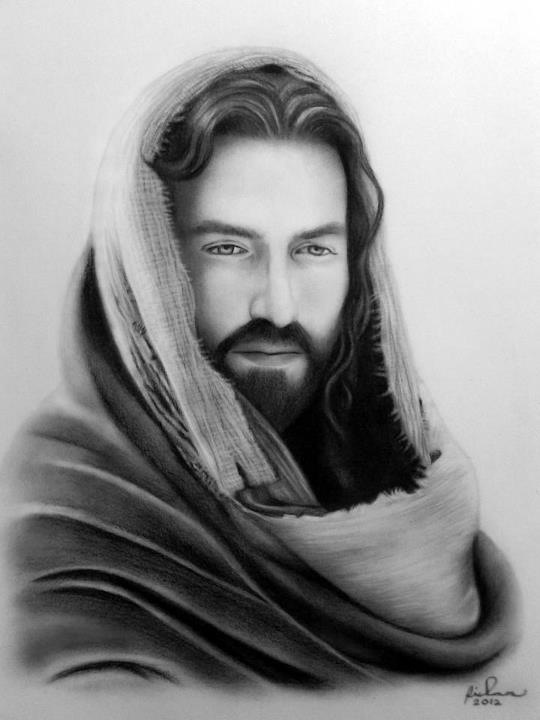
As I stated above, the Sabbath rest still exists in heaven before, during, and after the Mosaic Covenant. Just as there was no covenant law for the Sabbath before Moses so there is none in Christ. Instead the Sabbath we enter now is Gospel rather than Law, the Body of Christ, true rest for our souls (Matt 11:29). Clearly specific days on a calendar are not in view at all in the New Covenant.
“One person esteems one day as better than another, while another esteems all days alike. Each one should be fully convinced in his own mind. The one who observes the day, observes it in honor of the Lord. The one who eats, eats in honor of the Lord, since he gives thanks to God, while the one who abstains, abstains in honor of the Lord and gives thanks to God.” Rom 14:5-6 ESV
“Therefore let no one pass judgment on you in questions of food and drink, or with regard to a festival or a new moon or a Sabbath. These are a shadow of the things to come, but the substance belongs to Christ.” Col 2:16-17 ESV
Instead of specific days on a calendar pointing as shadows to an anti-type we have the fullness of Jesus Christ whom all the prophets spoke of:
“Long ago, at many times and in many ways, God spoke to our fathers by the prophets, but in these last days he has spoken to us by his Son, whom he appointed the heir of all things, through whom also he created the world.” Heb 1:1-2 ESV
“Therefore, holy brothers, you who share in a heavenly calling, consider Jesus, the apostle and high priest of our confession, who was faithful to him who appointed him, just as Moses also was faithful in all God’s house. For Jesus has been counted worthy of more glory than Moses—as much more glory as the builder of a house has more honor than the house itself. (For every house is built by someone, but the builder of all things is God.) Now Moses was faithful in all God’s house as a servant, to testify to the things that were to be spoken later, but Christ is faithful over God’s house as a son. And we are his house if indeed we hold fast our confidence and our boasting in our hope.” Heb 3:1-6 ESV
Notice above the juxtaposition between Moses the servant and Jesus the son. This shows the superiority of Christ over Moses. To a Jew this would be a very big deal indeed. This is important in establishing other truths later pointed out in Hebrews.
Read this next piece of the same chapter carefully. You will see that the Jews were forbidden the Sabbath rest due to disobedience. He also warns us not to neglect our call to rest in Christ today. All emphasis is mine.
“Therefore, as the Holy Spirit says, “Today, if you hear his voice, do not harden your hearts as in the rebellion, on the day of testing in the wilderness, where your fathers put me to the test and saw my works for forty years. Therefore I was provoked with that generation, and said, ‘They always go astray in their heart; they have not known my ways.’ As I swore in my wrath, ‘They shall not enter my rest.’” Take care, brothers, lest there be in any of you an evil, unbelieving heart, leading you to fall away from the living God. But exhort one another every day, as long as it is called “today,” that none of you may be hardened by the deceitfulness of sin. For we have come to SHARE IN CHRIST, if indeed we hold our original confidence firm to the end. As it is said, “Today, if you hear his voice, do not harden your hearts as in the rebellion.” For who were those who heard and yet rebelled? Was it not all those who left Egypt led by Moses? And with whom was he provoked for forty years? Was it not with those who sinned, whose bodies fell in the wilderness? And to whom did he swear that they would not enter his rest, but to those who were disobedient? So we see that they were unable to enter because of unbelief.” Heb 3:7-19 ESV
And now the punchline….
“Therefore, while the promise of entering his rest still stands, let us fear lest any of you should seem to have failed to reach it. For good news came to us just as to them, but the message they heard did not benefit them, because they were not united by faith with those who listened. For we who have believed enter that rest, as he has said, “As I swore in my wrath, ‘They shall not enter my rest,’” although his works were finished from the foundation of the world. For he has somewhere spoken of the seventh day in this way: “And God rested on the seventh day from all his works.” And again in this passage he said, “They shall not enter my rest.” Since therefore it remains for some to enter it, and those who formerly received the good news failed to enter because of disobedience, again he appoints a certain day, “Today,” saying through David so long afterward, in the words already quoted, “Today, if you hear his voice, do not harden your hearts.” Heb 4:1-7 ESV
Today is our Sabbath rest in the finished work of Christ. This juxtaposition rings clear in Hebrews.
One rest had more glory the other less.
One rest existed with Moses and the other was spoken later.
One rest could not be entered due to hardness of heart and the other is being offered today.
One is in the past the other is offered “today”.
One is a day and the other we “share in Christ“.
One “they shall not enter” the other “remains for some to enter”
One was on “the seventh day” the other is “today”.
Logically two things juxtaposed so strongly against each other are not the same exact thing. But rather in this case one was a prefigure for the other. Lest there be any confusion in Hebrews 8 and 9 the writer clearly spells out the disposition of the Old Covenant. Specifically in Heb 8:6-12 he quotes Jeremiah 31:31-34 noting that he is speaking of this prophecy as being fulfilled. Then in Heb 8:13 we see the following:
“In speaking of a new covenant, he makes the first one obsolete. And what is becoming obsolete and growing old is ready to vanish away.” Heb 8:13 ESV
Lest there be any confusion the writer continues right on into chapter 9 and details what is included in the “obsolete” old covenant:
“Now even the first covenant had regulations for worship and an earthly place of holiness. For a tent was prepared, the first section, in which were the lampstand and the table and the bread of the Presence. It is called the Holy Place. Behind the second curtain was a second section called the Most Holy Place, having the golden altar of incense and the ark of the covenant covered on all sides with gold, in which was a golden urn holding the manna, and Aaron’s staff that budded, and the tablets of the covenant. Above it were the cherubim of glory overshadowing the mercy seat. Of these things we cannot now speak in detail.” Heb 9:1-5 ESV
Notice in verse 1 he restates that we are speaking of the old covenant. Then he continues to list the various items associated with it, to include the ten commandments in verse 4 and then a general statement with which to cover everything else not mentioned in verse 5. I would argue that this covers the rest of the Torah rather than listing it out in detail. Ultimately this shows the error that Sabbatarians fall into, they argue that the Ten Commandments carry the Sabbath into the new covenant but that cannot be if the Ten Commandments are made obsolete along with the rest of the Torah as stated here in Hebrews.
In the new covenant we turn to the Law of Christ spoken of by Paul (1 Cor 9:20-22)(Gal 6:2) of which can be defined nicely with the Ten Commandments. That said, we dont use Exodus 20 prescriptively we instead use the teachings of Christ and the apostles. Its a fine line theologically speaking, but due to these complexities it has been easy for groups like the SDA to pull the wool over the eyes of the laity.
You can read more about the proper way of understanding the Ten Commandments HERE, notice that the author in that link teaches them from a new covenant perspective.
The sad thing is that in their confusion Sabbatarians obfuscate the blessings of the new covenant Sabbath rest in Christ spoken of in Hebrews 1-4. The Sabbath in the New Covenant is not Law, its Gospel. The Gospel of Christ crucified for our sins, conquering sin and death in his glorious Resurrection. In the New Covenant we rest in his completed work, for it truly is “finished” just as Jesus said on the cross.

 Armchair Theologian
Awesome i love this its exegisis!
LikeLiked by 1 person
Thanks for stopping by and I’m glad you liked the post!
LikeLike
thanks ,i understand now but still my head is buzzing OMG.All this time…….
LikeLiked by 1 person
Believe me I get it. I’m gonna recommend two things for you friend. Take a look at the new covenant posts.
http://armchairtheologian.info/leaving-adventism/the-new-covenant/
And then when you’re ready I have another page with more resources. Trust me, if it’s anything like it was for me you’re gonna be hungry for information.
http://armchairtheologian.info/leaving-adventism/former-adventist-resources/
LikeLike
May God bless you. I understand now.
LikeLiked by 1 person
what is your church
LikeLiked by 1 person
I am an LCMS Lutheran
LikeLike
I live in a predominantly LCMS community, and my uncle is an LCMS minister, so I have a lot of admiration for them.
LikeLiked by 1 person
I am also LCMS my wife is SDA I talk to her about your website and pray for her to study it.
LikeLiked by 1 person
Very, very good!
LikeLiked by 1 person
Hey thanks!
LikeLike
If you are saying that the Sabbath is part of the Old Covenant and thus was meant only for Jews, then I have to question your interpretation. Genesis 2 depicts God creating two institutions after creation: one was the Sabbath, and the other was marriage. So if the Sabbath was only meant for Jews, then by your logic, marriage is only for Jews as well. And as for the Ten Commandments ending at the cross: I understand the reasoning behind this. Because Jesus’ death allows the forgiveness of sins, we are not held accountable to keeping the Ten Commandments or any other moral law; it cannot save us. But we do it anyway to bring glory and honor to God with our lives. No Christian in his or her right mind would tell you that it’s OK to violate any of the other nine commandments, so why is the one about the Sabbath any different?
While there is much to criticize the traditional SDA Sabbath doctrine one (Sunday being the mark of the beast, Sabbath being kept in heaven, etc.), I believe they are on solid biblical ground to state that the Sabbath is on Saturday and is binding for Christians as well as Jews.
LikeLike
Not at all, in fact I argue the Sabbath wasn’t given to man at all in creation. You don’t see it until exodus 16.
Also I would distinguish between marriage seen at creation and the Law, or Torah, given to Moses later. I wouldn’t tie them as one at all.
Furthermore, the ten commandments are not the moral law. It never says that anywhere.
I would argue that the moral law is that which is taught prescriptively after the cross. That is really the only objective way to do it. Any other methodology appeals to eisegetical arguments.
I have a post on that here.
http://armchairtheologian.info/2014/11/14/the-la
LikeLike
In the Ten Commandments, the Sabbath commandment refers straight back to creation. That sounds like something established at creation, not just in the Law of Moses.
LikeLike
That doesn’t mean a prescriptive command was issue in Genesis. That is what you need. And there isn’t one.
LikeLike
Something I wanted to add to what I said. Though we clearly disagree on the Sabbath day, what we do agree on is what matters most. And that is we are saved by Jesus, not keeping the Sabbath.
If I were convicted in like manner as you are I would probably go to church on Sunday and make a point to rest on Saturday.
In fact that’s actually what I did for a long time after first stepping out of an SDA church. I was still convicted about the Sabbath but I was hungry for the peace of the Gospel.
Anyways, peace friend and thanks for reading and thanks for your insightful comments.
LikeLiked by 1 person
in colosians.sabath is shadow of things to come: meaning we will rest on the sabath coz it shows what is going 2 come it acts like asymbol,without it u r not in atrend of knowing what 2 come .tell us what next exept second comming of christ?
LikeLike
Can’t say I agree, you’re clinging to the shadow and rejecting the Body friend.
LikeLike
Hello friends,im not an SDA but i observe the sabbath after i came to know the truth about sunday and sabbath.I believe sabbath is not an option,its a command!..Jesus said in John 14:15,if you love me,keep my commandments.I believe we are only saved throught Christ Jesus and to show Him that we love Him,is to keep His commandments.Exodus 20:1-17 talks about the ten commandments..All the other verses,God said,”Do not”but only verse 8,God said,”REMEMBER The SABBATH Day To Keep It Holy”..God already saw that in the future,some of us will not,”REMEMBER The SABBATH”..Jesus said,you will know the Truth and the Truth will set you free.( John 8:32)..As the saying goes,all wolves are animal but not all animals are wolf..likewise all things can look spiritual but not all are from God.
LikeLike
Well first of all you’re assuming that which you seek to prove. Notice that Jesus doesn’t say “ten” commandments. Also you have verses specifically abbrogating the Sabbath (col 2:16)(Rom 14:5). I don’t twist those verses btw I take them at face value.
Then again, you don’t have any apostles teaching Sabbath keeping after the cross. The same thing that happened to the Passover happened to the Sabbath friend.
This is how the church has always seen it too. Even in the first century. It’s not until the past few hundred years that you see sabbatarianism.
But keep reading. I recommend you read the post that you just commented on and take a look at my others too
LikeLiked by 1 person
If you look at Deuteronomy 5:12-15, it reiterates the 4th commandment; however; it says to “remember you were a slave in the land of Egypt, and the Lord you God brought you out from there by a mighty hand and by an outstretched arm; therefore the Lord you God commanded you to keep the Sabbath day”. Were you a slave in Egypt? Are you of Jewish decent? If not, these commandments NEVER applied to you. Even if you are of Jewish decent, in Galatians 3:28, it says, “There is neither Jew nor Greek…for you are all one in Christ Jesus.” Jesus IS the Sabbath!
LikeLike
This man is like an anti_christ please pray before you read the bible,so that the spirit of God should lead you.read the following verses please,mark 2;19_28,Ezekiel 20;19_20 before man was created there was already Sabbath,why all this so call theologians are reading their bible upside down all this post is although some are true,but when you said Sabbath was not a day is only a gospel let me tell you,all the verses that talk about Sabbath is a day of rest to praise and worship him ( God ) again is visit people in need,in prisons,study his words(bible) not a name gospel.that’s why Jesus heal on Sabbath even his disciples ask why is he healing on Sabbath day,you forgot,may God help us I didn’t blame you,it’s the end time.
LikeLike
With respect, I think you fundamentally misunderstood the biblical teaching I was presenting in this post. Essentially, the Sabbath day is ceremonial. It’s obsolete in the new covenant.
And you’re prooftexts miss the boat too. Jesus was also circumcised. The old covenant wasn’t fully obsolete yet.
Take a look at my post on the new covenant. I think that would help.
LikeLike
Wow, God bless you Armchair and may He give you more wisdom to elaborate on these issues. Following a doctrine/myths/protocols will not take anyone to heaven but it is the fear of God, abstaining from sin and living a holy life that will save you .
LikeLike
LikeLike
I like your logic but i have several questions:
1. Did Christ in his ministry keep the Seventh day Sabbath? Because if he did, then since he is God the creator (Jn 1:1-4) he knows exactly what hedid back in creation.
2. Did Christ ever taught any Sabbath rest as a period of time spanning from creation till eternity as to nullify the weekly Sabbath?
3. Did Christ ever mention that the Sabbath and the commandment is done away with at his death?
4. What did Jesus mean when he prophecied in Matt. 24 regarding the destruction of Jerusalem then he admonished his disciples to “pray that tis will not come in winter or on the Sabbath day.” Doesn’t that mean that Jesus emphasised the importance of the Sabbath in the future?
5. If it is true that the law (ten commandment)is done away with, what does Paul mean in Romans 3:31?
6. What does Jesus mean in Matthew 5:17?
LikeLike
Thank you for your comment! I will give answers to each of your questions, thank you for bulleting them as it makes this easier and more clear for both of us.
1. Yes, Jesus kept the Sabbath, and the Passover, and he was circumcised. He also broke the Sabbath and touched lepers without ceremonial cleansing. How do you handle those two points? I address both in the blog you commented on so take a look. How I understand it is that the Old Covenant has those laws but the New does not. Do recall that Christ was born in the time of the old covenant.
2. Well yes he did, if you believe that he is God and that God inspired all scripture, and I do.
3. Yes, the word “obsolete” is used in Hebrews 8:13. I wouldn’t put it precisely at his death either, like I argued in the post it is more of a fade.
4. How you interpret Matt 24 with regards to timeline is dependent on your eschatology. If you’re a preterist for example then one would see the events of Matt 24 fulfilled in 70 AD. Even if you hold to a historicist view like SDA, or a Dispensationalist view like most Bapticostals in america these days, you would still have to confine that prophecy of the Sabbath to the area of Judea. A fair comparison of Matt 24 with the other accounts of the olivet discourse are clear that it is speaking to the area of Judea and that is true to all views on this passage. A dispensationalist will place the events in the last seven years of humanity, an SDA will place them at the close of probation, and a preterist will place them at 70 AD. But all place them in Judea only, even SDA will when you corner them on the text as there is no reason to read a global application to it.
5. Paul actually explains what he means in Romans 3:31, read verses 19-22. The law stops the mouth of the sinner. I am not making an antinomian argument though, perhaps you should read my post on the law. You can find it HERE.
6. Good question! In my experience SDA tend to ignore the two different words for law in this passage and the word fulfill. If you want a full analysis I recommend my blog post on Matt 5 which you can find HERE.
LikeLike
Pingback: “The Law of Christ” | Armchair Theologian
I appreciate your work, which is very clear and thorough. I was born and raised in SDA, 3rd generation. I left the church in my late 20s because of hurt, not because of doctrine. It took me many more years to figure out that the problem was the doctrines and beliefs, not just me.
That being said, the only thing I have an issue with is the last bit where you say that you believe we are still in the seventh day. I understand that it is your own personal belief or conclusion but I disagree with it because in my mind, that would mean God is still resting, and has been resting ever since creation, which contradicts what Jesus said in John 5 : 17. Please clarify that point for me, learning never ceases, I may be mistaken.
God bless.
LikeLiked by 1 person
Hey good point I’ll have to think about that. I understood it in terms of creation. Like, he’s not creating new universes right? That’s how I was thinking of it but the verse you referenced has giving me something to consider. Thanks!
LikeLike
I am also a former Adventist who was always troubled by the IJ doctrine. When I studied myself and found it untrue I then looked into E.G. White and found her to be no prophet.
As far as the Sabbath I do have some objections/questions. #1 – I think the Old covenant is indeed obsolete and done away and that we are invited to take part in the New Covenant which is in Christ. The problem with the Old Covenant was not the Law, but the people’s hearts. This is what He says after delivering the 10 commandments in Deuteronomy 5:29. It was not a failure on God’s part or a problem with the law. Jeremiah 31:31-34.
#2 – So, the New Covenant is the same law that was written on stone (the 10 Commandments) now written in the heart and mind. Jeremiah 31:31-34; 2 Corinthians chapter 3. God Himself will dwell in us, walk in us and cause us to walk in His law. Ezekiel 36:23-27. This is all God’s doing, not our own. It is God who works in us both to will and to do. Philippians 2:13
#3 – The 10 commandments were indeed included in the book of the law, but the book of the law was not included in the 10 commandments. The Bible did separate them quite clearly. The 10 commandments were written with God’s own finger (both times) and placed inside the ark. He said He wrote 10 and “added no more” – Deuteronomy 5:22, so 613 laws including the 10? It seems quite clear that the 10 were separate and distinct. The 10 commandments define sin. The other laws clarify the 10 and provide prescriptions for sin – what to do when one sins.
#4 – Do you not find it odd that 9 of the 10 (not as I understand it, but as others do) are repeated, there is only one now left out? The whole Old Covenant, including the 10 commandments are obsolete but 9 are still relevant under the New Covenant???
#5 – There indeed is no comand for Sabbath observance in Genesis, yet it is the reason He included it in the 10 commandments is it not in Exodus 20? Because He rested after day 6 of creation? Jesus did say the Sabbath was made for “man” did He not, mankind? We see animal sacrifice being offered in Genesis 4, yet we find no command to do so or any regulations regarding it until Exodus. We cannot argue from absence. Absence of evidence is not always evidence of absence.
#6 – The two great laws of loving God and loving our neighbor are not new but Jesus was quoting from the OT. Jesus explained that all the law and prophets hang from these two great commandments. The first 4 commandments show us how to love God with all our hearts and the last 6 show us how to love our neighbors as ourselves. Jesus never abrogated the 10 commandments, but kept them. The same 10 commandments that were given in the beginning are the same today that show our love for God and others – 1 John 2:1-8.
#7 – You argue the 10 commandments are not the moral law… well we do not have this phrase in the Bible. Which laws do you suppose define what is and what is not sin. Which commandments and laws define sin and are “love” when kept?
#8 – All 10 of the commandments still stand – not on tables of stone, but on the heart and in the mind – transformation that can only come from Christ. It is not the 10 commandments that were made obsolete, but the “ministration of death” when they were written in stone, now it is the ministration of the Spirit, written on the tablets of the heart – same commandments, different ministration. 2 Corinthians 3; Ezekile 36; Jeremiah 31; Hebrews 8:10-13; 10:16-18.
#9 – It would have been much simpler for God to say, “Hey the New covenant is 9 of the 10 and just the 4th one is gone!” But it seems you are saying, he said something to the effect of “Hey, all the 613 laws of the OT are gone, the 10 commandments of God are gone, BUUUUUUUT, still keep 9 of the 10.”
#10 – Your reference to Acts chapter 15 in relation to the Sabbath is moot since NONE of the 10 commandments – adultery, lying, stealing, killing were mentioned. I wonder why? Could it be because the 10 commandments were understood to be separate and distinct and were not part of the discussion? Or would you say it means that Acts 15 was not a clear and complete decision about what Gentiles needed to follow?
#11 – Also, as far as your point that it seems Jesus broke the Sabbath, well that was an accusation made by the Pharisees and I would not side with them. They also accused Him of casting out devils by the power of beelzebub etc…. I see no violation in anything Jesus did on the Sabbath.
#12 – Colossians 2 is almost a verbatim quote of Ezekiel 45:17; 2 Chronicles 2:4 etc. The laws which were a “shadow of things to come” as Colossians 2 mentions is clearly explained in Hebrews chapters 8-10. Which laws/ordinances were a shadow of the coming of Christ? Compare Colossians 2:17 with Hebrews 8:5; 9:10; 10:1 – really the entirety of these chapters. It was the Temple and its offerings – “concerned only with foods and drinks, various washings, and fleshly ordinances.” How you can throw any of the 10 commandments into these chapters is beyond me when it is clearly explaining the shadows met their reality in the sacrifice of Christ.
So, I would submit that the 10 commandments are indeed, as a whole, separate, distinct, and eternal. All other laws, ordinances, feasts etc, were a shadow of the coming of Christ. There are many, many laws and ordinances etc in the Word of God… but only 1 set of commandments written with the very finger of God. They total 10 in number – none can be added to those 10, and none can be taken away – Deuteronomy 4:2.
One last thing – concerning your “no Sabbath commanded in Genesis” argument. Is Genesis 26:5 not strange to you? And the sacrifice offered by Abel – no law mentioned means no law existed? That argument does not fly.
LikeLike
I stated this in my other reply, but just so it’s not missed in the future please break these down so that I don’t have to keep quoting you and can just address your points more naturally. If you have a lot to say more comments with 1-3 points would be ideal.
I actually don’t really have a big problem with Sabbatarianism on it’s own. I mean, I disagree but it’s something I think Christians can be charitable on. It’s usually the other things they package with it that I take issue. Understand in these blog posts that I wrote over a decade ago I was struggling with the fear that I was lost and apostate because in my conscience I believed that I was breaking the sabbath, even though it seemed clear in scripture that the belief I had was wrong.
Going through it one idea at a time helped me work through some of that stuff and I think it has value today for those walking a similar path which is why I leave it up. My later writings I think are better and more nuanced.
You said:
“As far as the Sabbath I do have some objections/questions. #1 – I think the Old covenant is indeed obsolete and done away and that we are invited to take part in the New Covenant which is in Christ. The problem with the Old Covenant was not the Law, but the people’s hearts. This is what He says after delivering the 10 commandments in Deuteronomy 5:29. It was not a failure on God’s part or a problem with the law. Jeremiah 31:31-34.”
That passage in Jeremiah does distinguish between old law and old covenant vs new law and new covenant. It’s even quoted in Hebrews 8 later when the author is doubling down on the same point.
You Said:
“#2 – So, the New Covenant is the same law that was written on stone (the 10 Commandments) now written in the heart and mind. Jeremiah 31:31-34; 2 Corinthians chapter 3. God Himself will dwell in us, walk in us and cause us to walk in His law. Ezekiel 36:23-27. This is all God’s doing, not our own. It is God who works in us both to will and to do. Philippians 2:13”
Here we disagree, nowhere does it say that the new covenant law is the same as the ten commandments in any discrete sense. That’s an assumption on your part. I wrote a post on this idea in greater detail than the one you’re commenting on. It was kind of my final thought out work on the Law of Christ. You can find it here: https://actheologian.com/2014/11/14/the-law-of-christ/
You said:
“#3 – The 10 commandments were indeed included in the book of the law, but the book of the law was not included in the 10 commandments. The Bible did separate them quite clearly. The 10 commandments were written with God’s own finger (both times) and placed inside the ark. He said He wrote 10 and “added no more” – Deuteronomy 5:22, so 613 laws including the 10? It seems quite clear that the 10 were separate and distinct. The 10 commandments define sin. The other laws clarify the 10 and provide prescriptions for sin – what to do when one sins.”
I think this is the wrong way of looking at it, the other laws of the torah define the ten commandments they don’t add to them. So for example the laws concerning the temple, the holy days, and such are a breakdown of the first table of the law (the first three or first four commandments depending on how you count them. Then there are other laws in the torah regarding sexual morality, honesty, harm to others, stealing and coveting etc. The torah gets into the nitty gritty of how to live out following the ten commandments. The tablets of stone are the cliffs notes if you will. It’s easier to memorize and teach.
Honestly I think it’s kind of weak to point to the ten as written and stored differently as a justification for some kind of ontological distinction between the two. To me that’s like saying because tires are made of rubber I need a glass mug for my coffee. It’s not a compelling or clear argument it seems obvious to me that you’re reading that in. Just because two things are not the same in all respects doesn’t completely separate them. The Lord of the Rings for example is three separate books, does that mean that they are three separate stories? No it doesn’t.
You said:
“#4 – Do you not find it odd that 9 of the 10 (not as I understand it, but as others do) are repeated, there is only one now left out? The whole Old Covenant, including the 10 commandments are obsolete but 9 are still relevant under the New Covenant???”
In my earlier days as a former adventist when this stuff weighed heavier on my heart yes. It would have conjured up an image of Ellen Whites vision where she claimed to have seen the ten commandments in heaven (written in KJV no less but I digress). In that vision she saw the fourth commandment as glowing and that people were trying to cut it out. I don’t feel that way anymore, she was just wrong simple as that. Being a fake prophet was just the thing to do in the 19th century, there were a few of those back then she was just one of them.
From a biblical perspective the moral aspect of the sabbath commandment is actually reiterated in Hebrews. We are commanded not to neglect meeting together (Heb 10:25). It just doesn’t have to be on a particular day anymore. The day is made Holy by the reading of God’s Word, it could be Tuesday. The church has historically chosen Sunday out of tradition.
You said:
“#5 – There indeed is no command for Sabbath observance in Genesis, yet it is the reason He included it in the 10 commandments is it not in Exodus 20? Because He rested after day 6 of creation? Jesus did say the Sabbath was made for “man” did He not, mankind? We see animal sacrifice being offered in Genesis 4, yet we find no command to do so or any regulations regarding it until Exodus. We cannot argue from absence. Absence of evidence is not always evidence of absence.”
We do see evidence of law during that period of time. Joseph knew that adultery was wrong for example. As you cite there is animal sacrifice too. I think that this is actually good evidence for the value of the Word of God as preeminence over tradition. There obviously was some oral tradition, Abraham knew about God and his law for example. That tradition failed by the time you get to Moses and in that sense we are shown the value of having God’s Word written down. For more on that line of thinking I recommend Martin Chemnitz.
That said, Joseph didn’t struggle with the sabbath as a slave in a land with a ten day work week. He was willing to risk his life not to commit adultery though. So I think that is solid evidence that he didn’t know about the sabbath at least.
The point here is that the sabbath being a creation ordinance is simply wrong. The typology is there, but to insist it’s an ordinance misses the point. The point is that the sabbath points to Christ. When we make all this about following a law we are missing the point. Jesus is our rest, the sabbath was only mean to point to him and why he is our rest. Imagine if we used your approach to other forms of literature. I’d read Moby Dick and think it’s a book about bad whaling advice. You’re seeing the law my friend but missing the gospel.
You said:
“#6 – The two great laws of loving God and loving our neighbor are not new but Jesus was quoting from the OT. Jesus explained that all the law and prophets hang from these two great commandments. The first 4 commandments show us how to love God with all our hearts and the last 6 show us how to love our neighbors as ourselves. Jesus never abrogated the 10 commandments, but kept them. The same 10 commandments that were given in the beginning are the same today that show our love for God and others – 1 John 2:1-8.”
Jesus fulfilled the law, remember as we established earlier when you separate them you’re wrong. He fulfilled the whole law including the ten commandments.
You said:
“#7 – You argue the 10 commandments are not the moral law… well we do not have this phrase in the Bible. Which laws do you suppose define what is and what is not sin. Which commandments and laws define sin and are “love” when kept?”
When I wrote this I was arguing against the Adventist notion that the ten commandments are the moral law and the rest of the torah is the ceremonial law. They see a rigid distinction between the two that’s just flatly wrong on it’s face. The torah for example gives many laws on sexual behavior that’s obviously speaking to morality. The ten commandments even have ceremonial in them, worshiping God is going to involve ritual.
I think a better way of looking at it is just God’s eternal laws. Some laws are eternal and part of God’s design and intent. He communicated them to us in his covenants and we can cross analyze to figure out as much as we can.
You said:
“#8 – All 10 of the commandments still stand – not on tables of stone, but on the heart and in the mind – transformation that can only come from Christ. It is not the 10 commandments that were made obsolete, but the “ministration of death” when they were written in stone, now it is the ministration of the Spirit, written on the tablets of the heart – same commandments, different ministration. 2 Corinthians 3; Ezekile 36; Jeremiah 31; Hebrews 8:10-13; 10:16-18.”
Well no, the author of Hebrews clearly included the ten commandments in the old covenant when he said it was obsolete. Read past 8:13 a bit into the next chapter when he starts listing the aspects of the old covenant. Let me know when you see it. It’s obsolete friend, not my words his.
You said:
“#9 – It would have been much simpler for God to say, “Hey the New covenant is 9 of the 10 and just the 4th one is gone!” But it seems you are saying, he said something to the effect of “Hey, all the 613 laws of the OT are gone, the 10 commandments of God are gone, BUUUUUUUT, still keep 9 of the 10.””
For this idea you’re assuming all of your others are true and they are not so I kind of see this as a nonstarter.
You said
“#10 – Your reference to Acts chapter 15 in relation to the Sabbath is moot since NONE of the 10 commandments – adultery, lying, stealing, killing were mentioned. I wonder why? Could it be because the 10 commandments were understood to be separate and distinct and were not part of the discussion? Or would you say it means that Acts 15 was not a clear and complete decision about what Gentiles needed to follow?”
You will have to help me out here friend I don’t see where I referenced Acts 15 in this post. That said, there are many reasons why something could have been said or not said. Generally wouldn’t you agree it’s best to exegete what we can from things that are said?
You Said
“#11 – Also, as far as your point that it seems Jesus broke the Sabbath, well that was an accusation made by the Pharisees and I would not side with them. They also accused Him of casting out devils by the power of beelzebub etc…. I see no violation in anything Jesus did on the Sabbath.”
No, with respect you’re flat out wrong here and it’s a common mistake. Notice it’s John who said Jesus broke the sabbath. He wasn’t quoting the Pharisee’s. If it were written how you interpret it he would have said “because they said he was breaking the sabbath”. He didn’t write that, instead he wrote “because not only was he breaking the sabbath”.
This was why the Jews were seeking all the more to kill him, because not only was he breaking the Sabbath, but he was even calling God his own Father, making himself equal with God.” John 5:18 ESV
You said:
“#12 – Colossians 2 is almost a verbatim quote of Ezekiel 45:17; 2 Chronicles 2:4 etc. The laws which were a “shadow of things to come” as Colossians 2 mentions is clearly explained in Hebrews chapters 8-10. Which laws/ordinances were a shadow of the coming of Christ? Compare Colossians 2:17 with Hebrews 8:5; 9:10; 10:1 – really the entirety of these chapters. It was the Temple and its offerings – “concerned only with foods and drinks, various washings, and fleshly ordinances.” How you can throw any of the 10 commandments into these chapters is beyond me when it is clearly explaining the shadows met their reality in the sacrifice of Christ.”
You made that distinction, Paul did not. I’m going with Paul, I’m not going to eisegete a distinction into his words he did not make. He very plainly included all the sabbaths. The weekly sabbath, the new moon, all of them. He didn’t say except for the weekly one. The two ways theologians most commonly twist scripture is to overly narrow it with distinctions not made or overly broaden it to remove all meaning. I see you doing the former here. The wiser approach is to take Paul’s words at face value and simply believe different things than you presently do. That is how we should approach scripture.
LikeLiked by 1 person