Three uses of the Law

Martin Luther

The purpose of this post is to Biblically define the three uses of the Law.  This is more of an abstract concept (in abstracto) rather than a concrete one (in concreto), that said I do believe it is accurate.  I also find that this teaching clarifies scripture on the Law a great deal.  If you want to read about the three uses of the law beyond this post I would recommend clicking HERE.

The Curb

The first use of the law is for governing authorities placed here on this earth by God.  Ultimately the Bible teaches that these authorities are for our good.  I understand that in a broader sense rather than a narrow one.  Of course some individual governments are and have been very bad, that said God’s overall purpose is eternal rather than temporal.  If you want to see a really good example of why this use of the Law is so necessary I would recommend a read through on the book of Judges.  Much of the tragedy that happened could have been curbed with a functioning civil government.  Instead, many times the writer of Judges states:

In those days there was no king in Israel. Everyone did what was right in his own eyes.” Judges 21:25 ESV

Where do governments receive their authority to make laws in the first place?  A good American would assert that a government receives their authority by the consent of the governed.  While I would agree that is the best way to establish a government, it is not the only way.  Also it doesn’t address the greater truth, which is that the authority to have a government in the first place is received from God.  This would even include pagan nations, like Rome which Paul speaks of here:

“Let every person be subject to the governing authorities. For there is no authority except from God, and those that exist have been instituted by God….  

This makes it clear that the authority which is delegated to every government comes from God.  I would argue two things regarding this text.  First is that it applies to every single government ever, even the bad ones.  This is because it says “there is no authority except from God”.  That is a rather all encompassing statement.

Second, I would argue that the authority that which is delegated is less than the authority that which God has.  By that I mean, our government obviously doesn’t have the authority to create or sustain universes.  How then do we define the extent of the authority of government?

Since our only written revelation from God is found in scripture I would argue that the boundaries of the delegated authority is the Law which is given in scripture.  To that end, if a government is passing Laws that are not Biblical then this is a signal to us that they are overstepping the authority delegated to them.

Therefore whoever resists the authorities resists what God has appointed, and those who resist will incur judgment.  For rulers are not a terror to good conduct, but to bad. Would you have no fear of the one who is in authority? Then do what is good, and you will receive his approval,  for he is God’s servant for your good….

Simply because the Government oversteps their bounds does not mean we have carte blanche to disobey.  Just as we are commanded to obey and honor our parents so are we commanded to obey and honor government.  Ultimately this is for our good as it says “rulers are not a terror to good conduct, but to bad”.  Ideally, this would mean that citizens are less inclined to murder, steal, etc.  Even though such individuals may not be Christian they are still encumbered by the government at the very least.  My opinion is that this is a gift that God has given to us to reduce the severity of overall wickedness in the world.

But if you do wrong, be afraid, for he does not bear the sword in vain. For he is the servant of God, an avenger who carries out God’s wrath on the wrongdoer. Therefore one must be in subjection, not only to avoid God’s wrath but also for the sake of conscience….

The command to fear here applies to everyone, not just the heathen.  Even Christians are forgiven of every sin in Christ we still bear the earthly consequences of our actions.

 For because of this you also pay taxes, for the authorities are ministers of God, attending to this very thing. Pay to all what is owed to them: taxes to whom taxes are owed, revenue to whom revenue is owed, respect to whom respect is owed, honor to whom honor is owed.” Romans 13:1-7 ESV

As I said before, even bad governments are due our respect, money, and obedience.  The Bible does teach one exception to this, and that is when the government is commanding rebellion to God (Acts 5:29).  That said, we are not promised a reprieve from the consequences of violating laws even for the reasons Peter did in Acts, as in this case he still received a punishment for his defiance (Acts 5:40).

Does government work and serve God’s purposes overall?  I believe the answer is yes.  Eventually all earthly governments fail to serve their purpose, at which point total collapse follows pretty quickly.  It is very fortunate for those of us who live in the times between such strife.  For such generations we can be grateful, in these times the first use of the law is an effective curb for sin which allows for life, happiness, and human flourishing.

The Mirror

The second use of the Law is chief among the three, which is that the Law reveals the sin in our hearts.  Held up against the Law like a mirror one’s wickedness is revealed, silences the mouth, and brings us face to face with our death and need for repentance.

“Now we know that whatever the law says it speaks to those who are under the law, so that every mouth may be stopped, and the whole world may be held accountable to God. For by works of the law no human being will be justified in his sight, since through the law comes knowledge of sin.” Rom 3:19-20 ESV

“Now we know that the law is good, if one uses it lawfully, understanding this, that the law is not laid down for the just but for the lawless and disobedient, for the ungodly and sinners, for the unholy and profane, for those who strike their fathers and mothers, for murderers, the sexually immoral, men who practice homosexuality, enslavers, liars, perjurers, and whatever else is contrary to sound doctrine, in accordance with the gospel of the glory of the blessed God with which I have been entrusted.” 1 Tim 1:8-11 ESV

This is why I say the Bible teaches different uses of the law.  When speaking of the curb we saw that the Law is for everyone, with a global and timeless application.

When speaking of the law in its second use we see that it reveals our spiritual death (Eph 2:1-3) and prepares the hearer for the gospel.  

“though if I should wish to boast, I would not be a fool, for I would be speaking the truth; but I refrain from it, so that no one may think more of me than he sees in me or hears from me. So to keep me from becoming conceited because of the surpassing greatness of the revelations, a thorn was given me in the flesh, a messenger of Satan to harass me, to keep me from becoming conceited. Three times I pleaded with the Lord about this, that it should leave me. But he said to me, My grace is sufficient for you, for my power is made perfect in weakness.” Therefore I will boast all the more gladly of my weaknesses, so that the power of Christ may rest upon me.” 2 Cor 12:6-9 ESV

Here we see Paul sharing that it is God’s intent for him to still have a weakness, probably related to sin (1 Tim 1:15), in his life.  For it is in our fleshy weakness that we turn to the Grace of God rather than ourselves.  A weakness that turns us to Christ continually rather than rely on our own abilities.  I would argue that this teaches there is a continuing application of the second use of the law even for the believer.  We need to be continually reminded of our sin and brought to repentance in Christ. In this sense repentance is a place one lives rather than a place one visits.

The standard of the second use is absolute perfection in word thought and deed.  Anyone falling short of that, which is all of us, needs a perfect savior in their place.  This is because Jesus says:

“You therefore must be perfect, as your heavenly Father is perfect.” Matt 5:48 ESV

When handling this verse in Matt 5 many will try to move the goal post on the word “perfect”.  They will say that perfect is perfection in your current state of sanctification.  The problem is that Jesus likens the perfection to God the Father.  A standard that only God himself could ever achieve.  By moving the goal post one makes a subjective definition of moral behavior descriptive of God Almighty.

Just follow that to its logical conclusion, when you fail to meet your personal “perfect” standard of sanctification you only have two options.  Either first you have to question whether or not you were ever saved in the first place, or you have to move the goal post again.  Many will choose the second until they have moved it so far their only description of God in heaven is themselves which is no God at all, but an idol.

There is no escaping the death of the law.  It will beat you into submission, only God the Holy Spirit gives life through the death burial and Resurrection of our Lord and Savior Jesus Christ who perfectly satisfied and fulfilled the law.  We need him to take our place of death under the law as our sacrificial Lamb on the Cross for all of our sins.

For an example of a pastor preaching the Law in its second use click HERE.

The Guide

Much of the legalism in Christianity is born out of a confusion between the third use of the Law and the second.  One reads verses demanding perfection and doesn’t discern the difference between them with those teaching the sanctifying work of God the Holy Spirit.  I believe that the key to understanding the third use properly is that it is subjective rather than objective.  You cannot say ‘all true Christians will never commit the sin of lying’, or any other sin in particular.  Once you do you have in some way conceded to a form of works righteousness.

Instead the Scriptures teach that believers change over time, and in this sense a law is a guide to us because we can see where we are at our weakest and need to grow.  That said, the law in this use is not salvific.  It was Martin Luther who said:

“God doesn’t need your good works, but your neighbor does”

We see this in the sense that good works are not something that we do for God, but rather they are something that he creates within us.

For we are his workmanship, created in Christ Jesus for good works, which God prepared beforehand, that we should walk in them.” Eph 2:10 ESV

“Beloved, I urge you as sojourners and exiles to abstain from the passions of the flesh, which wage war against your soul. Keep your conduct among the Gentiles honorable, so that when they speak against you as evildoers, they may see your good deeds and glorify God on the day of visitation.” 1 Peter 2:11-12 ESV

“For he who said, “Do not commit adultery,” also said, “Do not murder.” If you do not commit adultery but do murder, you have become a transgressor of the law. So speak and so act as those who are to be judged under the law of liberty.” James 2:11-12 ESV

What we see above is a command for holiness.  Not in such a fashion as to pull yourself up by the bootstraps to get to heaven, but rather as a command to follow God’s law in spite of your imperfection.  Some will argue that this need not be taught as the Holy Spirit will work in the heart of the regenerate automatically.  Where this errs is that the manner in which God the Holy Spirit has chosen to speak to us and teach us is in his Word.  When we don’t teach the Word, even with regards to the law, we are not feeding on the Word of God but rather the word of man.  The word of man cannot sanctify anyone, only the Word of God can do that.

“Blessed is the man who walks not in the counsel of the wicked, nor stands in the way of sinners, nor sits in the seat of scoffers; but his delight is in the law of the Lordand on his law he meditates day and night.” Psa 1:1-2 ESV
“Blessed are those whose way is blameless, who walk in the law of the LordBlessed are those who keep his testimonies, who seek him with their whole heart, who also do no wrong, but walk in his ways! You have commanded your precepts to be kept diligently. Oh that my ways may be steadfast in keeping your statutes! Then I shall not be put to shame, having my eyes fixed on all your commandments. I will praise you with an upright heart, when I learn your righteous rules. I will keep your statutes; do not utterly forsake me!” Psa 119:1-8 ESV

What we see in the Psalms is “blessed are….” in the context of meditating on and observing God’s laws.  It is a wonderful blessing indeed, this is not the law in the sense of the curse one is under but rather a promise.  Jesus took the curse (Gal 3:13), but we can still receive the practical real life blessings of keeping the law.  These need not be mystical blessings, but are in fact very practical.  Is ones life not better and simpler with less lying, cheating, and stealing?  Is that not in and of itself its own reward and blessing?

Following God’s law leads to good things.  When you break it down this is Loving the Lord with all your heart, mind and soul, and loving your neighbor as yourself (Matt 22:37-39).  More love in your life rather than less is certainly a blessing as the psalmist teaches.  For this cause we are to daily exercise in the law of the Lord.  

Where confusion enters in is when one hinges justification upon law keeping.  It is through the Gospel that the curse of the law is lifted.  One can receive the blessings of the law without the curse. This is best understood with the teaching of the third use of the law.

The reason it is not burdensome to us to keep the law in its third use is because the actual debt has been paid, there is no threshold that need be reached on our end.  We are free to receive the blessings from the law without any eternal fear from missing the mark in sin.

Final remarks

The reason I find this so helpful is it prevents the scriptures from being twisted with regards to the law.  For example, some will say “we are no longer under the law but under grace…. so I can do whatever I want”.  Such an assertion, while plausible in the sense of the second use of the law fails to recognize the third and in doing so confuses the two.

Another example of this would be if someone thinks they are a good person because they have never gone to jail.  This would be a case of confusing the first use of the law with the second.  Staying out of jail is great, but just because you haven’t crossed that civil line doesn’t mean you meet the standards of perfection demanded by a Holy God.

What do you think? Did I handle this abstract concept correctly?  Please let me know in the comments.

Posted in Armchair Lounge | Tagged , , , , , , , , , , , , , , | 10 Comments

“Rightly dividing the Word of truth” – New Testament governs Old Testament

BibleReadingMan

This is the fourth post in a series on principles of Biblical interpretation for the previous entry please click HERE.

New Testament governs Old Testament

Most Christians who do any Bible study at all are familiar with this principle.  This is not because the New Testament fixes all of the stuff that the Old got wrong.  It is simply because the New Testament gives the fuller revelation of God and is quite simply more clear in its teachings.  Without the New Testament we are left to use our own imaginations to determine the meaning of figurative language and typology, with the New Testament these themes are defined for us.

For starters, we actually see at the outset of scripture that the Old Testament promises to be very unclear.

“And he said, Hear now my words: If there be a prophet among you, I the Lord will make myself known unto him in a vision, and will speak unto him in a dreamMy servant Moses is not so, who is faithful in all mine house. With him will I speak mouth to mouth, even apparently, and not in dark speeches; and the similitude of the Lord shall he behold: wherefore then were ye not afraid to speak against my servant Moses?” Num 12:6-8 KJV


Here we see that Moses spoke to the Lord as “mouth to mouth” but the same is not promised for the prophets that follow.  Instead they receive:

“vision[s]”

“dream[s]”

“dark speeches”

“I have also spoken by the prophets, and I have multiplied visions, and used similitudes, by the ministry of the prophets.” Hos 12:10 KJV

The 1611 KJV Dictionary defines similitude as follows:

SIMIL’ITUDE, n. L. similitudo.

1. Likeness; resemblance; likeness in nature, qualities of appearance; as similitude of substance. Let us make man in our image, man in our similitude. Fate some future bard shall join in sad similitude of griefs to mine.

2. Comparison; simile. Tasso, in his similitude, never departed from the woods. See Simile.


So ultimately what we see is that the Old Testament essentially even calls itself a lesser revelation.  Just to clarify, I am not saying that the Old Testament is less inspired I am simply saying that it is by and large unclear.  As I explained in a prior post, we are to govern unclear texts with clear texts.  By this same principle the entire Old Testament is governed by the New.

Paul even clearly states that the Revelation given to him was “not made known to the sons of men in other generations” but that it “was revealed to his holy apostles”.

“…. When you read this, you can perceive my insight into the mystery of Christ, which was not made known to the sons of men in other generations as it has now been revealed to his holy apostles and prophets by the Spirit. This mystery is that the Gentiles are fellow heirs, members of the same body, and partakers of the promise in Christ Jesus through the gospel.” Eph 3:1-6 ESV


In his letter to the Corinthians Paul makes the same juxtaposition in chapter 13.

“But when that which is perfect is come, then that which is in part shall be done away.
When I was a child, I spake as a child, I understood as a child, I thought as a child: but when I became a man, I put away childish things.  For now we see through a glass, darkly; but then face to face: now I know in part; but then shall I know even as also I am known.” 1 Cor 13:10-12 KJV


Keep in mind not only was the New Testament still being written when Paul wrote the above text, but it would be many years until the canon was considered closed and many years still until the Church would even realize this fact.

Even still Paul describes what they have at the time as:

“in part”

“as a child”

“childish things”

“glass, darkly”

Then he says what is coming is going to be:

“perfect”

“[grown] man”

“face to face”

“then shall I know”

Some time after Paul wrote this the office of Apostle, prophecy, gifts of tongues, interpretation of tongues, and words of knowledge left the Church.  What we have instead is something Paul calls “perfect” which is the clearest words of God ever delivered to this planet, the New Testament.

Before moving on to typology I would like to place an extensive quote here from  Present Truth Magazine, Vol 12 Article 2.

“Once we grasp the overall outline of the Bible and see that it is a progressive revelation, we will always look to see how the New Testament interprets the Old Testament. For instance, God promised Abraham a Seed which would bring a blessing to all nations. The New Testament interprets that Seed as Christ (Gal. 3:16). We are not to take the things of the old covenant and fabricate the meaning of them out of our own head. The New Testament interprets the meaning of the Passover, the offerings under the Law, the priestly ministry, etc.

The same principle applies to the handling of Old Testament prophecies. Those prophecies are not self-interpreting. Some people pride themselves that they can understand these prophecies if they simply take them “literally.” And without consulting the interpretation of the New Testament, they arrive at all sorts of fantastic things which are supposed to happen in modern day Palestine. A prophecy may or may not be meant to be understood literally. For example, Isaiah declared that God would put a foundation stone in Zion, one that would support a building in time of wind and hail (Isa. 28:16). He does not say he means that the stone is a person. It is a veiled prophecy of Christ. We need the New Testament to interpret it for us. The same prophet speaks in terms of a highway building program in the desert to make a way for the King of Israel (Isa. 40:3, 4). Few would be foolish enough to see this being fulfilled in the freeways which the Israelis are now constructing in the new State of Israel. The New Testament authoritatively interprets the prophecy for us as meaning the mission of John the Baptist. Malachi 4:5 speaks of Elijah’s coming before the day of the Lord. No intimation is given that it is not to be taken with strict literalness. When we read the New Testament, “Elijah” turns out to be John the Baptist.

The prophet Amos writes about the time when God would “raise up the tabernacle of David that is fallen . . . and . . . build it as in the days of old.” What does this mean? The rebuilding of Solomon’s temple? The New Testament interprets it for us. This took place in the outpouring of the Spirit in the raising up of the Christian church (see Acts 15:16).

Not only does the New Testament show us how to interpret the prophecies of the Old Testament, but it shows us how to interpret the laws of the Old Testament. The New Testament shows us how the laws of ceremony have met their spiritual reality in the person and work of Christ. But not all the laws found in the Old Testament are ceremonial in nature. Some are moral, and their moral principles are perpetually binding. The apostle Paul refers to a number of them as a rule of life for Christians. The Sermon on the Mount interprets the moral precepts of the Ten Commandments and, instead of lessening their binding force, strengthens their demand for holiness (see Matt. 5:17-28). Jesus claimed the authority to interpret the law. When a dispute arose about proper observance of the Sabbath, He claimed His Lordship of the Sabbath (Mark 2:28) and interpreted the law to allow for works of mercy and necessity to be performed on the Sabbath.

All this goes to show how important it is that we allow the New Testament to interpret the Old Testament.”

Types and Shadows

Furthermore, what we have in the Old Testament is types and shadows pointing to the anti types and fulfillment found in the New.  To see this we need to understand the material principal taught to us by Christ for unlocking the Old Testament.

Search the scriptures; for in them ye think ye have eternal life: and they are they which testify of me. John 5:39 KJV

And beginning at Moses and all the prophets, he expounded unto them in all the scriptures the things concerning himself. Luke 24:27 KJV

Not to put too fine a point on it Christ is telling us that revelation in general, and the Old Testament in particular is speaking of himself.  Below is a quote from “A Study on Eschatology and Millennialism A Report of the Commission on Theology and Church Relations of The Lutheran Church-Missouri Synod September 1989“.  Though the topic of the paper is on eschatology, there are some really good points with regards to typology found on page 11.

“A type is a person, institution, or event which prefigures and foreshadows a new and greater reality (the antitype). The antitype historically and theologically corresponds to, elucidates, fulfills, and eschatologically completes the type. The antitype is no mere repetition of the type but is always greater than its prefigurement. And since the Scriptures are Christological, the Old Testament’s types (which are so indicated by Scripture) are related to, centered in, and fulfilled in Christ and His people, the church.”

This hermeneutical understanding of scripture brings great light and clarity to the overall body of biblical text.  For example, David is not a personal lesson on how to overcome the “goliaths” in my life.  David was a type of Christ, though he was lesser than the antitype to come he prefigured Christ in his time by conquering Goliath with five stones.  In a greater manner Christ conquered sin, death, and the devil with five wounds on the cross.  This is a pattern seen throughout the whole old testament.  To graph them all would take years of study and each more than merits a blog post unto itself, however I can paint a picture with a few that pop out the most.

OT Type Scripture NT Anti-type Scripture
Noah’s Ark Gen 7:1 Salvation 1 Pet 3:20-21
Sacrifice of Isaac Gen 22:1-19 Sacrifice of Christ Mrk 15:1-39
Bondage in Egypt Ex 6:6 Bondage to sin Rom 6:17-20
Blood of the Lamb Ex 12:7 Blood of Christ Rev 7:14
Parting of the Sea Ex 14:21 Baptism 1 Cor 10:2, Eph 5:25-27
Wilderness Manna  Ex 16:4 Manna of Christ  John 6:49-51
Promised Land  Jos 21:43 The age to come  Rev 21:1-4
Animal sacrifice  Ex 12:5-8 Propitiatory Sacrifice  1 Pet 2:24
Sabbath day/s  Ex 31:13-14 Sabbath in Christ  Mt 11:28, Heb 4:7
Gospel typology  Ezk 37:1-14 Actual Gospel  1 Cor 15:1-4
Earthly Judgment  1 Sam 15:3 Eternal Judgment  Mt 25:46, Rev 19:5
Elijah  1 Kings 18:37-39 John the Baptist  Lk 3:3-4, Jhn 1:29
King David  1 Sam 16:13 Jesus Christ  Matt 28:18
Posted in Armchair Lounge | Tagged , , , , , , , , , , | Leave a comment

The Sabbath

thumb

I have certainly covered this topic in one fashion or another in earlier blogs but none that have addressed the Sabbath specifically.  I feel that I should take some time to publish my studies on the Sabbath since Leaving Adventism.

It is not enough to simply prove that the Old Covenant Sabbath is obsolete, this is because Hebrews 4:9 clearly says the following:

“So then, there remains a Sabbath rest for the people of God” Heb 4:9 ESV

The logical questions one is left with when reading that verse are the following:

  1. What is this Sabbath rest that remains for the people of God if not any of the Old Covenant Sabbaths?
  2. How do we receive this new Sabbath?

To answer these I am going to build from Genesis and work my way to Hebrews.

Sabbath in Creation

Sabbatarians at one point or another will argue that the weekly Sabbath is an eternal ordinance because it began at creation.  The problem with this argument is that we don’t see the Sabbath being given to man here.

“Thus the heavens and the earth were finished, and all the host of them. And on the seventh day God finished his work that he had done, and he rested on the seventh day from all his work that he had done. So God blessed the seventh day and made it holy, because on it God rested from all his work that he had done in creation.  These are the generations of the heavens and the earth when they were created, in the day that the Lord God made the earth and the heavens.” Gen 2:1-4 ESV

The first thing to point out is that there is no verse anywhere in Genesis where God commands any man to keep the Sabbath.  Since inferring such would be practicing Eisegesis that view is simply not an option.  That said, what do we see going on in Gen 2:1-4?  To pull this out of the text we have to take a closer look at the preceding chapter.  If you want to take a moment of read all of Genesis 1 please click HERE.  I will only be posting a selection of those verses below.

“5...And there was evening and there was morning, the first day…..”

8….And there was evening and there was morning, the second day…..

13…And there was evening and there was morning, the third day….

19…And there was evening and there was morning, the fourth day…. 

23…And there was evening and there was morning, the fifth day….

31… And there was evening and there was morning, the sixth day.”

Gen 1:5,8,13,19,23,31 ESV

The word for day here in Genesis is the Hebrew word “Yom“.  I am no Hebrew scholar, but from my studies I would argue that the meaning of Yom in ancient Hebrew seems to be very similar to the English word “day”.  By that I mean that just as the word “day” can mean 24 hours, the period of daylight, or an undetermined length of time so it is with the Hebrew word Yom.  That said, I believe that the Bible is clear that the first six days of creation are 24 hour days and this is due to the following reasons.

  1. Though Yom can mean an undetermined amount of time it can also mean 24 hours, the question of which is determined by context.
  2. In the context we see that the words “evening” and “morning” are associated with the word “day”.
  3. The use of Cardinal Numbers in conjunction with day implies a closed set or series.  This literary technique can be seen in other writings by Moses and usually refers to 24 hour days. (Lev 23:5)(Lev 23:6)(Lev 25:9)(Lev 23:24)(Lev 23:27)(Exo 12:3)(Num 29:1)

When we get to the “Seventh Day” we see a few things stand out.

  1. There is no association of “evening” and “morning” with the “seventh day”.
  2. There is no mention of an eighth day.
  3. The only thing that God seems to be resting from is creating a universe.
  4. We see no mention of other universes being created in scripture until the age to come (Rev 21:1).

To me the above imply the ending of the series with nothing that follows until the next age.  Since “yom” can also mean an undetermined amount of time I believe we are still in the Seventh Day now.


For forty years I loathed that generation and said, “They are a people who go astray in their heart, and they have not known my ways.” Therefore I swore in my wrath,  “They shall not enter my rest.”  Psa 95:10-11 ESV


We see above that the Psalmist is speaking of the 40 year sojourn through the wilderness and how they could not “enter” the rest.  In Heb 4 when this verse is quoted we see that this is named as the Sabbath rest.  My point is though that the Sabbath rest is something that can be entered into or entrance can be forbidden.


Sabbath in the Old Covenant

There is more than just a weekly Sabbath of (Exo 20:11) in the old covenant.  In fact there are many Sabbaths with none lifted above any other in preeminence:

  1. Weekly feast of the Sabbath (Exo 20:11)
  2. New Moon Feasts (Num 28:11-15)
  3. Sabbath Year Feasts (Deu 15:1-11)
  4. Jubilee Feasts (Lev 25:9-52)

In several verses old testament and new all of the above including the weekly Sabbath are summarized as “festival, new moon, Sabbath day” to refer to the system as a whole.  For a full listing and exegesis of Col 2:16 please click HERE.  That said, in each Sabbath day, new moon, or feast the Israelites were to “enter into” the rest of God.  I see no reason to believe that this rest ended in between each period of time like peaks and valleys, but rather that they were permitted to “enter into” an on-going rest.

Dale Ratzlaff summarizes this concept nicely in his Book Sabbath in Christ Page 72:

“Each of the Sabbaths pointed them forward with hope to the next sabbatical event.  The seventh-day Sabbath was a weekly reminder of the coming seasonal Sabbaths.  The seasonal Sabbaths were a reminder of the coming sabbatical year.  The sabbatical year was a reminder of the coming Jubilee.  This kept hope alive.”

As the ages past Israel built into its peak of power under the rule of David and Solomon, then later fell apart piece by piece into idolatry.  During the time that the Israelites possessed the promised land the sabbatical year and the Jubilee were ignored.  When the Israelites were taken into captivity the duration was actually the 70 years of Sabbath for the land that had been denied to it.  So even though we don’t see these years being observed pointing to Christ, he made it happen anyway so that we would know how important it was.

To summarize, what we see in the Old Covenant Sabbaths is a type and shadow pointing to a greater anti-type fulfillment.

Sabbath in the New Covenant

Before the captivity Jeremiah issues the following Prophecy:


“Behold, the days are coming, declares the Lord, when I will make a new covenant with the house of Israel and the house of Judah, not like the covenant that I made with their fathers on the day when I took them by the hand to bring them out of the land of Egypt, my covenant that they broke, though I was their husband, declares the Lord.” Jer 31:31-32 ESV


In the New Testament we see the beginnings of the fulfillment of this prophecy.  Specifically, when Jesus begins his ministry declaring the fulfillment of the year of Jubilee.  Thus showing that the type and shadow of the Jubilee was pointing to the anti-type which is his ministry.


“And he came to Nazareth, where he had been brought up. And as was his custom, he went to the synagogue on the Sabbath day, and he stood up to read. And the scroll of the prophet Isaiah was given to him. He unrolled the scroll and found the place where it was written,

 “The Spirit of the Lord is upon me,

because he has anointed me

to proclaim good news to the poor.

He has sent me to proclaim liberty to the captives

and recovering of sight to the blind,

to set at liberty those who are oppressed,

 to proclaim the year of the Lord’s favor.”

And he rolled up the scroll and gave it back to the attendant and sat down. And the eyes of all in the synagogue were fixed on him. And he began to say to them, “Today this Scripture has been fulfilled in your hearing.” Luk 4:16-21 ESV


The Old Covenant Sabbath proclaimed the ministry and gospel of Jesus Christ on this earth in type and shadow.  In ancient times a nation of slaves received freedom from bondage and rest from labor in the type and shadow of the Sabbath.  This is a lesser image of the fullness of  Christ that we receive today.


Today we receive true rest from this world and freedom from sin and death in the broken and crucified body of Jesus Christ.


“Come to me, all who labor and are heavy laden, and I will give you rest. Take my yoke upon you, and learn from me, for I am gentle and lowly in heart, and you will find rest for your souls. For my yoke is easy, and my burden is light.”  Matt 11:28-30 ESV


We even see during the ministry of Jesus Christ that the Old Covenant types and shadows were fading away into obsolescence being replaced by the Glory of Christ.


Jesus Broke the Sabbath Day


“This was why the Jews were seeking all the more to kill him, because not only was he breaking the Sabbath, but he was even calling God his own Father, making himself equal with God.” John 5:18 ESV


Some SDA strenuously object to me using this verse above because they say I am calling Jesus Christ a sinner by quoting it.  The fact is, this verse doesn’t say that the Pharisees thought Jesus broke the sabbath.  Instead St. John under the inspiration of God the Holy Spirit identifies the reasons for which they were stoning him as breaking the Sabbath and making himself equal with God.  Both accusations are true, and the only reason that they are not sin is because Jesus is God and the Sabbath day had already faded into obsolescence at this point in the ministry of Christ.


Jesus touched a Leper


“While he was in one of the cities, there came a man full of leprosy. And when he saw Jesus, he fell on his face and begged him, “Lord, if you will, you can make me clean.” And Jesus stretched out his hand and touched him, saying, “I will; be clean.” And immediately the leprosy left him.” Luk 5:12-13 ESV


In old covenant law among other things it was required to go through ceremonial cleansing after touching a leper.  In this instance Jesus Christ did in fact touch the leper and even healed him, but did not undergo the ritual of ceremonial cleansing.  It is not as if he never obeyed old covenant law, he was even circumcised into the old covenant.  However, by this point in his ministry the old covenant was already fading away into fulfillment that ceremonial cleansing was simply not a law anymore.


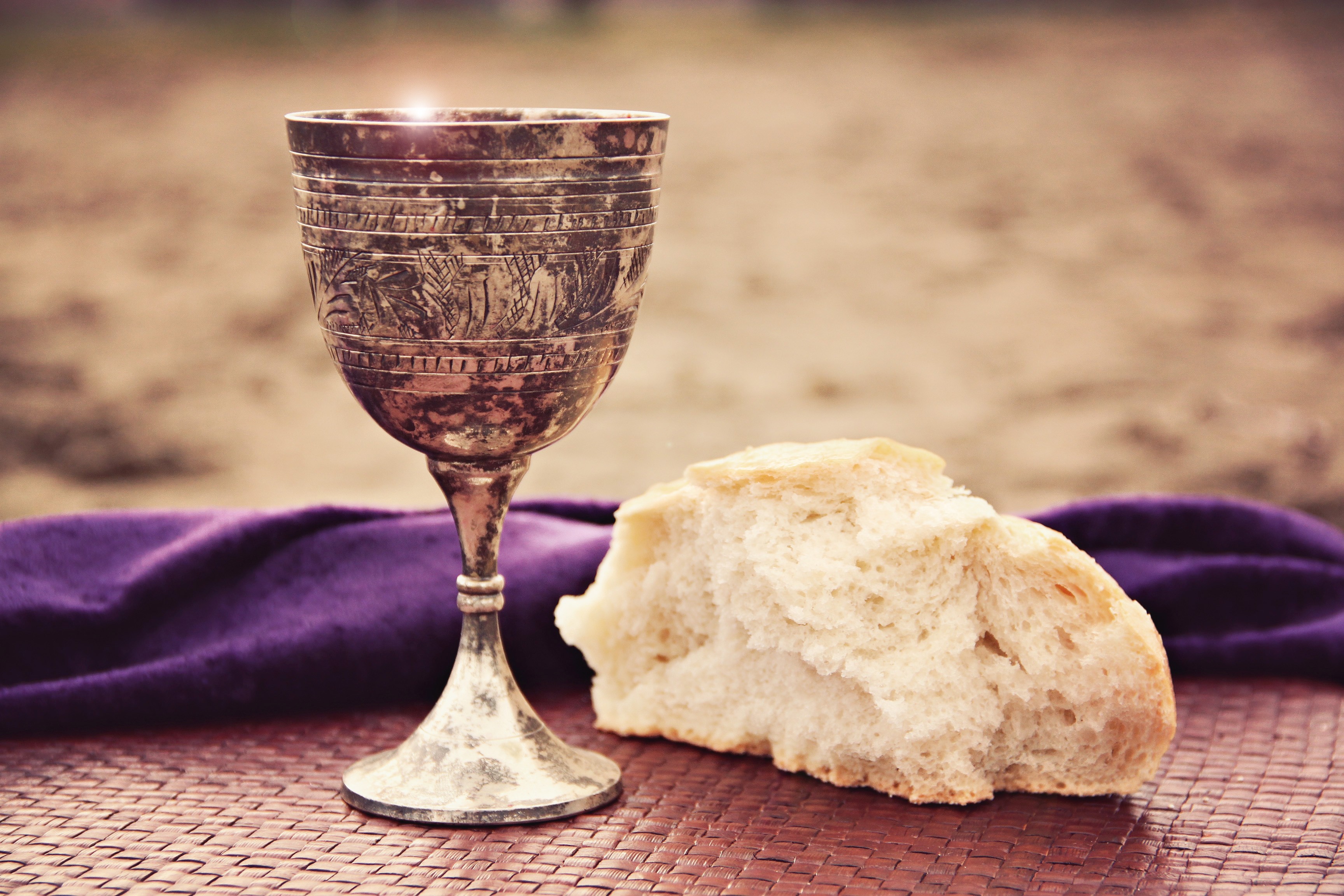
“And likewise the cup after they had eaten, saying, “This cup that is poured out for you is the new covenant in my blood.” Luk 22:20 ESV


If you wanted a date and time stamp for the full initiation of the new covenant here it is.  Just as the old covenant was initiated with a meal (Exo 24:11) and blood (Exo 24:8) as type and shadow, so the new covenant is initiated with anti-type fulfillment in a last supper, the literal body and blood of Jesus Christ for the forgiveness of sins, the true Passover Lamb provided by God.


The New Covenant Sabbath is a Person

jesus_christ__existence__by_richmondeleon-d5zkhlj

As I stated above, the Sabbath rest still exists in heaven before, during, and after the Mosaic Covenant.  Just as there was no covenant law for the Sabbath before Moses so there is none in Christ.  Instead the Sabbath we enter now is Gospel rather than Law, the Body of Christ, true rest for our souls (Matt 11:29).  Clearly specific days on a calendar are not in view at all in the New Covenant.


“One person esteems one day as better than another, while another esteems all days alike. Each one should be fully convinced in his own mind. The one who observes the day, observes it in honor of the Lord. The one who eats, eats in honor of the Lord, since he gives thanks to God, while the one who abstains, abstains in honor of the Lord and gives thanks to God.” Rom 14:5-6 ESV


“Therefore let no one pass judgment on you in questions of food and drink, or with regard to a festival or a new moon or a Sabbath. These are a shadow of the things to come, but the substance belongs to Christ.” Col 2:16-17 ESV


Instead of specific days on a calendar pointing as shadows to an anti-type we have the fullness of Jesus Christ whom all the prophets spoke of:


“Long ago, at many times and in many ways, God spoke to our fathers by the prophets, but in these last days he has spoken to us by his Son, whom he appointed the heir of all things, through whom also he created the world.” Heb 1:1-2 ESV


“Therefore, holy brothers, you who share in a heavenly calling, consider Jesus, the apostle and high priest of our confession, who was faithful to him who appointed him, just as Moses also was faithful in all God’s house. For Jesus has been counted worthy of more glory than Moses—as much more glory as the builder of a house has more honor than the house itself. (For every house is built by someone, but the builder of all things is God.) Now Moses was faithful in all God’s house as a servant, to testify to the things that were to be spoken later, but Christ is faithful over God’s house as a son. And we are his house if indeed we hold fast our confidence and our boasting in our hope.” Heb 3:1-6 ESV


Notice above the juxtaposition between Moses the servant and Jesus the son. This shows the superiority of Christ over Moses. To a Jew this would be a very big deal indeed. This is important in establishing other truths later pointed out in Hebrews.


Read this next piece of the same chapter carefully. You will see that the Jews were forbidden the Sabbath rest due to disobedience. He also warns us not to neglect our call to rest in Christ today. All emphasis is mine.


“Therefore, as the Holy Spirit says, “Today, if you hear his voice,  do not harden your hearts as in the rebellion, on the day of testing in the wilderness,  where your fathers put me to the test and saw my works for forty years.  Therefore I was provoked with that generation, and said, ‘They always go astray in their heart; they have not known my ways.’   As I swore in my wrath, ‘They shall not enter my rest.’”  Take care, brothers, lest there be in any of you an evil, unbelieving heart, leading you to fall away from the living God. But exhort one another every day, as long as it is called “today,” that none of you may be hardened by the deceitfulness of sin. For we have come to SHARE IN CHRIST, if indeed we hold our original confidence firm to the end. As it is said, “Today, if you hear his voice, do not harden your hearts as in the rebellion.”  For who were those who heard and yet rebelled? Was it not all those who left Egypt led by Moses? And with whom was he provoked for forty years? Was it not with those who sinned, whose bodies fell in the wilderness? And to whom did he swear that they would not enter his rest, but to those who were disobedient? So we see that they were unable to enter because of unbelief.” Heb 3:7-19 ESV


And now the punchline….


“Therefore, while the promise of entering his rest still stands, let us fear lest any of you should seem to have failed to reach it. For good news came to us just as to them, but the message they heard did not benefit them, because they were not united by faith with those who listened. For we who have believed enter that rest, as he has said, “As I swore in my wrath, ‘They shall not enter my rest,’” although his works were finished from the foundation of the world. For he has somewhere spoken of the seventh day in this way: “And God rested on the seventh day from all his works.” And again in this passage he said, “They shall not enter my rest.”  Since therefore it remains for some to enter it, and those who formerly received the good news failed to enter because of disobedience, again he appoints a certain day, “Today,” saying through David so long afterward, in the words already quoted, “Today, if you hear his voice, do not harden your hearts.” Heb 4:1-7 ESV


Today is our Sabbath rest in the finished work of Christ.  This juxtaposition rings clear in Hebrews.


One rest had more glory the other less.

One rest existed with Moses and the other was spoken later.

One rest could not be entered due to hardness of heart and the other is being offered today.

One is in the past the other is offered “today”.

One is a day and the other we “share in Christ“.

One “they shall not enter” the other “remains for some to enter”

One was on “the seventh day” the other is “today”.

Logically two things juxtaposed so strongly against each other are not the same exact thing.  But rather in this case one was a prefigure for the other.  Lest there be any confusion in Hebrews 8 and 9 the writer clearly spells out the disposition of the Old Covenant.  Specifically in Heb 8:6-12 he  quotes Jeremiah 31:31-34 noting that he is speaking of this prophecy as being fulfilled.  Then in Heb 8:13 we see the following:


“In speaking of a new covenant, he makes the first one obsolete. And what is becoming obsolete and growing old is ready to vanish away.” Heb 8:13 ESV


Lest there be any confusion the writer continues right on into chapter 9 and details what is included in the “obsolete” old covenant:


“Now even the first covenant had regulations for worship and an earthly place of holiness. For a tent was prepared, the first section, in which were the lampstand and the table and the bread of the Presence. It is called the Holy Place. Behind the second curtain was a second section called the Most Holy Place, having the golden altar of incense and the ark of the covenant covered on all sides with gold, in which was a golden urn holding the manna, and Aaron’s staff that budded, and the tablets of the covenant. Above it were the cherubim of glory overshadowing the mercy seat. Of these things we cannot now speak in detail.” Heb 9:1-5 ESV


Notice in verse 1 he restates that we are speaking of the old covenant.  Then he continues to list the various items associated with it, to include the ten commandments in verse 4 and then a general statement with which to cover everything else not mentioned in verse 5.  I would argue that this covers the rest of the Torah rather than listing it out in detail.  Ultimately this shows the error that Sabbatarians fall into, they argue that the Ten Commandments carry the Sabbath into the new covenant but that cannot be if the Ten Commandments are made obsolete along with the rest of the Torah as stated here in Hebrews.


In the new covenant we turn to the Law of Christ spoken of by Paul (1 Cor 9:20-22)(Gal 6:2) of which can be defined nicely with the Ten Commandments.  That said, we dont use Exodus 20 prescriptively we instead use the teachings of Christ and the apostles. Its a fine line theologically speaking, but due to these complexities it has been easy for groups like the SDA to pull the wool over the eyes of the laity.


You can read more about the proper way of understanding the Ten Commandments HERE, notice that the author in that link teaches them from a new covenant perspective.


The sad thing is that in their confusion Sabbatarians obfuscate the blessings of the new covenant Sabbath rest in Christ spoken of in Hebrews 1-4.  The Sabbath in the New Covenant is not Law, its Gospel.  The Gospel of Christ crucified for our sins, conquering sin and death in his glorious Resurrection.  In the New Covenant we rest in his completed work, for it truly is “finished” just as Jesus said on the cross.


Posted in Leaving Adventism, New Covenant | Tagged , , , | 32 Comments

“Rightly dividing the Word of truth” – Clear Governs Unclear

Reading

This is the third post in a series on principles of Biblical interpretation for the previous entry please click HERE.

Clear Governs Unclear

I have found this is among the most useful tools for interpretation of scripture.  The Bible is the Word of God and I accept this means there are no contradictions or errors.  That said some verses can be juxtaposed and reasoned against each other when terms are undefined or unclear.  It has been my experience that when I exam scripture in these cases closely I find that some of these passages are more clear than others.  So until I fully understand what is going on I rely on the clear passages. Before breaking down my understanding of how this works I am going to quote a professional, he uses the words “incidental” and “systematic” instead of clear and unclear but I think the principle is the same.  You can find this entry in its fullness in Present Truth Magazine, Volume 12 Chapter 2.

“This rule applies to the proper reading of any literature. It is common sense, but how hard it is to use common sense when we are so anxious to prove our point!

For example, the heart of all Bible doctrine is the great doctrine of justification by grace, for Christ’s sake, through faith. There are two books in the Bible (Romans and Galatians) which present this doctrine systematically, and they do it also in the perspective of sacred history—the promise to Abraham, the giving of the Law, etc. Common sense should teach us to build our understanding about justification by going to the places where the subject and all the ramifications of it are treated systematically.

Now there are places where Paul touches on justification incidentally, like in Titus 3:5-8. He is writing to a fellow minister and has no need to speak in detail. Some have used the incidental passage in Titus (i.e., the Roman Catholics at Trent) in an effort to substantiate the doctrine of justification by infused righteousness (inward renewal). Now let us grant the point that it is possible to get that idea out of Titus 3:5-8. Then there is the book of James, a wonderful place where some go to build a prima facie case for justification by works.

Major heresies are often the result of turning minors into majors. In 1 Corinthians 15 Paul incidentally makes some reference to “baptism for the dead,” and most scholars will admit that Paul’s meaning here is obscure. But the Mormons use this as the basis of a whole doctrine on baptism for the dead. And while we are talking about the dead, how hard it is for us humans to think rationally when we are governed sentimentally. If we want to prove something about the intermediate state badly enough, we will find a text somewhere to support it, but the chances are that we will build a great edifice on an incidental passage. Rather, we should honestly go to where the subject is treated in a systematic way. Do not interpret the systematic passage in the light of the incidental one, but the incidental must be interpreted by the systematic. It is positively foolhardy to build a doctrine on an incidental passage.”

What defines a clear passage?

The clarity often depends on the definition of terms with regards to the topic in question.  I am not saying that one simply writes off verses as not being in scripture, it just depends on what it is that you are studying.  This is because sometimes a verse might offhand mention a doctrine even though the context is directed on something else entirely.  When this happens I simply don’t rely on that verse for the doctrine I am studying.  How is such a principle applied to practice?  To answer that I am going to put forward three practical examples.

Practical Example #1

As I was leaving SDA one of the doctrines I chose to study was Hell.  SDA teach a form of annihilationism and most other Christians teach that Hell is a place of eternal conscious torment.  To discern who was correct I pulled every passage that I could find on the topic and read each carefully, then categorized them.

As I demonstrated in my post on Hell the two verses below are extremely clear on this topic:

“And the smoke of their torment ascendeth up for ever and ever: and they have no rest day nor night, who worship the beast and his image, and whosoever receiveth the mark of his name.” Revelation 14:11 KJV

“And the devil that deceived them was cast into the lake of fire and brimstone, where the beast and the false prophet are, and shall be tormented day and night for ever and ever.” Revelation 20:10 KJV

Some may wonder though why I chose not to even bring this next verse up at all:

“For the wages of sin is death; but the gift of God is eternal life through Jesus Christ our Lord.”  Romans 6:23 KJV

This verse is used by annihilationists to argue for the destruction of body and soul in hell rather than its persistence.  I would agree that for other doctrines this verse is very clear and should be quoted.    However it’s not teaching on the topic of Hell where as the passages from Revelation that I listed are.

When I first discerned this I didn’t know what was meant by “death” in Rom 6:23, and though I felt uncomfortable passing it by I had to trust that in time maybe I would learn what God the Holy Spirit was saying here.  Today I would argue that the death in view is the spiritual death that we are all cursed with by original sin,  once regenerated by Grace through Faith in the atoning sacrifice of Christ we are no longer spiritually dead and receive the gift of eternal life spoken of in this passage.

To interpret “death” in the above verse as annihilation of body and soul in hell has to bend and twist very clear passages which teach to the contrary.  Thus clear passages should always govern unclear.


Practical Example #2


Another example that is even more obvious but highly controversial is that of women’s ordination.  The traditional teaching of the Church is that a woman cannot hold the Biblical office of pastor.  Reason being is that there are very clear verses that say things like this:


“But I suffer not a woman to teach, nor to usurp authority over the man, but to be in silence.” 1 Tim 2:12 KJV

“This is a true saying, If a man desire the office of a bishop, he desireth a good work. A bishop then must be blameless, the husband of one wife, ….” 1 Tim 3:1-7 KJV


To be fair that second passage goes on listing a whole host of additional requirements a pastor must meet besides just being male.  Also both passages are addressing the biblical office of pastor only not household hierarchy.


That said, with regards to the qualifications for the Biblical office of pastor it is clear that one must be a man.  Obviously this is not a popular truth taught or practiced today.  Many Churches are in open rebellion to this.  They will use verses like below to argue that women can be pastors:


“Salute Andronicus and Junia, my kinsmen, and my fellowprisoners, who are of note among the apostles, who also were in Christ before me.” Rom 16:7 KJV


The argument generally goes that since Junia sounds like a feminine name that means women can be Pastors today.  First problem with this is that the verse is not teaching on the Biblical office of pastor and the above passages from 1 Timothy are.  Second, we actually don’t know what sex Junia was.  The text doesn’t say, which defacto renders this text unclear to the subject matter at hand.


Practical Example #3

Lastly I am going to address how I used this technique in my post on the State of the Dead.  SDA and Jehovah’s witnesses use similar proof-texts to argue for their position on soul sleep, which is the belief that there is no soul but rather just flesh.  Furthermore they believe that when one dies they simply cease to exist altogether until the resurrection.  The problem is that they ultimately end up governing clear text with unclear text when we are supposed to do that the other way around.


“Jesus said unto her, I am the resurrection, and the life: he that believeth in me, though he were dead, yet shall he live: And whosoever liveth and believeth in me shall never die. Believest thou this?” John 11:25-26 KJV


“1 For we know that if our earthly house of this tabernacle were dissolved, we have a building of God, an house not made with hands, eternal in the heavens….6 Therefore we are always confident, knowing that, whilst we are at home in the body, we are absent from the Lord: 7 (For we walk by faith, not by sight:) 8 We are confident, I say, and willing rather to be absent from the body, and to be present with the Lord.” 2 Cor 5:1,6-8 KJV


The above texts are very clear and on the topic of the human soul, its existence, and disposition after death.  In an attempt to overwrite this some will use verses like Ecc 9:5.


“3 … under the sun…. 5 For the living know that they shall die: but the dead know not any thing, neither have they any more a reward; for the memory of them is forgotten. 6 … under the sun.” Ecc 9:3-6 KJV


In the above passage I condensed to point out that the context is under the sun.  For a full examination of all of these verses please read my post on the state of the dead.  The point is it is irresponsible and misleading to use Ecc 9:5 to delete the obvious meaning from clear texts such as 2 Cor 5:1-8 and John 11:25-26 when in fact it is much more logical to accept that the context of Ecc 9:5 limits the teaching to events transpiring under the sun.  Since souls go to heaven or hell upon death this simply is not a contradiction as such places cannot be visited “under the sun”.


My overall point is that it is a good Biblical principle to govern unclear verses with clear ones.  Unfortunately this principle will lead you to believe doctrines that you might personally find distasteful.  However, in the end you actually have your bible governing you rather than a puddy of passages you are free to bend any way you like to suit your worldview.


Posted in Armchair Lounge | Tagged , , , , , , , , , | Leave a comment

Prophecies of Christ

Crucifixion

In my studies I found a list of the prophecies in the Old Testament pointing to Christ along with their New Testament fulfillment HERE.  I found this encouraging and decided to share.  This is by no means and index of every single one but it should give you an idea.


These prophecies were written many years before Christ walked the earth, in some cases by over a thousand.  Evidence for this has only been made stronger by the finding of the dead sea scrolls.  As you read below consider the odds that so many things could all be fulfilled in the life of one man.


Messiah would be born of a woman


“And I will put enmity between thee and the woman, and between thy seed and her seed; it shall bruise thy head, and thou shalt bruise his heel.” Gen 3:15 KJV


“But while he thought on these things, behold, the angel of the Lord appeared unto him in a dream, saying, Joseph, thou son of David, fear not to take unto thee Mary thy wife: for that which is conceived in her is of the Holy Ghost.” Matt 1:20 KJV


“But when the fulness of the time was come, God sent forth his Son, made of a woman, made under the law,” Gal 4:4 KJV


Messiah would be born in Bethlehem


“But thou, Beth–lehem Ephratah, though thou be little among the thousands of Judah, yet out of thee shall he come forth unto me that is to be ruler in Israel; whose goings forth have been from of old, from everlasting.” Mic 5:2 KJV


“And Joseph also went up from Galilee, out of the city of Nazareth, into Judæa, unto the city of David, which is called Bethlehem; (because he was of the house and lineage of David:) To be taxed with Mary his espoused wife, being great with child. And so it was, that, while they were there, the days were accomplished that she should be delivered.” Luk 2:4-6 KJV


Messiah would be born of a virgin and called Immanuel


“Therefore the Lord himself shall give you a sign; Behold, a virgin shall conceive, and bear a son, and shall call his name Immanuel. Butter and honey shall he eat, that he may know to refuse the evil, and choose the good. For before the child shall know to refuse the evil, and choose the good, the land that thou abhorrest shall be forsaken of both her kings.” Isa 7:14-16 KJV


“Now all this was done, that it might be fulfilled which was spoken of the Lord by the prophet, saying, Behold, a virgin shall be with child, and shall bring forth a son, and they shall call his name Emmanuel, which being interpreted is, God with us.” Matt 1:22-23 KJV


“And in the sixth month the angel Gabriel was sent from God unto a city of Galilee, named Nazareth, To a virgin espoused to a man whose name was Joseph, of the house of David; and the virgin’s name was Mary. And the angel came in unto her, and said, Hail, thou that art highly favoured, the Lord is with thee: blessed art thou among women. And when she saw him, she was troubled at his saying, and cast in her mind what manner of salutation this should be. And the angel said unto her, Fear not, Mary: for thou hast found favour with God. And, behold, thou shalt conceive in thy womb, and bring forth a son, and shalt call his name JESUS.” Luk 1:26-31 KJV


Messiah would come from the line of Abraham


“And I will bless them that bless thee, and curse him that curseth thee: and in thee shall all families of the earth be blessed.” Gen 12:3 KJV


“And in thy seed shall all the nations of the earth be blessed; because thou hast obeyed my voice.” Gen 22:18 KJV


“The book of the generation of Jesus Christ, the son of David, the son of Abraham.” Matt 1:1 KJV


Messiah would be a descendant of Isaac


“And God said, Sarah thy wife shall bear thee a son indeed; and thou shalt call his name Isaac: and I will establish my covenant with him for an everlasting covenant, and with his seed after him.” Gen 17:19 KJV


“And God said unto Abraham, Let it not be grievous in thy sight because of the lad, and because of thy bondwoman; in all that Sarah hath said unto thee, hearken unto her voice; for in Isaac shall thy seed be called.” Gen 21:12 KJV


“Which was the son of Jacob, which was the son of Isaac, which was the son of Abraham, which was the son of Thara, which was the son of Nachor,” Luk 3:34 KJV


Messiah would be a descendant of Jacob


“I shall see him, but not now: I shall behold him, but not nigh: there shall come a Star out of Jacob, and a Sceptre shall rise out of Israel, and shall smite the corners of Moab, and destroy all the children of Sheth.” Num 24:17 KJV


“Abraham begat Isaac; and Isaac begat Jacob; and Jacob begat Judas and his brethren;” Matt 1:2 KJV


Messiah would come from the tribe of Judah


“The sceptre shall not depart from Judah, nor a lawgiver from between his feet, until Shiloh come; and unto him shall the gathering of the people be.” Gen 49:10 KJV


“Which was the son of Aminadab, which was the son of Aram, which was the son of Esrom, which was the son of Phares, which was the son of Juda,” Luk 3:33 KJV


“For it is evident that our Lord sprang out of Juda; of which tribe Moses spake nothing concerning priesthood.” Heb 7:14 KJV


Messiah would be heir to King David‘s throne


“And when thy days be fulfilled, and thou shalt sleep with thy fathers, I will set up thy seed after thee, which shall proceed out of thy bowels, and I will establish his kingdom. He shall build an house for my name, and I will stablish the throne of his kingdom for ever.” 2 Sam 7:12-13 KJV


“For unto us a child is born, unto us a son is given: and the government shall be upon his shoulder: and his name shall be called Wonderful, Counsellor, The mighty God, The everlasting Father, The Prince of Peace. Of the increase of his government and peace there shall be no end, upon the throne of David, and upon his kingdom, to order it, and to establish it with judgment and with justice from henceforth even for ever. The zeal of the Lord of hosts will perform this.” Isa 9:6-7 KJV


“He shall be great, and shall be called the Son of the Highest: and the Lord God shall give unto him the throne of his father David: And he shall reign over the house of Jacob for ever; and of his kingdom there shall be no end.” Luk 1:32-33 KJV


“Concerning his Son Jesus Christ our Lord, which was made of the seed of David according to the flesh;” Rom 1:3 KJV


Messiah’s throne will be anointed and eternal


“Thy throne, O God, is for ever and ever: the sceptre of thy kingdom is a right sceptre. Thou lovest righteousness, and hatest wickedness: therefore God, thy God, hath anointed thee with the oil of gladness above thy fellows.” Psa 45:6-7 KJV


“And in the days of these kings shall the God of heaven set up a kingdom, which shall never be destroyed: and the kingdom shall not be left to other people, but it shall break in pieces and consume all these kingdoms, and it shall stand for ever.” Dan 2:44 KJV


“And Jesus came and spake unto them, saying, All power is given unto me in heaven and in earth.” Matt 28:18 KJV


Messiah would spend a season in Egypt


“When Israel was a child, then I loved him, and called my son out of Egypt.” Hos 11:1 KJV


“When he arose, he took the young child and his mother by night, and departed into Egypt: And was there until the death of Herod: that it might be fulfilled which was spoken of the Lord by the prophet, saying, Out of Egypt have I called my son.” Matt 2:14-15 KJV


A massacre of children would happen at Messiah’s birthplace


“Thus saith the Lord; A voice was heard in Ramah, lamentation, and bitter weeping; Rahel weeping for her children refused to be comforted for her children, because they were not.” Jer 31:15 KJV


“Then Herod, when he saw that he was mocked of the wise men, was exceeding wroth, and sent forth, and slew all the children that were in Bethlehem, and in all the coasts thereof, from two years old and under, according to the time which he had diligently enquired of the wise men. Then was fulfilled that which was spoken by Jeremy the prophet, saying, In Rama was there a voice heard, lamentation, and weeping, and great mourning, Rachel weeping for her children, and would not be comforted, because they are not.” Matt 2:16-18 KJV


A messenger would prepare the way for Messiah


“The voice of him that crieth in the wilderness, Prepare ye the way of the Lord, make straight in the desert a highway for our God. Every valley shall be exalted, and every mountain and hill shall be made low: and the crooked shall be made straight, and the rough places plain: And the glory of the Lord shall be revealed, and all flesh shall see it together: for the mouth of the Lord hath spoken it.” Isa 40:3-5 KJV


“And he came into all the country about Jordan, preaching the baptism of repentance for the remission of sins; As it is written in the book of the words of Esaias the prophet, saying, The voice of one crying in the wilderness, Prepare ye the way of the Lord, make his paths straight. Every valley shall be filled, and every mountain and hill shall be brought low; and the crooked shall be made straight, and the rough ways shall be made smooth; And all flesh shall see the salvation of God.” Luk 3:3-6 KJV


Messiah would be rejected by his own people


“I am become a stranger unto my brethren, and an alien unto my mother’s children.” Psa 69:8 KJV


“He is despised and rejected of men; a man of sorrows, and acquainted with grief: and we hid as it were our faces from him; he was despised, and we esteemed him not.” Isa 53:3 KJV


“He came unto his own, and his own received him not.” Jhn 1:11 KJV


“For neither did his brethren believe in him.” Jhn 7:5 KJV


Messiah would be a prophet


“The Lord thy God will raise up unto thee a Prophet from the midst of thee, of thy brethren, like unto me; unto him ye shall hearken;” Deu 18:15 KJV


“And he shall send Jesus Christ, which before was preached unto you: Whom the heaven must receive until the times of restitution of all things, which God hath spoken by the mouth of all his holy prophets since the world began. For Moses truly said unto the fathers, A prophet shall the Lord your God raise up unto you of your brethren, like unto me; him shall ye hear in all things whatsoever he shall say unto you.” Acts 3:20-22 KJV


Messiah would be preceded by Elijah


“Behold, I will send you Elijah the prophet before the coming of the great and dreadful day of the Lord: And he shall turn the heart of the fathers to the children, and the heart of the children to their fathers, lest I come and smite the earth with a curse.” Mal 4:5-6 KJV


“For all the prophets and the law prophesied until John. And if ye will receive it, this is Elias, which was for to come.” Matt 11:13-14 KJV


Messiah would be declared the Son of God


“I will declare the decree: the Lord hath said unto me, Thou art my Son; this day have I begotten thee.” Psa 2:7 KJV


“And Jesus, when he was baptized, went up straightway out of the water: and, lo, the heavens were opened unto him, and he saw the Spirit of God descending like a dove, and lighting upon him: And lo a voice from heaven, saying, This is my beloved Son, in whom I am well pleased.” Matt 3:16-17 KJV


Messiah would be called a Nazarene

“And there shall come forth a rod out of the stem of Jesse, and a Branch shall grow out of his roots:” Isa 11:1 KJV


“And he came and dwelt in a city called Nazareth: that it might be fulfilled which was spoken by the prophets, He shall be called a Nazarene.” Matt 2:23 KJV


Messiah would bring light to Galilee

“Nevertheless the dimness shall not be such as was in her vexation, when at the first he lightly afflicted the land of Zebulun and the land of Naphtali, and afterward did more grievously afflict her by the way of the sea, beyond Jordan, in Galilee of the nations. The people that walked in darkness have seen a great light: they that dwell in the land of the shadow of death, upon them hath the light shined.” Isa 9:1-2 KJV


“And leaving Nazareth, he came and dwelt in Capernaum, which is upon the sea coast, in the borders of Zabulon and Nephthalim: That it might be fulfilled which was spoken by Esaias the prophet, saying, The land of Zabulon, and the land of Nephthalim, by the way of the sea, beyond Jordan, Galilee of the Gentiles; The people which sat in darkness saw great light; and to them which sat in the region and shadow of death light is sprung up.” Matt 4:13-16 KJV


Messiah would speak in parables


“I will open my mouth in a parable: I will utter dark sayings of old: Which we have heard and known, and our fathers have told us. We will not hide them from their children, shewing to the generation to come the praises of the Lord, and his strength, and his wonderful works that he hath done.” Psa 78:2-4 KJV


“And he said, Go, and tell this people, Hear ye indeed, but understand not; and see ye indeed, but perceive not. Make the heart of this people fat, and make their ears heavy, and shut their eyes; lest they see with their eyes, and hear with their ears, and understand with their heart, and convert, and be healed.” Isa 6:9-10 KJV


“And the disciples came, and said unto him, Why speakest thou unto them in parables? He answered and said unto them, Because it is given unto you to know the mysteries of the kingdom of heaven, but to them it is not given. For whosoever hath, to him shall be given, and he shall have more abundance: but whosoever hath not, from him shall be taken away even that he hath. Therefore speak I to them in parables: because they seeing see not; and hearing they hear not, neither do they understand. And in them is fulfilled the prophecy of Esaias, which saith, By hearing ye shall hear, and shall not understand; and seeing ye shall see, and shall not perceive: For this people’s heart is waxed gross, and their ears are dull of hearing, and their eyes they have closed; lest at any time they should see with their eyes, and hear with their ears, and should understand with their heart, and should be converted, and I should heal them.” Matt 13:10-15 KJV


“All these things spake Jesus unto the multitude in parables; and without a parable spake he not unto them: That it might be fulfilled which was spoken by the prophet, saying, I will open my mouth in parables; I will utter things which have been kept secret from the foundation of the world.” Matt 13:34-35 KJV


Messiah would be sent to heal the brokenhearted


“The Spirit of the Lord God is upon me; because the Lord hath anointed me to preach good tidings unto the meek; he hath sent me to bind up the brokenhearted, to proclaim liberty to the captives, and the opening of the prison to them that are bound; To proclaim the acceptable year of the Lord, and the day of vengeance of our God; to comfort all that mourn;” Isa 61:1-2 KJV


“The Spirit of the Lord is upon me, because he hath anointed me to preach the gospel to the poor; he hath sent me to heal the brokenhearted, to preach deliverance to the captives, and recovering of sight to the blind, to set at liberty them that are bruised, To preach the acceptable year of the Lord.” Luk 4:18-19 KJV


Messiah would be a priest after the order of Melchizedek


“The Lord hath sworn, and will not repent, Thou art a priest for ever after the order of Melchizedek.” Psa 110:4 KJV


“So also Christ glorified not himself to be made an high priest; but he that said unto him, Thou art my Son, to day have I begotten thee. As he saith also in another place, Thou art a priest for ever after the order of Melchisedec.” Heb 5:5-6 KJV


Messiah would be called King


“Yet have I set my king upon my holy hill of Zion.” Psa 2:6 KJV


“Rejoice greatly, O daughter of Zion; shout, O daughter of Jerusalem: behold, thy King cometh unto thee: he is just, and having salvation; lowly, and riding upon an ass, and upon a colt the foal of an ass.” Zec 9:9 KJV


“And set up over his head his accusation written, THIS IS JESUS THE KING OF THE JEWS.” Matt 27:37 KJV


“And they brought the colt to Jesus, and cast their garments on him; and he sat upon him. And many spread their garments in the way: and others cut down branches off the trees, and strawed them in the way. And they that went before, and they that followed, cried, saying, Hosanna; Blessed is he that cometh in the name of the Lord: Blessed be the kingdom of our father David, that cometh in the name of the Lord: Hosanna in the highest. And Jesus entered into Jerusalem, and into the temple: and when he had looked round about upon all things, and now the eventide was come, he went out unto Bethany with the twelve.” Mrk 11:7-11 KJV


Messiah would be praised by little children


“Out of the mouth of babes and sucklings hast thou ordained strength because of thine enemies, that thou mightest still the enemy and the avenger.” Psa 8:2 KJV


“And said unto him, Hearest thou what these say? And Jesus saith unto them, Yea; have ye never read, Out of the mouth of babes and sucklings thou hast perfected praise?” Matt 21:16 KJV


Messiah would be betrayed


“Yea, mine own familiar friend, in whom I trusted, which did eat of my bread, hath lifted up his heel against me.” Psa 41:9 KJV


“And I said unto them, If ye think good, give me my price; and if not, forbear. So they weighed for my price thirty pieces of silver. And the Lord said unto me, Cast it unto the potter: a goodly price that I was prised at of them. And I took the thirty pieces of silver, and cast them to the potter in the house of the Lord.” Zec 11:12-13 KJV


“And while he yet spake, behold a multitude, and he that was called Judas, one of the twelve, went before them, and drew near unto Jesus to kiss him. But Jesus said unto him, Judas, betrayest thou the Son of man with a kiss?” Luk 22:47-48 KJV


“Then one of the twelve, called Judas Iscariot, went unto the chief priests, And said unto them, What will ye give me, and I will deliver him unto you? And they covenanted with him for thirty pieces of silver. And from that time he sought opportunity to betray him.” Matt 26:14-16 KJV


Messiah’s price money would be used to buy a potter’s field


“And I said unto them, If ye think good, give me my price; and if not, forbear. So they weighed for my price thirty pieces of silver. And the Lord said unto me, Cast it unto the potter: a goodly price that I was prised at of them. And I took the thirty pieces of silver, and cast them to the potter in the house of the Lord.” Zec 11:12-13 KJV


“Then was fulfilled that which was spoken by Jeremy the prophet, saying, And they took the thirty pieces of silver, the price of him that was valued, whom they of the children of Israel did value; And gave them for the potter’s field, as the Lord appointed me.” Matt 27:9-10 KJV


Messiah would be falsely accused


“False witnesses did rise up; they laid to my charge things that I knew not.” Psa 35:11 KJV


“And there arose certain, and bare false witness against him, saying, We heard him say, I will destroy this temple that is made with hands, and within three days I will build another made without hands.” Mrk 15:57-58 KJV


Messiah would be silent before his accusers

“He was oppressed, and he was afflicted, yet he opened not his mouth: he is brought as a lamb to the slaughter, and as a sheep before her shearers is dumb, so he openeth not his mouth.” Isa 53:7 KJV


“And Pilate asked him again, saying, Answerest thou nothing? behold how many things they witness against thee. But Jesus yet answered nothing; so that Pilate marvelled.” Mrk 15:4-5 KJV


Messiah would be spat upon and struck

“I gave my back to the smiters, and my cheeks to them that plucked off the hair: I hid not my face from shame and spitting.” Isa 50:6 KJV


“Then did they spit in his face, and buffeted him; and others smote him with the palms of their hands,” Matt 26:67 KJV


Messiah would be hated without cause


“Let not them that are mine enemies wrongfully rejoice over me: neither let them wink with the eye that hate me without a cause.” Psa 35:19 KJV

“If I had not done among them the works which none other man did, they had not had sin: but now have they both seen and hated both me and my Father. But this cometh to pass, that the word might be fulfilled that is written in their law, They hated me without a cause.” Jhn 15:24-25 KJV


Messiah would be crucified with criminals


“Therefore will I divide him a portion with the great, and he shall divide the spoil with the strong; because he hath poured out his soul unto death: and he was numbered with the transgressors; and he bare the sin of many, and made intercession for the transgressors.” Isa 53:12 KJV

“For dogs have compassed me: the assembly of the wicked have inclosed me: they pierced my hands and my feet. I may tell all my bones: they look and stare upon me. They part my garments among them, and cast lots upon my vesture.” Psa 22:16-18 KJV


“Then were there two thieves crucified with him, one on the right hand, and another on the left.” Matt 27:38 KJV


“And with him they crucify two thieves; the one on his right hand, and the other on his left. And the scripture was fulfilled, which saith, And he was numbered with the transgressors.” Mrk 15:27-28 KJV


Messiah would be given vinegar to drink


“They gave me also gall for my meat; and in my thirst they gave me vinegar to drink.” Psa 69:21 KJV


“They gave him vinegar to drink mingled with gall: and when he had tasted thereof, he would not drink.” Matt 27:34 KJV


“After this, Jesus knowing that all things were now accomplished, that the scripture might be fulfilled, saith, I thirst. Now there was set a vessel full of vinegar: and they filled a spunge with vinegar, and put it upon hyssop, and put it to his mouth. When Jesus therefore had received the vinegar, he said, It is finished: and he bowed his head, and gave up the ghost.” Jhn 19:28-30 KJV


Messiah’s hands and feet would be pierced

“For dogs have compassed me: the assembly of the wicked have inclosed me: they pierced my hands and my feet.” Psa 22:16 KJV


“And I will pour upon the house of David, and upon the inhabitants of Jerusalem, the spirit of grace and of supplications: and they shall look upon me whom they have pierced, and they shall mourn for him, as one mourneth for his only son, and shall be in bitterness for him, as one that is in bitterness for his firstborn.” Zec 12:10 KJV


“The other disciples therefore said unto him, We have seen the Lord. But he said unto them, Except I shall see in his hands the print of the nails, and put my finger into the print of the nails, and thrust my hand into his side, I will not believe. And after eight days again his disciples were within, and Thomas with them: then came Jesus, the doors being shut, and stood in the midst, and said, Peace be unto you. Then saith he to Thomas, Reach hither thy finger, and behold my hands; and reach hither thy hand, and thrust it into my side: and be not faithless, but believing.” Jhn 20:25-27 KJV


Messiah would be mocked and ridiculed


“All they that see me laugh me to scorn: they shoot out the lip, they shake the head, saying, He trusted on the Lord that he would deliver him: let him deliver him, seeing he delighted in him.” Psa 22:7-8 KJV


“And the people stood beholding. And the rulers also with them derided him, saying, He saved others; let him save himself, if he be Christ, the chosen of God.” Luk 23:35 KJV


Soldiers would gamble for Messiah’s garments

“They part my garments among them, and cast lots upon my vesture.”  Psa 22:18 KJV


“Then said Jesus, Father, forgive them; for they know not what they do. And they parted his raiment, and cast lots.” Luk 23:34 KJV

“And they crucified him, and parted his garments, casting lots: that it might be fulfilled which was spoken by the prophet, They parted my garments among them, and upon my vesture did they cast lots. And sitting down they watched him there;” Matt 27:35-36 KJV


Messiah’s bones would not be broken

“In one house shall it be eaten; thou shalt not carry forth ought of the flesh abroad out of the house; neither shall ye break a bone thereof.” Exo 12:46 KJV


“He keepeth all his bones: not one of them is broken.” Psa 34:20 KJV


“But one of the soldiers with a spear pierced his side, and forthwith came there out blood and water. And he that saw it bare record, and his record is true: and he knoweth that he saith true, that ye might believe. For these things were done, that the scripture should be fulfilled, A bone of him shall not be broken.” Jhn 19:34-36 KJV


Messiah would be forsaken by God


“My God, my God, why hast thou forsaken me? why art thou so far from helping me, and from the words of my roaring?” Psa 22:1 KJV


“And about the ninth hour Jesus cried with a loud voice, saying, Eli, Eli, lama sabachthani? that is to say, My God, my God, why hast thou forsaken me?” Matt 27:46 KJV


Messiah would pray for his enemies

“For my love they are my adversaries: but I give myself unto prayer.” Psa 109:4 KJV


“Then said Jesus, Father, forgive them; for they know not what they do. And they parted his raiment, and cast lots.” Luk 23:34 KJV


Soldiers would pierce Messiah’s side

“And I will pour upon the house of David, and upon the inhabitants of Jerusalem, the spirit of grace and of supplications: and they shall look upon me whom they have pierced, and they shall mourn for him, as one mourneth for his only son, and shall be in bitterness for him, as one that is in bitterness for his firstborn.” Zec 12:10 KJV


“But one of the soldiers with a spear pierced his side, and forthwith came there out blood and water.” Jhn 19:34 KJV


Messiah would be buried with the rich

“And he made his grave with the wicked, and with the rich in his death; because he had done no violence, neither was any deceit in his mouth.” Isa 53:9 KJV


“When the even was come, there came a rich man of Arimathæa, named Joseph, who also himself was Jesus’ disciple: He went to Pilate, and begged the body of Jesus. Then Pilate commanded the body to be delivered. And when Joseph had taken the body, he wrapped it in a clean linen cloth, And laid it in his own new tomb, which he had hewn out in the rock: and he rolled a great stone to the door of the sepulchre, and departed.” Matt 27:57-60 KJV


Messiah would resurrect from the dead


“For thou wilt not leave my soul in hell; neither wilt thou suffer thine Holy One to see corruption.” Psa 16:10 KJV


“But God will redeem my soul from the power of the grave: for he shall receive me. Selah.” Psa 49:15 KJV


“And, behold, there was a great earthquake: for the angel of the Lord descended from heaven, and came and rolled back the stone from the door, and sat upon it. His countenance was like lightning, and his raiment white as snow: And for fear of him the keepers did shake, and became as dead men. And the angel answered and said unto the women, Fear not ye: for I know that ye seek Jesus, which was crucified. He is not here: for he is risen, as he said. Come, see the place where the Lord lay. And go quickly, and tell his disciples that he is risen from the dead; and, behold, he goeth before you into Galilee; there shall ye see him: lo, I have told you.” Matt 28:2-7 KJV


“Ye men of Israel, hear these words; Jesus of Nazareth, a man approved of God among you by miracles and wonders and signs, which God did by him in the midst of you, as ye yourselves also know: Him, being delivered by the determinate counsel and foreknowledge of God, ye have taken, and by wicked hands have crucified and slain: Whom God hath raised up, having loosed the pains of death: because it was not possible that he should be holden of it. For David speaketh concerning him, I foresaw the Lord always before my face, for he is on my right hand, that I should not be moved: Therefore did my heart rejoice, and my tongue was glad; moreover also my flesh shall rest in hope: Because thou wilt not leave my soul in hell, neither wilt thou suffer thine Holy One to see corruption. Thou hast made known to me the ways of life; thou shalt make me full of joy with thy countenance. Men and brethren, let me freely speak unto you of the patriarch David, that he is both dead and buried, and his sepulchre is with us unto this day. Therefore being a prophet, and knowing that God had sworn with an oath to him, that of the fruit of his loins, according to the flesh, he would raise up Christ to sit on his throne; He seeing this before spake of the resurrection of Christ, that his soul was not left in hell, neither his flesh did see corruption. This Jesus hath God raised up, whereof we all are witnesses.” Acts 2:22-32 KJV


Messiah would ascend to heaven


“Lift up your heads, O ye gates; and be ye lift up, ye everlasting doors; and the King of glory shall come in. Who is this King of glory? The Lord strong and mighty, the Lord mighty in battle. Lift up your heads, O ye gates; even lift them up, ye everlasting doors; and the King of glory shall come in. Who is this King of glory? The Lord of hosts, he is the King of glory. Selah.” Psa 24:7-10 KJV


“So then after the Lord had spoken unto them, he was received up into heaven, and sat on the right hand of God.” Mrk 16:19 KJV


“And it came to pass, while he blessed them, he was parted from them, and carried up into heaven.” Luk 24:51 KJV


Messiah would be seated at God’s right hand


“Thou hast ascended on high, thou hast led captivity captive: thou hast received gifts for men; yea, for the rebellious also, that the Lord God might dwell among them.” Psa 68:18 KJV


“The Lord said unto my Lord, Sit thou at my right hand, until I make thine enemies thy footstool.” Psa 110:1 KJV


“So then after the Lord had spoken unto them, he was received up into heaven, and sat on the right hand of God.” Mrk 16:19 KJV


“The Lord said unto my Lord, Sit thou on my right hand, till I make thine enemies thy footstool?” Matt 22:44 KJV


Messiah would be a sacrifice for sin


“But he was wounded for our transgressions, he was bruised for our iniquities: the chastisement of our peace was upon him; and with his stripes we are healed. All we like sheep have gone astray; we have turned every one to his own way; and the Lord hath laid on him the iniquity of us all. He was oppressed, and he was afflicted, yet he opened not his mouth: he is brought as a lamb to the slaughter, and as a sheep before her shearers is dumb, so he openeth not his mouth. He was taken from prison and from judgment: and who shall declare his generation? for he was cut off out of the land of the living: for the transgression of my people was he stricken. And he made his grave with the wicked, and with the rich in his death; because he had done no violence, neither was any deceit in his mouth.” Isa 53:5-12 KJV


“For when we were yet without strength, in due time Christ died for the ungodly. For scarcely for a righteous man will one die: yet peradventure for a good man some would even dare to die. But God commendeth his love toward us, in that, while we were yet sinners, Christ died for us.He shall see of the travail of his soul, and shall be satisfied: by his knowledge shall my righteous servant justify many; for he shall bear their iniquities. Therefore will I divide him a portion with the great, and he shall divide the spoil with the strong; because he hath poured out his soul unto death: and he was numbered with the transgressors; and he bare the sin of many, and made intercession for the transgressors.” Rom 5:6-8 KJV


Posted in Armchair Lounge, Eschatology | Tagged | 1 Comment

“Rightly dividing the Word of truth” – Recognizing Genre

young man reading small bible

This is the second post in a series on principles of Biblical interpretation for the previous entry please click HERE.

Recognizing Genre

There are multiple literary genres employed in Holy Scripture.  Rather than run through them on my own I am going to quote a professional, to read the following breakdown from the original author please click HERE.

Law: This includes the books of Leviticus and Deuteronomy. The purpose of law is to express God’s sovereign will concerning government, priestly duties, social responsibilities, etc. Knowledge of Hebrew manners and customs of the time, as well as a knowledge of the covenants, will complement a reading of this material.

History: Stories and epics from the Bible are included in this genre. Almost every book in the Bible contains some history, but Genesis, Exodus, Numbers, Joshua, Judges, 1 and 2 Samuel, 1 and 2 Kings, 1 and 2 Chronicles, Ezra, Nehemiah, and Acts are predominately history. Knowledge of secular history is crucial, as it dovetails perfectly with biblical history and makes interpretation much more robust.

Wisdom: This is the genre of aphorisms that teach the meaning of life and how to live. Some of the language used in wisdom literature is metaphorical and poetic, and this should be taken into account during analysis. Included are the books of Proverbs, Job and Ecclesiastes.

Poetry: These include books of rhythmic prose, parallelism, and metaphor, such as Song of Solomon, Lamentations and Psalms. We know that many of the psalms were written by David, himself a musician, or David’s worship leader, Asaph. Because poetry does not translate easily, we lose some of the musical “flow” in English. Nevertheless, we find a similar use of idiom, comparison and refrain in this genre as we find in modern music.

Narrative: This genre includes the Gospels, which are biographical narratives about Jesus, and the books of Ruth, Esther, and Jonah. A reader may find bits of other genres within the Gospels, such as parable (Luke 8:1-15) and discourse (Matthew 24). The book of Ruth is a perfect example of a well-crafted short story, amazing in its succinctness and structure.

Epistles: An epistle is a letter, usually in a formal style. There are 21 letters in the New Testament from the apostles to various churches or individuals. These letters have a style very similar to modern letters, with an opening, a greeting, a body, and a closing. The content of the Epistles involves clarification of prior teaching, rebuke, explanation, correction of false teaching and a deeper dive into the teachings of Jesus. The reader would do well to understand the cultural, historical and social situation of the original recipients in order to get the most out of an analysis of these books.

Prophecy and Apocalyptic Literature: The Prophetic writings are the Old Testament books of Isaiah through Malachi, and the New Testament book of Revelation. They include predictions of future events, warnings of coming judgment, and an overview of God’s plan for Israel. Apocalyptic literature is a specific form of prophecy, largely involving symbols and imagery and predicting disaster and destruction. We find this type of language in Daniel (the beasts of chapter 7), Ezekiel (the scroll of chapter 3), Zechariah (the golden lampstand of chapter 4), and Revelation (the four horsemen of chapter 6). The Prophetic and Apocalyptic books are the ones most often subjected to faulty eisegesis and personal interpretation based on emotion or preconceived bias. However, Amos 3:7 tells us, “Surely the Sovereign LORD does nothing without revealing his plan to his servants the prophets.” Therefore, we know that the truth has been told, and it can be known via careful exegesis, a familiarity with the rest of the Bible, and prayerful consideration. Some things will not be made clear to us except in the fullness of time, so it is best not to assume to know everything when it comes to prophetic literature.

To give a practical example of how an armchair theologian would be aware of Genre in the study of a doctrine I am going to talk about the use of Psalms with regards to the doctrine of Hell.

Poetry in any literary work will often use a great deal of imagery, metaphor, and hyperbole.  These literary devices can give a vivid picture of the topic but are generally a poor source for dry facts.  A simple google search can yield many verses in the Psalms that describe hell as being a “pit” of “flames” with prison “bars” and many other such things.  There is debate on how applicable these are due to the words used in the old testament and new testament for hell.  All of that though was moot with regards to my post as I wasn’t addressing what hell looks or feels like.

Since I was only attempting to prove things like the existence of hell, poetic descriptions and imagery were not helpful.  If for example, the Bible was more open ended about the existence of hell in the genres that are clearer on objective doctrinal truths it would follow logically that such poetic narrative could and should be interpreted differently.  So in this sense, I would not rely on poetic genre even though all of the Bible is the word of God.

More relevant to this rule, I would not use an apocalypse to govern scripture in an epistle or gospel narrative.  Apocalypses, such as Daniel or Revelation, are by their very nature unclear without intense study.  Even though I used the powerful proof-texts from Revelation on hell in my post, the go-to passages for my understanding are from the Epistles and words of Christ in the gospel narratives.

Apocalyptic Proof Texts Rev 14:11, Rev 20:10
Hermeneutical Foundation Mark 9:43-48, Matt 13:50, Matt 25:41, 1 Pet 3:19-20Luke 16:19-31

To be clear, had those verses in Revelation been the only passages in the Bible teaching eternal conscious torment I would be more apt to question it as the apocalypse of Revelation uses a great deal of figurative language.  As it turns out, although they are short and quotable they are far from the only passages on the doctrine of hell.

My point when using genre is this, make sure that the doctrine you are trying to prove can be established from a foundation of clear texts in the genre that is most applicable to it.

Posted in Armchair Lounge | Tagged , , , , , , , , , | Leave a comment

“Rightly dividing the Word of truth” – Biblical Authority

Young man reading small Bible

This is the first post in a series on principles of Biblical interpretation.

Up until about a year and a half ago I was unaware of the various rules for understanding scripture.  Most people I speak to about this are also unaware, they typically rely on their Pastor or favorite theologian to know these things for them.  Which is fine, as long as you have a really trustworthy pastor or theologian that you subscribe to.  However, just because you personally enjoy their sermons doesn’t mean they are trustworthy.

I would recommend to anyone to take it upon themselves to learn some basic principles of Biblical analysis.  I don’t think we are all called to be pastors or (non-armchair) theologians, but if you learn the basics you can spot a wolf in sheep’s clothing pretty quickly.

That said this is a lifelong discipline in which there are few masters.  To help anyone who is also new to this journey I will blog for a while on the rules that I have learned and agree with, as well as some of the ones that I reject along with my reasoning.

Each post on this topic will cover one principle of interpretation of scripture.  Also, to clarify each principle I will be drawing on examples of topics I have already posted on, and I will provide links so that you can compare and contrast if desired.

That stated, the first principle I am going to address is that of:

Biblical Authority

Logically, to engage in any kind of interpretation of scripture you need a confession on the authority of scripture.  The below quote sums up the confession that I subscribe to nicely:

“We receive and embrace with our whole heart the prophetic and apostolic Scriptures of the Old and New Testaments as the pure, clear foundation of Israel.  They are the only true standard or norm by which all teachers and doctrines are to be judged” Solid Declaration of the Formula of Concord.

This is a different confession than what you may typically see from an orthodox American Church.  I do believe that all 66 books of the Bible are inspired and God breathed, down to the very words.  However, due to the extra philosophical baggage that comes along with them I try to avoid the confessions on Biblical Authority that come out of enlightenment fundamentalism.

That said it is important to understand as best you can the confession that one subscribes to regarding Biblical Authority.  If one has a very liberal confession the only way to prove anything will be with vast quantities of scripture.  Generally a liberal student of scripture seems to assume that the odds are 50 verses making the same point over and over again likely contain the word of God in at least one of them.  In my experience, the degree of ones “liberalness” can be measured by the shear number of scriptures needed to convince them of any particular doctrine.

It can be hard to pin a Biblical Liberalist down as their criteria for Biblical authority is usually vague and generally centers around the verses they choose to reject rather than those they embrace.  Ultimately the reason I reject Biblical Liberalism is that at the end of the day it is the reader who is picking and choosing which parts of the Bible are inspired and which parts are not.  Even if in heaven it is revealed by Christ that the liberals were right all along, and that there were errors and defects in the original manuscripts, I would still prefer to stand on the side where I am and not the one picking and choosing the canon as I personally see fit.  This is because I know how dark my vile heart is and I simply refuse to trust it over scripture.

Francis Pieper makes a strong stand against Biblical Liberalism in his works on Christian Dogmatics.  A notable quote can be found on Page 5 of Volume I.

“Some have called the complete submergence of the theologian’s Ego a disgraceful “bondage” and a “letter worship.”  Christ, however, teaches that this is the glorious liberty which we as Christian theologians are privileged to enjoy.  “if ye continue in My Word . . . ye shall know the truth, and the truth shall make you free,” (John 8:31-32).  To be held in bondage by one’s own false opinions is the most disgraceful form of human slavery.  And the purpose for which Christ gave us His own Word through His Apostles and Prophets is to deliver us from the bondage of our own false notions in matters pertaining to our salvation and that of all men.  Therefore our slogan dare never be: “Away from Scripture!” It must remain: “into Scripture, into Scripture as the sole source and standard of theology!” Luther thanked God for the wonderful grace that he could at once discard all thoughts that came to him “without Scripture.”

While I do plan on defending my view of scripture objectively over and against a liberal confession in a future post, for the moment I only want to make clear how a view on the authority of scripture impacts ones theology.  If I have motivated you to consider this fact and question yourself as to why you have the confession on Biblical Authority that you do that will suffice for now.

Posted in Armchair Lounge | Tagged , , , , , , , , , | 2 Comments

Five Flaws of Adventism

Ellen-White-Estate-database-hacked_banner

While discussing my studies regarding Adventism online I encountered a YouTube comment by Colleen Tinker.  For those of you who are unfamiliar with her work, among other things, she is one of the founders of Former Adventist Fellowship.

Her work helped me a great deal when I was conducting my studies, and I have since started attending her annual former SDA conferences in Redlands CA.  For the benefit of those reading my blog I am going to post her analysis of the Five Fundamental Flaws in Adventism:

Adventism’s worldview is not a biblical one but rather one that is shaped by the “great controversy motif”. First, Adventism believes in an unbiblical nature of man; it holds that man is physical with no immaterial spirit that separates from the body at death and survives with the Lord until the resurrection. The Bible teaches that man has a spirit that is separate from the body; it bears the image of God who is spirit, and that spirit is what is dead when we are born and which comes alive when we believe in the substitutionary death of Jesus.

Second, Adventism believes in a fallible Jesus who could have sinned, who inherited Mary’s genetic propensities to sin although He did not sin, who could have failed in His mission and thus fractured the godhead and plunged the cosmos into chaos (as Doug Batchelor says)…and significantly, Adventism believes Jesus forever relinquished the attribute of omnipresence, a loss which would render him NOT fully God, NOT of the same substance as the Father. In fact, Adventism does not believe the Trinity is one in substance; the Adventist “trinity” is actually a tritheism, the EGW “heavenly trio” rather than the classic Christian Trinity. This diminished, not-fully-almighty-God Jesus is left over from Adventism’s heretical Arian foundation.

Further, this unbiblical understanding of the Lord Jesus changes how Adventism sees “sin”. Instead of its being a spiritual problem that literally separates our spirits from the life of God, and since Adventism teaches that Jesus had no advantage we do not have, that He was EXACTLY as we are, this means that Jesus the Man had to avoid sin by prayer and dependence upon the Holy Spirit…and that He demonstrated to us that we, too, can avoid sin exactly as He did. But this teaching is false. No human—except Jesus—can avoid sin by prayer without being born again. Without our spirits being brought to life, there is no possible way anyone can overcome or avoid sin. Jesus did not have to be born again; He was spiritually alive from the moment He was conceived by the Holy Spirit. He was the only human ever born who was born spiritually alive. He was sinless because He was ALIVE. He avoided sin because He was sinless; He was not sinless because He avoided sin.

Third, Adventism teaches that the seventh-day Sabbath is eternally significant and that it will play a role in the final events of the world’s history. Adventism believes that when Jesus comes back, those who will be saved will be keeping the Sabbath. This idea is completely unbiblical. The saved will be saved because they are born again and trust Jesus. That is the only requirement for being saved.

Fourth, Adventism has an extra-biblical prophet. This prophet’s writings continue to have prophetic authority and explain Scripture to Adventists, providing the hermeneutic by which Adventists interpret the Bible. Christianity does not tolerate extra-biblical prophets. No matter how an Adventist may argue that EGW is simply a great devotional writer, all Adventists know that she is far more than that to the organization. If you doubt her significance, try admitting the truth that she is a false prophet. Adventists may say she is “not a prophet” if they are liberal or progressive, but they will not say she is a false prophet. That is very different. Moreover, whether they want to admit it or not, all Adventists share a worldview adopted from her great controversy, investigative judgment scenario.

Fifth, Adventism has a “different gospel”. They do not believe simply that humans are justified ONLY by believing faith in the Lord Jesus and His completed work on the cross. No matter their “brand”, Adventists believe they might lose their salvation if they give up the Sabbath. But even more critical and foundational, Adventists believe that Satan, not Jesus, is the scapegoat who carries away the sins of the saved into the lake of fire. Adventism teaches that Jesus’ blood transfers confessed sins to the heavenly sanctuary where they “defile heaven” until Jesus is done with the investigation there. At the end of His “heavenly ministry”, the sins of the saved are placed on Satan, the sins of the unsaved are rolled back onto the unsaved, and heaven is cleansed as Satan carries them away and is punished. This belief is utter blasphemy. The Lord Jesus has already born the sins of the saved on the cross. Satan never, ever carries the sins of the saved. He does not cleanse heaven by taxiing evil away from God’s presence. Jesus is the One who became sin for us so that we might become the righteousness of God in Him.

No matter what type of Adventist a person is, he or she holds an Adventist worldview. It is simply disingenuous to say Adventism is not “monolithic”. Of course it’s not…on the surface. But the fact that the superstructure of various Adventists may be different, their foundation is the same. It is shaped by the great controversy paradigm, and at its core is a different gospel, a different Jesus, and an unbiblical nature of man.

Though I can no longer remember the video that she posted the above comment in, you can find this and related works of their ministry HERE.

In each point above she has identified fundamental flaws in SDA belief that twist their doctrine into something that is not Christian.

Over the past year I have blogged on some of these topics and if you would like to know what the Bible says from a Former Adventist perspective please take a look:

  1. State of the Dead
  2. The Holy Trinity
  3. The Sabbath
  4. Ellen White
  5. The False Gospel of SDA
Posted in Ellen White, Leaving Adventism | Tagged , , , | 14 Comments

Is Homosexuality a sin?

crucifixion-wallpapers-1501

Due to the recent SCOTUS decision in the US this issue has become a hot topic.  Because of that I feel obligated to make a post addressing the relevant biblical teachings. In this post I will attempt to prove the dry fact that the Bible does teach Homosexuality is a sin.

Disclaimer: If this is a sin you personally struggle with I would recommend that you reach out to your pastor.

The Bible is actually very clear on the sin of homosexuality, you do not need anything more than a 5th grade education to find out for yourself.  That said, there are a number of notable scholars out there trying to confuse people.

“For the time is coming when people will not endure sound teaching, but having itching ears they will accumulate for themselves teachers to suit their own passions, and will turn away from listening to the truth and wander off into myths.” 2 Tim 4:3-4 ESV

My goal in this post will be to review a select number of verses that are abused by those who deny that Homosexuality is a sin.  I do not believe it is necessary to cover them all, but if you would like a certain verse addressed that I do not cover in this blog post please drop it in the comments at the bottom.

Sodom and Gomorrah

The first passage that most deniers will abuse is the story of Sodom and Gomorrah.  I am not going to post the whole passage because it is very long.  Please click HERE if you want to read through it before continuing.

The most common argument for neutralizing this passage is asserting that it is irrelevant to the topic of homosexuality at all.  Critics will assert that the sin being condemned here is gang rape only, and that no other sin is in view.  Therefore rendering the passage entirely moot in their eyes.

The problem is that they have the burden of proving that the ONLY sin being condemned is gang rape.  A closer look at the text reveals that there were other issues:

“The two angels came to Sodom in the evening, and Lot was sitting in the gate of Sodom. When Lot saw them, he rose to meet them and bowed himself with his face to the earth and said, “My lords, please turn aside to your servant’s house and spend the night and wash your feet. Then you may rise up early and go on your way.” They said, “No; we will spend the night in the town square.” But he pressed them strongly; so they turned aside to him and entered his house. And he made them a feast and baked unleavened bread, and they ate.” Gen 19:1-3 ESV

It seems clear to me that Lot’s first reaction was to rescue these men from something that he was aware could or would take place in the town square were they to remain overnight.  Furthermore this cannot simply be dismissed as an act of charity as we see Lot insists and “pressed them strongly”.  Taken by itself one could assume Lot is just a very kind man, but placed back in the context of the rest of the passage it is logical to presume that Lot felt he was rescuing them from a dire fate.

“But before they lay down, the men of the city, the men of Sodom, both young and old, all the people to the last man, surrounded the house. And they called to Lot, “Where are the men who came to you tonight? Bring them out to us, that we may know them.” Gen 19:4-5 ESV

The fact that undoes this verse as simply speaking on gang rape is that it clearly implicates all men in the entire city.  Obviously this was a community affair, a level of sin that was much broader in scope than any sexual sin we know to this day.  Some will argue that “know them” simply refers to hospitality in a social sense.  Anyone who has read the books of Moses knows that this is simply not the case.  This is a figure of speech used frequently to refer to carnal knowledge, a good cross reference would be Judges 19:22.

Establishing that it was carnal knowledge that they were seeking, how do we know that their desires were directly only at other men?  The answer is found here:

“and [Lot] said, “I beg you, my brothers, do not act so wickedly. Behold, I have two daughters who have not known any man. Let me bring them out to you, and do to them as you please. Only do nothing to these men, for they have come under the shelter of my roof.” But they said, “Stand back!” And they said, “This fellow came to sojourn, and he has become the judge! Now we will deal worse with you than with them.” Then they pressed hard against the man Lot, and drew near to break the door down.” Gen 19:7-9 ESV

Here we see that the Sodomites were seeking only men.  I have seen people raise various objections to this, but what cannot be avoided is among the many sins going on in this passage one of them was that men were seeking carnal knowledge of other men.  The very concept of this was so repugnant to Lot that he offered his daughters to be raped instead.  It baffles me that Lot would propose such a thing.  That said, seeing as how Lot was so protective of these travelers earlier (Gen 19:1-3) it is logical to presume that which he was seeking to protect them from was so evil in his mind that having his daughters raped is preferable.

Furthermore, this nullifies the issue at hand being only gang rape.  Had that been Lot’s only concern he would not have offered his daughters to be raped instead.  Clearly his main focus was the acts of Sodomy that Lot found to be the primary evil.  Does this mean that the Bible teaches Sodomy is worse than rape?  I don’t think so, remember this is just Lot’s estimation.  That said, when compared to other verses in the Bible it does show that among the many sins the acts and desires of Sodomy were considered evil, and worthy of judgement.

Still, some may argue that all men in the city were acting as a single unit, therefore sodomy gang rape is the only sin in view.  The reason we know it cannot ONLY be speaking to gang rape is the following:

“And they struck with blindness the men who were at the entrance of the house, both small and great, so that they wore themselves out groping for the door.” Gen 19:11 ESV

At the point of blindness every man in the city is removed from the group and turned into an individual.  We see that they still persisted as individual units groping to satisfy their sexual passions for those of the same sex.  Its rather grotesque in its imagery, but makes the case all on its own that the issue in Sodom was more than bouts of gang rape.  At the very least these individuals had desires for the flesh of the same sex, which reveals that it is not just the acts that are condemned as sin but the desires as well.

“just as Sodom and Gomorrah and the surrounding cities, which likewise indulged in sexual immorality and pursued unnatural desire, serve as an example by undergoing a punishment of eternal fire.” Jude 1:7 ESV

Instead of saying “unnatural desire” ESV some translations say “strange flesh” NKJV.  It is clear with cross referencing this passage to Genesis 19 that the sexual immorality being identified is the pursuit and or fulfillment of homosexual desires.

“if by turning the cities of Sodom and Gomorrah to ashes he condemned them to extinction, making them an example of what is going to happen to the ungodly; and if he rescued righteous Lot, greatly distressed by the sensual conduct of the wicked (for as that righteous man lived among them day after day, he was tormenting his righteous soul over their lawless deeds that he saw and heard);” 2 Peter 2:6-8 ESV

Here we get a greater view of what Lot was seeing and hearing in Sodom.  Again, I am not denying that there were other sins in the city.  Clearly though, among the many sins there was such an abomination that Lot knew that traveling men were in danger.  Lot found this danger they were in so repugnant that he was willing to offer his daughters to be raped as the thought of that was preferable to the idea of men being raped.  How can sodomy in and of itself not be condemned in these passages?

To argue that Genesis 19 is ONLY speaking to gang rape is fallacious at best and deceptive at worst.  Especially when we look at other texts written by Moses.

Leviticus 18:22

This is the go to proof-text that most Christians use to define homosexuality as a sin:

You shall not lie with a male as with a woman; it is an abomination.” Lev 18:22 ESV

I would argue that it is a mistake to use this as the key proof-text.  It is very quotable, but since it is part of the old covenant which was made obsolete in many new testament passages.  I cannot tell you how many times I have heard atheists argue that Christians pluck Lev 18:22 as being applicable today, yet still eat shell fish (Lev 11:12) and wear mixed clothing (Lev 19:19).  Their theology is flawed but it derails the conversation none the less.

Though it is true that the old covenant is obsolete as far as prescriptive laws go (Heb 8:13), it does not follow that Leviticus cannot be used in a scholarly fashion to gain a greater understanding on other texts in the Bible.  In some cases, such texts are found in the new testament which is the source of a New Covenant Christian’s prescriptive laws.

What is not questioned though is how ancient Jews interpreted Lev 18:22, all forms of homosexual actions and desires were strictly forbidden.

New Testament

Paul specifically addresses Homosexuality in 3 different passages.  All of these are very obviously condemning it as sin, however I am only going to address one of them as I believe it makes the case for the others all on its own.

Or do you not know that the unrighteous will not inherit the kingdom of God? Do not be deceived: neither the sexually immoral, nor idolaters, nor adulterers, nor men who practice homosexuality, nor thieves, nor the greedy, nor drunkards, nor revilers, nor swindlers will inherit the kingdom of God. And such were some of you. But you were washed, you were sanctified, you were justified in the name of the Lord Jesus Christ and by the Spirit of our God.” 1 Cor 6:9-11 ESV

This should be the go-to proof text as it is the most clear and specific.  Also, it not only lays down the law but offers the gospel in verse 11 “such were some of you”.  Washed being by baptism, sanctified by the Holy Spirit, and Justified by grace through faith in the shed blood of our Lord and Savior Jesus Christ for the forgiveness of sins.

Some will argue that homosexuality is not identified as sin in this passage.  They assert that the word “homosexual” only appears in the newest translations of the Bible and is not found in the original manuscripts.

The word Homosexual is actually a relatively new word in English, this is why you don’t see it in the KJV for example.  From the sources I have read, the word first appears in English around the turn of the 20th century.  Obviously the word “Homosexual” does not appear in the Greek manuscripts, its an English word and the manuscripts were written in Greek.  There is no possible way it could appear in them.

The real questions are, which word was used as the Greek equivalent for Homosexual by Paul, what does that word mean, and how do we know?

The words found in 1 Cor 6:9 that are translated into English as Homosexual are:

μαλακοὶ

malakoi effeminate
ἀρσενοκοῖται arsenokoitai

homosexuals

Source: http://www.biblehub.com

Many scholars interpret the above words as referring to both active and passive homosexual acts.  Meaning that Paul is specifically calling out both the giving and receiving of homosexual sex.  This interpretation hinges on an understanding of the word malakoi that is beyond the scope and purpose of this blog.  However, if you want to look into that further I recommend that you review the sources posted at the bottom of the blog.

The word that I want to focus on is “arsenokoitai” because I believe that it is this word that makes the case. I have not seen a single scholar who argues against homosexuality being a sin who was able to refute the argument on the meaning of this word.  Each and every one of them fails every single time in each debate I’ve seen.

This is because there are no known ancient sources that predate Pauls use of this word.  In fact, it would appear that the fist time the word was ever used at all was when Paul wrote 1 Corinthians.  Most scholars actually believe that Paul made the word up.

That being the case what did Paul mean by “arsenokoitai”?  What is the referent to this word?  The only place we see the word being used is in the writings of Paul.  However, Paul quoted heavily from the Septuagint in all of his writings.  Most believe that though Paul was fluent in Hebrew he chose to quote the Septuagint as that was the Bible used in the Churches he was teaching.  For those who do not know, the Septuagint was the ancient Greek translation of the Old Testament.

In the Septuagint version of Leviticus 18:22 we see that the words “arseno” and “koitai” and “arseno”.

Arseno: Man

Koitai: Laying (sexually) with

Arseno: Man

I don’t think there is any coincidence that the neologism Paul constructs here is from three words in Leviticus that lay-side-by-side.  In doing so Paul is condemning as sin the very same act that is condemned in Leviticus.  So logically, the word arsenokoitai is actually defined by Leviticus 18:22.  Though Leviticus no longer applies prescriptively to new covenant Christians, 1 Corinthians does.  So here we have one of many cases in the New Testament where an Apostle, under inspiration of the Holy Spirit, uses the authority given to him to re-issue a law from the old covenant into the new.

The meaning of Leviticus 18:22 rings clear from not only logic but its historic interpretation.  Thus when we see Paul functionally quoting it in his neologism, it follows that the same intent is imported into 1 Cor 6:9-11.

There can be no mistake, Paul does not want us to be deceived of the sins of sexual immorality.  Sin that does include the acts and desires of homosexuality.  Sin that we are called to repent of just like any other, and place our trust in Christ.

Sexual Immorality

Responses to what I have posted above will generally stray into the absurd.  People will assert that since bestiality isn’t condemned in the new Testament, it must therefore be permissible now.

Problem with that assertion is that other sexual sins such as pedophilia are not condemned anywhere in scripture.  The Bible does not lay out every possible sexual infraction nor does it seek to.  It does condemn specifically many forms of sexual sin but this does not mean or imply that such sins are limited to those that are called out.  Even if my whole argument above were proved to be false the one that follows cannot.

There is only one form of sexual desire or action that the bible ever authorizes, this can be found in Matt 19.

“Have you not read that he who created them from the beginning made them male and female, and said, Therefore a man shall leave his father and his mother and hold fast to his wife, and the two shall become one flesh’? So they are no longer two but one flesh. What therefore God has joined together, let not man separate.” Matt 19:4-6 ESV

This is the only sexual union condoned by God in the Bible. Every other form of sex mentioned in scripture is condemned either specifically or generally with the term “sexual immorality”.  Logically the only sexual union blessed must therefore be the only one that is permissible.

Notice that it doesn’t state the reasons for man and woman to become one flesh is the desire to do so.  The reason cited for this blessing is simply that they were created male and female.  This reason would therefore apply to anyone, even if they are not sexually attracted to each other.  This statement may turn some heads but it is perfectly rational to assert from scripture that sexual desire is not the sole reason for marriage and sexual union, but rather the biological correspondence of male to female.  This is most clear in the KJV:

“Have ye not read, that he which made them at the beginning made them male and female, And said, For this cause shall a man leave father and mother, and shall cleave to his wife: and they twain shall be one flesh? Wherefore they are no more twain, but one flesh. What therefore God hath joined together, let not man put asunder.” Matt 19:4-6 KJV

Therefore, any sex outside of a monogamous male female marriage is sin.  This includes any and all variations outside of the text in question.  It is a sin to have or desire sex:

  1. before marriage,
  2. outside marriage,
  3. extra maritally,
  4. with animals
  5. with minors
  6. or any other form of sex not given by Christ in Matt 19:4-6

This is a truth of scripture we simply need to confess and call people to repentance on.  It doesn’t mean we should be judgmental or even mean, just honest.

I would recommend to anyone reading to study this topic further.  To that end I am providing my  sources below:

For a link to “Same Sex Controversy” by Dr. James White please click HERE.

For an online article on this topic please click HERE .

For a YouTube video briefly covering arsenokoitai please click HERE.

For a five hour long YouTube video scholarly covering many Biblical passages on this topic please click HERE.

To hear a testimony given by a former Homosexual please click HERE.

Posted in Armchair Lounge, Heresy & Heterodoxy | Tagged , | 9 Comments

The Real Presence

Giampietrino-Last-Supper-ca-1520

I had heard various arguments for the doctrine of the Real Presence of the Body and Blood of Christ in communion before but never accepted them.  My rejection was mostly based on ignorance of both scripture and the true Biblical confession of the doctrine.

I have come to think that most protestants really just don’t understand why so many Christians have always believed this, and they end up misrepresenting the belief that they try to refute.

The focus of this post is to demonstrate how I was forced by the word to accept this teaching.  It was not a belief that I came to easily, but slowly as every objection that I had was removed through study it became something that I confess and now feel blessed to receive.  Before getting started, I need to define some terms on various views related to this topic as I understand them.

Transubstantiation: The conversion of the substance of the Eucharistic elements into the body and blood of Christ at consecration which can only possibly be performed by a Roman Catholic Priest with the power granted to him by the earthly Pope, only the appearances of bread and wine still remain.

Consubstantiation:  The belief that the communion bread and wine become a new third substance that is a combination of bread, wine, and Christ. Like a mixture.

Real Presence: The belief that the actual presence of Christ’s literal body and blood are in, around, and under the Eucharistic elements.  Accepted simply because the Bible says so without any speculation as to how or by what earthly means which the Bible is silent on.

Lords-Supper-Church-Stock-Photos

It would be most accurate in my opinion to say that Confessional Lutherans confess the Real Presence.  The Bible teaches that the real Body and Blood of Christ truly do exist in the Bread and Wine.  The Bible does not say how this happens or specifically in what manner it happens.  The Bible also doesn’t deny the existence of bread and wine in communion.  Because of this, I believe it would be accurate to say that you receive with your mouth bread and wine, which are also the true body and blood of Christ, and that this is a mystery.  We are to believe it because the Bible teaches it and for no other reason.

26 Now as they were eating, Jesus took bread, and after blessing it broke it and gave it to the disciples, and said, “Take, eat; this is my body.” 27 And he took a cup, and when he had given thanks he gave it to them, saying, “Drink of it, all of you, 28 for this is my blood of the covenant, which is poured out for many for the forgiveness of sins. Matthew 26:26-28 ESV

“15 I speak as to sensible people; judge for yourselves what I say.16 The cup of blessing that we bless, is it not a participation in the blood of Christ? The bread that we break, is it not a participation in the body of Christ? 17 Because there is one bread, we who are many are one body, for we all partake of the one bread.” 1 Corinthians 10:15-17 ESV

23 For I received from the Lord what I also delivered to you, that the Lord Jesus on the night when he was betrayed took bread, 24 and when he had given thanks, he broke it, and said, “This is my body which is for you. Do this in remembrance of me.” 25 In the same way also he took the cup, after supper, saying, “This cup is the new covenant in my blood. Do this, as often as you drink it, in remembrance of me.” 26 For as often as you eat this bread and drink the cup, you proclaim the Lord’s death until he comes. 27 Whoever, therefore, eats the bread or drinks the cup of the Lord in an unworthy manner will be guilty concerning the body and blood of the Lord. 28 Let a person examine himself, then, and so eat of the bread and drink of the cup.29 For anyone who eats and drinks without discerning the body eats and drinks judgment on himself. 30 That is why many of you are weak and ill, and some have died. 1 Corinthians 11:23-30 ESV

“this IS my body”.

“this IS my blood”.

“participation in the blood of Christ”

“participation in the body of Christ”

“For you”

“For the forgiveness of sins”

By the grace of God I am not willing to deny such clear texts.  They say what they say, this is further driven home by the fact that all of the Church believed and confessed these verses as true, even from the earliest of writings.  It was not until very recently that the Real Presence was denied.  Truly, though we cannot understand it the bread and wine must be the Body and Blood of Christ.  We only get to pick whether or not we want it.  This is why I will no longer accept juice and crackers.

Below is a breakdown of John 6:25-65

26 Jesus answered them, “Truly, truly, I say to you, you are seeking me, not because you saw signs, but because you ate your fill of the loaves. 27 Do not work for the food that perishes, but for the food that endures to eternal life, which the Son of Man will give to you.…. 31

Our fathers ate the manna in the wilderness; as it is written, ‘He gave them bread from heaven to eat.’” 32 Jesus then said to them, “Truly, truly, I say to you, it was not Moses who gave you the bread from heaven, but my Father gives you the true bread from heaven. 33  For the bread of God is he who comes down from heaven and gives life to the world.”

34 They said to him, “Sir, give us this bread always.” 35 Jesus said to them, “I am the bread of life; whoever comes to me shall not hunger, and whoever believes in me shall never thirst…

47 Truly, truly, I say to you, whoever believes has eternal life. 48 I am the bread of life. 49 Your fathers ate the manna in the wilderness, and they died. 50 This is the bread that comes down from heaven, so that one may eat of it and not die. 

51 I am the living bread that came down from heaven. If anyone eats of this bread, he will live forever. And the bread that I will give for the life of the world is my flesh.”

52 The Jews then disputed among themselves, saying, “How can this man give us his flesh to eat?” 53 So Jesus said to them, “Truly, truly, I say to you, unless you eat the flesh of the Son of Man and drink his blood, you have no life in you. 

54 Whoever feeds on my flesh and drinks my blood has eternal life, and I will raise him up on the last day.

55 For my flesh is true food, and my blood is true drink.

56 Whoever feeds on my flesh and drinks my blood abides in me, and I in him.

57 As the living Father sent me, and I live because of the Father, so whoever feeds on me, he also will live because of me.

58 This is the bread that came down from heaven, not like the bread the fathers ate, and died. Whoever feeds on this bread will live forever.” John 6:26-65 ESV

I have condensed the above passage for brevity, if you want to read the whole thing click HERE.

In John chapter six Christ reiterates the same point with greater and greater clarity eleven separate times. It appears to me as if he is spelling out something that is difficult to understand as clearly as possible so that there can be no confusion.  How do you explain something simple to your children when they don’t understand?  You look them in the eye and speak as clearly as possible, and then if you have to, you rephrase and repeat yourself until the message breaks through. That is what I think Christ is doing here.

“my flesh is true food”

“my blood is true drink”

To anyone who would now tell me that this is symbolic and not true food of flesh and true drink of blood, I would tell them that he didn’t say his flesh was “symbolic” food or that his blood was “symbolic” drink.  Jesus said that this flesh is “true” food and that this blood is ”true” drink.  I simply refuse to unwind these words from their clear meaning.  My conscience simply will not allow it.

Furthermore, I find it compelling that Christ likened the understanding of himself as manna with the exodus in the wilderness.  As we are dead in trespasses and sins so were the Israelites in bondage in Egypt.  As we were baptized and freed from sin and death so were the Israelites freed from Egypt and sprinkled in the waters of the red sea.  Just as we are sustained and covered by the blood of Christ so too did the Israelites receive the blood of the old covenant (Exodus 24:8).  Just as we are sustained in this age by the true manna from heaven, the body of Christ, so to were the Israelites sustained by food from heaven.  Just as we are promised heaven in the age to come, so to did the Israelites receive the promised land.

I was not always so clear on my understanding though.  I thought that the Bible could not be speaking literally as Jesus also said other things that we all interpret figuratively.  I will address these now as I suspect I know which verses are popping into your head as I stress literalism.

“I am the light of the world” John 8:12

“I am the true vine” John 15:1

“I am the door” John 10:9

I actually have not seen a true theologian use the above verses to dismiss the Real Presence.  I am not saying there isn’t one out there, I am just saying I have never seen one.  This is generally an argument used by the laity, it is one I used to use myself.  The reason that is not turned to by serious students of the word is that it is very easily refuted if any thought or consideration is put into it.  Before I do that I am going to give an example to make a point:

This is a Tree

AngelOakTree_articleSpan02

To which one would rightly respond, no that is only a picture of a tree!

But suppose we go into the woods together and I point to a tree planted by the water and tell you “This is a Tree”.  Then it is an entirely different matter.  Why is that?

The reason is context, in one scenario I am presenting to you a photo and in the other an actual tree.  The context in the first example is the presence of the photo, the photo itself presents a context in which it is clear to one that they are seeing a picture of a tree, which is in fact a tree if one goes to the location where the tree resides.

This is the difference between those three verses in John and the teaching of the real presence.  Please allow me to explain:

“I am the Light of the world”

“12 Again Jesus spoke to them, saying, “I am the light of the world. Whoever follows me will not walk in darkness, but will have the light of life.” 13 So the Pharisees said to him, “You are bearing witness about yourself; your testimony is not true.” 14 Jesus answered, “Even if I do bear witness about myself, my testimony is true, for I know where I came from and where I am going, but you do not know where I come from or where I am going. 15 You judge according to the flesh; I judge no one. 16 Yet even if I do judge, my judgment is true, for it is not I alone who judge, but I and the Father who sent me.” John 8:12-16 ESV

Notice that it says whoever “follows” Jesus will “not walk in darkness, but will have the light of life” which is further defined as his “testimony” that he shares with the father.  The context of the light of Christ is his testimony, which for us is the Holy Scriptures.  One can honestly ascertain from the context that Jesus Christ is using an earthly example to teach a heavenly truth.

“I am the true vine”

1 “I am the true vine, and my Father is the vinedresser.2 Every branch in me that does not bear fruit he takes away, and every branch that does bear fruit he prunes, that it may bear more fruit. 3 Already you are clean because of the word that I have spoken to you. 4 Abide in me, and I in you. As the branch cannot bear fruit by itself, unless it abides in the vine, neither can you, unless you abide in me. 5 I am the vine; you are the branches. Whoever abides in me and I in him, he it is that bears much fruit, for apart from me you can do nothing. John 15:1-5 ESV

The above is an obvious simile because Jesus uses the words “as the” in verse 4.  This is a direct comparison of one to the other, an earthly example to teach a heavenly truth.  We are to remain in the “word” that he has spoken to us so that we will “bear fruit” in Christ.  The context here is the teachings of Christ, just as the photo was the context of the tree.

“I am the door”

7 So Jesus again said to them, “Truly, truly, I say to you, I am the door of the sheep. 8 All who came before me are thieves and robbers, but the sheep did not listen to them. 9 I am the door. If anyone enters by me, he will be saved and will go in and out and find pasture. 10 The thief comes only to steal and kill and destroy. I came that they may have life and have it abundantly. John 10:7-19 ESV

Here we see an earthly example of a door to teach a heavenly truth of salvation.  The context here is the teaching that there is one means of salvation which is Christ Jesus.  Neither Buda, Ghandi, nor Mohammad will save you.  Only Jesus will save you from the righteous judgment for all of your sins.

Let’s revisit Matt 26:26-28

26 Now as they were eating, Jesus took bread, and after blessing it broke it and gave it to the disciples, and said, “Take, eat; this is my body.” 27 And he took a cup, and when he had given thanks he gave it to them, saying, “Drink of it, all of you, 28 for this is my blood of the covenant, which is poured out for many for the forgiveness of sins. Matthew 26:26-28

Here we see neither metaphor nor simile at play.  The context of “this [bread] is my body” and “this [wine] is my blood” is “poured out for many for the forgiveness of sins”.  The only explanation that stays true to the text here is that Christ has delivered his very body in bread and his very blood in wine from 2000 years ago to us today.  We receive this through the communion bread and wine.  Furthermore, with the painfully intense emphasis in other texts that the Body and Blood are true food and drink there exists no reason in the text to interpret as symbols.  One has to eisegete a symbolic reading, which was never done by any Christian until Ulrich Swingli about 500 years ago.

As I said above today those who deny the Real Presence do not use the three verses I pointed out in John, they instead rely heavily on a philosophical interpretation of Hebrews.  And if I don’t mention it now someone is bound to in the comments.

“12 But when Christ had offered for all time a single sacrifice for sins, he sat down at the right hand of God” Hebrews 10:12 ESV

I agree with the above verse 100%, I do not believe that Christ is re-sacrificing himself at the altar of every communion as some have taught in Roman Catholicism.  Jesus Christ died once for all sins for all time.  What we also see here though are the words:

“Offered for all time a single sacrifice”

“Offered…a…”

The sacrifice here is a noun not a verb.  This is not an act being repeated over and over but a singular noun of which was offered 2000 years ago as the propitiation of sins and is delivered to us today in bread and wine.  The very body and blood of Christ given for us for the forgiveness of sins.

When I express this, some have told me that Christ is at the right hand of the Father in Heaven and thus cannot also be on earth in communion.  I think this is a very sad argument, because it is a confession that Christ is not powerful enough, which is not Biblical at all and is a notion that I reject.  Furthermore, none of the verses used in Hebrews can be argued to be teaching on communion anyways, one has to bring that category to the text philosophically.

Devoid of any clear relevant text that requires a symbolic interpretation of the Communion elements, and whilst everything else speaks to the contrary, I see no reason why to deny them except that of holding steadfast to American Protestant tradition.  Seeing as it was placing Church Tradition over the Word of God that lead to the protestant reformation in the first place I don’t find that as a compelling reason to deny the Real Presence.

Maybe you agree? Maybe you don’t? Either way at the very least I hope I have convinced you to study and pray on this further.  Below is a link to a video on YouTube that was the turning point for me on this belief.  Perhaps you might be interested in watching it.


Posted in Armchair Lounge | Tagged , | 6 Comments