Clear Word vs Bible: Heavenly Sanctuary

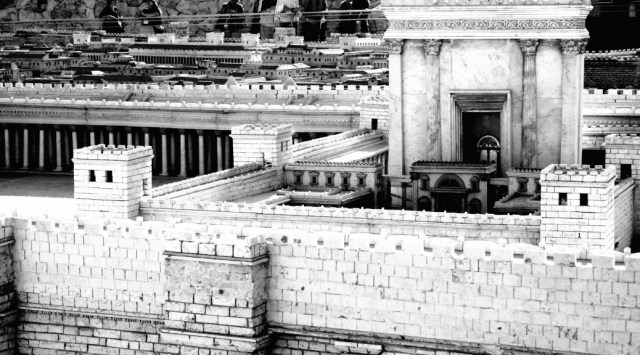
second-jewish-temple-in-jerusalem-1038x576

One of the particulars about Seventh Day Adventist Theology is their beliefs centered around the Sanctuary in Heaven.  There are a lot of details and nuances to this SDA belief, but a critical thesis is that the Sanctuary described in the Torah was a replica of the one that is in heaven.

Below I am going to present some passages from the Holy Bible and others from the Clear Word.  What I want you to look carefully for is whether or not SDA felt it necessary to add this concept into the scripture, or if they actually believe it is already there on it’s own.


The Holy Bible

The Clear Word

“Exactly as I show you concerning the pattern of the tabernacle, and of all its furniture, so you shall make it.” Exodus 25:9 ESV  “I want you to supervise its construction and see that its furnishings are exactly like the plan I’ll show you, which is patterned after things in heaven.  My Sanctuary will have its own measurement.  A hand’s breadth is to be added to each cubit, making a Sanctuary cubit twenty-two inches.”


Wow, looks like this only took one verse for us to see a difference.  The Clear Word adds the phrase “which is pattered after the things in heaven”.  In the Holy Bible we don’t have this at all.  God has simply given a pattern to Moses for the tabernacle just as he did with Noah and the Ark.  Would it be okay to presume that there is also a giant wooden boat in heaven?  The answer to that is no, when the Bible speaks we are to speak and where it is silent we should also be silent.  Instead of doing that SDA have added in an entire concept to scripture.


The Holy Bible

The Clear Word

“And see that you make them after the pattern for them, which is being shown you on the mountain.” Exodus 25:40 ESV “Be very careful that you make everything according to the plan which is patterned after the heavenly Sanctuary I showed you on the mountain.”


Later in the same chapter we see that the Clear Word has added the very same concept yet again.  The bible simply has God giving Moses a pattern and the Clear Word is specifying that patter as modeled after the heavenly sanctuary.  This is really weird, we don’t even see a concept of a heavenly sanctuary in this verse in Exodus.  Where did the author of the Clear Word get that concept from?  If it wasn’t from this verse why did he feel the need to add it in?

My only conclusion is that this is a concession on the part of SDA that the Bible doesn’t teach what they believe.  If they felt that it did then they wouldn’t feel the need to import concepts foreign to the text.


The Holy Bible

The Clear Word

“For Christ has entered, not into holy places made with hands, which are copies of the true things, but into heaven itself, now to appear in the presence of God on our behalf.” Hebrews 9:24 ESV  “That’s why Christ, who is the better Sacrifice, did not stay here to minister in the man-made Sanctuary on earth, which is only a copy of the true one in heaven, but entered heaven itself to appear in the presence of God on our behalf, who is not confined to the Most Holy Place.”


Notice that in the Holy  Bible the grammatical referent for “true things” is the “presence of God”.  This is consistent with Biblical typology where lesser things in the Old Testament pointed to fuller things in the New.  Instead SDA hold to a change of address as being anti-type fulfillment.  What do I mean by that?  Instead of presenting a one time sacrifice for sin in the presence of God at the ascension as antitype fulfillment of the Old Testament ceremonies, SDA present that the ceremonies are simply being done by Christ in heaven to this day.

You can discern where they are doing this in the clear word though by noticing that a new concept of man-made Sanctuary vs. Heavenly Sanctuary is added to the narrative.  This concept isn’t in the Holy Bible at all.

Also the Clear Word has added a clause informing the reader that the Father is not confined to the Most Holy Place.  I would find this funny were it not so sad.  But the fact is that the Bible teaches Christ ascended to the right hand of the Father in heaven.  So it is fair to say that if the Sanctuary in heaven were truly identical to the one on earth, that would logically mean that Christ entered the Most Holy Place at least once before 1844.  Because the Holy Bible and the Clear Word are not teaching the same things this back door had to be added in by the author.


The Holy Bible

The Clear Word

Nor was it to offer himself repeatedly, as the high priest enters the holy places every year with blood not his own” Hebrews 9:25 ESV   In heaven everything is not done exactly the same as it was in the earthly Sanctuary.  On earth the high priest offered a sacrifice for himself every year before he went into the holy places of the Sanctuary to appear in the presence of God with blood that was not his own.”


Notice the past tense referent to the actions being performed in the Holy Bible.  The writer of Hebrews is pointing chronologically backwards in time to speak about what Christ has done in heaven.  In the Clear Word though the tense is changed to the present.  This is because SDA believe that Hebrews 9 is speaking about an on-going ministry by Christ as the High Priest in Heaven that continued until 1844.

To squeeze this into the Bible though they felt the need to alter the tense of the text.  To me this is evidence that SDA themselves don’t believe this verse is teaching the same thing that they believe, otherwise they would not have felt the need to change it.


The Holy Bible

The Clear Word

“For since the law has but a shadow of the good things to come instead of the true form of these realities, it can never, by the same sacrifices that are continually offered every year, make perfect those who draw near.” Hebrews 10:1 ESV “There’s no doubt that the law of Moses with its sacrificial system pointed forward to something better.  The Sanctuary here on earth was only a shadow of the realities of things in heaven.  Even though sacrifices were offered every day, they had no power to make people spiritually perfect.”


Notice that the “Law” in the Holy Bible is changed to the “Law of Moses” in the Clear Word.  You need to understand a little inside SDA Baseball to know why they would do this.  While scripture uses many terms to refer to old testament law in general, SDA distinguish between the Law of Moses and the Ten Commandments.  So the writer of the Clear Word seems to feel the need to point out we are not talking about the Ten Commandments in this passage.  Of course, a Biblical understanding would see the Torah as a single unit.

Also notice that the writer of the Clear Word has again put in his distinction between earthly and heavenly sanctuary.  A concept which is again foreign to the Biblical text.


Conclusion

I can only conclude that even SDA don’t believe that the Bible teaches their heavenly sanctuary doctrine.  The obvious truth is that they are attempting to connect the teachings of Ellen White to the Bible to round out their hermenuetic.  This becomes apparent when you see that it is her concepts they are adding to the Clear Word.  So at the end of the day you have a doctrine which relies on extra biblical revelation for critical theses and assumptions.

 

Posted in Leaving Adventism, The Clear Word | Tagged | 1 Comment

Two Natures of the Believer

heaven_vs_hell_by_subject_delta12-d57sg19


Three older posts that should probably be read before you dig into this one is Justification, Grace, and Repentance.  As this blog digs deeper into theology the reader should expect less and less posts to be stand alone.

A phrase made popular by Martin Luther is that all believers are presently “Saint and Sinner”.  Both of these are a current reality in all of us.  They don’t get along with each other as both push and pull against the other in this life.

The Steadfast Lutherans blog has a nice article on this that I recommend, but I will quote a piece of it:


“Too easily we imagine that we at one time were among the ungodly, but now enjoy our own inherent righteousness, or“sanctification.” We behave as if that’s what keeps us right in God’s eyes. Far too many Christians, even those in the churches who bear Luther’s namesake, ignore the dual reality that the German reformer articulated in his famous dictum that we are simultaneously justified and ungodly: fully sinner and wholly saint at the same time.”

“The Latin phrase “simul iustus et peccator,” that a Christian is“simultaneously justified and a sinner,” is the hinge on which not only Lutheran pastoral care hangs, but Lutheran theology as a whole, especially as regards justification.” – Steadfast Lutherans


Ultimately this understanding comes from the simple acceptance of the entire Word of God on this matter as being true.  There are many passages that teach the total sinlessness  and past tense sanctified nature of the believer.  Also true, is that many teach the sinfulness that still resides within us.

Rather than abrogate one with the other and miss out on half of the council of scripture, it is best to accept both as true and let this confession form the teaching.  Before reading I recommend you take another spin through Romans 6 and 7.  I will pull from the text but you will miss important themes without the full context.


Believers are Presently Perfect


You have heard that sanctification is a process?  This isn’t necessarily an untrue thing depending on what sense you mean that in.  If you’re speaking about the believer as a whole then yes.  But with regards to the ‘new man’ it is not the case at all.  Because of this I prefer words like Christification or Theosis to refer to a process.  The term sanctified I feel is best used to refer to the saint nature of the Believer.


“9 Know ye not that the unrighteous shall not inherit the kingdom of God? Be not deceived: neither fornicators, nor idolaters, nor adulterers, nor effeminate, nor abusers of themselves with mankind, 10 Nor thieves, nor covetous, nor drunkards, nor revilers, nor extortioners, shall inherit the kingdom of God. 11 And such were some of you: but ye are washed, but ye are sanctified, but ye are justified in the name of the Lord Jesus, and by the Spirit of our God.” 1 Cor 6:9-11 KJV  


Above notice that these words are in the past tense.  Not only that, but they are juxtaposed against wicked sins that are no longer present in those being spoken to.  This is a full and completed thing.  He is not pointing to one day when it will take place, but presently speaking that it has.


“1 What shall we say then? Shall we continue in sin, that grace may abound?; 2 God forbid. How shall we, that are dead to sin, live any longer therein?; 3 Know ye not, that so many of us as were baptized into Jesus Christ were baptized into his death?; 4 Therefore we are buried with him by baptism into death: that like as Christ was raised up from the dead by the glory of the Father, even so we also should walk in newness of life.” Rom 6:1-4 KJV 


What I want to point out above is that baptism is a past tense event performed upon the believer by God.  In this act we are literally dead to sin and alive to righteousness.


“4 Wherefore, my brethren, ye also are become dead to the law by the body of Christ; that ye should be married to another, even to him who is raised from the dead, that we should bring forth fruit unto God.; 5 For when we were in the flesh, the motions of sins, which were by the law, did work in our members to bring forth fruit unto death.; 6 But now we are delivered from the law, that being dead wherein we were held; that we should serve in newness of spirit, and not in the oldness of the letter.” Rom 7:4-6 KJV 

“6 Knowing this, that our old man is crucified with him, that the body of sin might be destroyed, that henceforth we should not serve sin.; 7 For he that is dead is freed from sin.; 8 Now if we be dead with Christ, we believe that we shall also live with him:; 9 Knowing that Christ being raised from the dead dieth no more; death hath no more dominion over him. 10 For in that he died, he died unto sin once: but in that he liveth, he liveth unto God.; 11 Likewise reckon ye also yourselves to be dead indeed unto sin, but alive unto God through Jesus Christ our Lord.” Rom 6:6-11 KJV 


become dead to the law

delivered from the law

our old man is crucified

freed from sin

death hath no more dominion over him

dead indeed unto sin

alive unto God


Don’t fight this teaching, it is true.  The Believer is born again in the waters of their baptism.  Holy and pure and dead to sin.  Perfect in every way which Christ commanded (Matt 5:48).  This is the merit Christ has won for us.  An eternal perfection in word thought and deed, a new man created by the power of God unto salvation.


Believers are Presently Sinners


Just as the Bible teaches we are presently sinless, it also teaches us that we are sinners.  Both are true at the exact same time.  Just look at the Apostle Paul:


“This is a faithful saying, and worthy of all acceptation, that Christ Jesus came into the world to save sinners; of whom I am chief.” 1 Tim 1:15 KJV 


The obvious implication of the above verse is that since Paul was a sinner we should expect to be too.  There are some groups out there that teach you are to expect to never sin at all, but look at Paul.  Not only was he a sinner but he called himself the chiefest.  Don’t fight it, it’s in the Bible just roll with it as true.


“7 But if we walk in the light, as he is in the light, we have fellowship one with another, and the blood of Jesus Christ his Son cleanseth us from all sin. If we say that we have no sin, we deceive ourselves, and the truth is not in us. If we confess our sins, he is faithful and just to forgive us our sins, and to cleanse us from all unrighteousness. 10 If we say that we have not sinned, we make him a liar, and his word is not in us.” 1 John 1:7-10 KJV


If you say you are not a sinner then you are a liar.  John is saying this to believers, and he isn’t speaking of them before coming to faith for it speaks of being cleansed by Christ before calling you a sinner and then cleansing you again.  Read the whole chapter and see for yourself.  This is the Christian life of constant forgiveness in the waters of your baptism.


“15 For that which I do I allow not: for what I would, that do I not; but what I hate, that do I.; 16 If then I do that which I would not, I consent unto the law that it is good.; 17 Now then it is no more I that do it, but sin that dwelleth in me.; 18 For I know that in me (that is, in my flesh,) dwelleth no good thing: for to will is present with me; but how to perform that which is good I find not.; 19 For the good that I would I do not: but the evil which I would not, that I do.; 20 Now if I do that I would not, it is no more I that do it, but sin that dwelleth in me.; 21 I find then a law, that, when I would do good, evil is present with me.; 22 For I delight in the law of God after the inward man:; 23 But I see another law in my members, warring against the law of my mind, and bringing me into captivity to the law of sin which is in my members.; 24 O wretched man that I am! who shall deliver me from the body of this death?; 25 I thank God through Jesus Christ our Lord. So then with the mind I myself serve the law of God; but with the flesh the law of sin.” Romans 7:15-25 KJV 


Above Paul speaks of what I can only describe as an internal tug of war between the new man and the old.  The old man pulls and gains victory over the new, and the new pulls harder and gains victory over the old.  This is an on-going struggle in our life.  One side wicked and depraved, another sinless and perfect, each hating the other and seeking the upper hand.


Competition


The Tug of War


Below Paul describes this on-going struggle.  My understanding is that rather than an “either/or” dichotomy scripture is teaching a “both/and”.  At the same time that we are perfect in the eyes of God through the shed blood of Christ there is a struggle in the flesh during this life.  Notice that Paul exhorts us to stand in this struggle and not yield to our wicked desires.


“22 That ye put off concerning the former conversation the old man, which is corrupt according to the deceitful lusts; 23 And be renewed in the spirit of your mind; 24 And that ye put on the new man, which after God is created in righteousness and true holiness.” Eph 4:22-24 KJV 

“12 Let not sin therefore reign in your mortal body, that ye should obey it in the lusts thereof.; 13 Neither yield ye your members as instruments of unrighteousness unto sin: but yield yourselves unto God, as those that are alive from the dead, and your members as instruments of righteousness unto God.; 14 For sin shall not have dominion over you: for ye are not under the law, but under grace.; 15 What then? shall we sin, because we are not under the law, but under grace? God forbid.; 16 Know ye not, that to whom ye yield yourselves servants to obey, his servants ye are to whom ye obey; whether of sin unto death, or of obedience unto righteousness?; 17 But God be thanked, that ye were the servants of sin, but ye have obeyed from the heart that form of doctrine which was delivered you.; 18 Being then made free from sin, ye became the servants of righteousness.; 19 I speak after the manner of men because of the infirmity of your flesh: for as ye have yielded your members servants to uncleanness and to iniquity unto iniquity; even so now yield your members servants to righteousness unto holiness.” Rom 6:12-19 KJV 

It is most simply understood that the Old Man is evil and the New Man is regenerated.  The Old is sown in the earth upon our death and at that time this tug of war will be over.  In the mean time each nature fights on.

It is my opinion that this struggle is for our own good.  In this fight we must continually turn to Christ in faith, remember our baptism, seek absolution, hear the preaching of law & gospel, and receive the body and blood of Christ in bread and wine.

At the end of the day I find this understanding of scripture to be both clarifying and a great comfort.  The fight is real and it is not made less important, but knowing that salvation isn’t hinged upon temporal success or failure in fighting the Old Man lets one place this burden on Christ in faith.

Posted in Nature of Man | Tagged | 3 Comments

The Lie Within and The Lie Without: The Holy Trinity

lie


This is my second post in a series on the lies of Seventh Day Adventism.  These are lies that the SDA Church tells both to their own members and to the public about what they believe.  This week I am going to present the SDA doctrine of the Trinity.

Though Seventh Day Adventists claim to believe in the Trinity, this isn’t actually true.  They do take the word but the redefine it into something else.  Why the dishonestly?  If you don’t believe in it just say so.  To prove my case I am going to first present the Seventh Day Adventist confession of the doctrine they call the Trinity.


“There is one God: Father, Son, and Holy Spirit, a unity of three coeternal Persons. God is immortal, all-powerful, all-knowing, above all, and ever present. He is infinite and beyond human comprehension, yet known through His self-revelation. God, who is love, is forever worthy of worship, adoration, and service by the whole creation.” – SDA Fundamental Beliefs


The word Trinity isn’t actually found in the Bible.  It is a name used to confess the Biblical teaching of three clear theses about the nature of God.

  1. One Being
  2. Three Persons
  3. Same Substance

All three of these are critical and can be found in an confession of the Holy Trinity.  This is a definitional aspect of the doctrine, if you remove that you don’t have the doctrine anymore.  The teaching of the Trinity can be found in the earliest of Church Fathers as well as in the pages of the Bible.  To demonstrate this I am going to post a few Christian confessions of the Holy Trinity so that you can plainly see the difference I am talking about.

The most clear confession of the Trinity though ever was formulated in the Athanasian Creed to fight arianism in the fourth century.


we worship one God in Trinity, and Trinity in Unity; Neither confounding the Persons, nor dividing the Substance. For there is one Person of the Father, another of the Son, and another of the Holy Ghost. But the Godhead of the Father, of the Son, and of the Holy Ghost is all one: the glory equal, the majesty coeternal. Such as the Father is, such is the Son, and such is the Holy Ghost. The Father uncreated, the Son uncreated, and the Holy Ghost uncreated. The Father incomprehensible, the Son incomprehensible, and the Holy Ghost incomprehensible. The Father eternal, the Son eternal, and the Holy Ghost eternal. And yet they are not three Eternals, but one Eternal. As there are not three Uncreated nor three Incomprehensibles, but one Uncreated and one Incomprehensible. So likewise the Father is almighty, the Son almighty, and the Holy Ghost almighty. And yet they are not three Almighties, but one Almighty. So the Father is God, the Son is God, and the Holy Ghost is God. And yet they are not three Gods, but one God. So likewise the Father is Lord, the Son Lord, and the Holy Ghost Lord. And yet not three Lords, but one Lord” – Excerpt from the Athanasian Creed


Follow the link above to read the whole creed if you like.  I think the reason most are so confused by the doctrine of the Trinity is that they don’t take the time to look at a solid Biblical confession of it.  It is a confession derived from accepting all scriptures as true.  You can find a Biblical presentation I have done in the past on this doctrine HERE.

Below is another confession of the Trinity put together by the Synod that I attend.  See for yourself, I will highlight where the three theses come out.


“On the basis of the Holy Scriptures we teach the sublime article of the Holy Trinity; that is, we teach that the one true God, Deut. 6:4; 1 Cor. 8:4, is the Father and the Son and the Holy Ghost, three distinct persons, but of one and the same divine essence, equal in power, equal in eternity, equal in majesty, because each person possesses the one divine essence entire, Col. 2:9, Matt. 28:19. We hold that all teachers and communions that deny the doctrine of the Holy Trinity are outside the pale of the Christian Church. The Triune God is the God who is gracious to man, John 3:16-18, 1 Cor. 12:3. Since the Fall, no man can believe in the “fatherhood” of God except he believe in the eternal Son of God, who became man and reconciled us to God by His vicarious satisfaction, 1 John 2:23; John 14:6. Hence we warn against Unitarianism, which in our country has to a great extent impenetrated the sects and is being spread particularly also through the influence of the lodges.” LCMS (Lutheran)


And below is another clear confession of the Holy Trinity put out by the Southern Baptist Convention.


“There is one and only one living and true God. …The eternal triune God reveals Himself to us as Father, Son and Holy Spirit, with distinct personal attributes, but without division of nature, essence, or being.” Southern Baptist Convention


I could go on, look up formal orthodox confessions of the Holy Trinity yourself on other non-SDA churches and you will see that the only ones close to the SDA belief are Mormons , Oneness Pentacostals, and Jehovah’s Witnesses.  This is because anti-trinitarian groups do not hold to the three theses I mentioned above.  They typically select one that they favor and abrogate the others with it.


Why do SDA Deny the Trinity?

I don’t think simply saying you believe in the Trinity cuts it.  You have to confess it in line with the actual definition of the doctrine.  If you tried to do this in medicine it would be the same thing as prescribing a heart surgery and performing a knee replacement.  Why would SDA do this?  Why is it hard for them to confess all three theses in a clear fashion?  Each of them is clearly taught in the Bible, and SDA want to be accepted by the evangelical community.  So why hold out on this?

The reason is that Ellen White and many of the the early SDA pioneers were not Trinitarian at all.  They openly confessed Arianism.  Below are some brief excerpts from the writings of Ellen White that demonstrate my point:

“The Eternal Father, the unchangeable one, gave his only begotten Son, tore from his bosom Him who was made in the express image of his person, and sent him down to earth to reveal how greatly he loved mankind.” EGW, Advent Review and Sabbath Herald, 07-09-1895, “The Duty of the Minister and the People,” Par. 14.

“The exaltation of the Son of God as equal with the Father was represented as an injustice to Lucifer, who, it was claimed, was also entitled to reverence and honor.” EGW, Patriarchs and Prophets, p. 37

This doesn’t even address the most obvious Trinity denial in Ellen White, and that is the heavenly narratives she writes in her books.  Anyone who has read them knows that she has Jesus and the Father walking around heaven in separate bodies, conversing with angels, and interacting with the course of events like characters in a play.  This is very similar to the Arian accounts given by Joseph Smith and other false prophets.

Since SDA hold to the “prophetic Authority” of Ellen White they have to hold to her teachings.  Quotes like the ones I presented above are of course conveniently re-interpreted.  But since the narratives of her books cannot be re-interpreted to incorporate things like “same substance” SDA preachers will frequently argue for a God who is one in purpose through love, like a marriage.  Because of this, it would be more accurate to say SDA believe in Tritheism.

Conclusion

Don’t kid yourself, SDA theologians are educated men.  They have read the Bible and they have read the ancient creedal definitions of the Trinity.  If they honestly just don’t agree with the interpretation and want to confess a different belief, then why use the word “Trinity”?  It’s a free country, other groups such as Mormons, Oneness Pentacostals,  and Jehovah’s Witnesses openly deny the Trinity.

Seventh-Day Adventist’s on the other hand have chosen to use the word “Trinity” but define it in a fundamentally different way.  That is dishonest to themselves and to the public, this much is fact.  Why the deception?

In my opinion, the reason they do this is because they want to be viewed as evangelical by the Body of Christ.  Such a distinction opens their playing field and makes it easier to bring in new converts.  Also, they don’t want SDA laity to know their Church denies the Trinity otherwise many would analyze the Churches teachings with greater scrutiny.  When a core confession of the Church on the very nature of God is nothing more than a political statement what does that reveal about the deeper issues of deception at play?  If the root of belief itself is rotten how can the fruit be wholesome?

Posted in Leaving Adventism, The Fundamental Beliefs | Tagged , | 4 Comments

Clear Word vs Bible: Visions of Daniel

aramaean2


This is my next post in a series on comparing the Clear Word to the Holy Bible.  In this series my goal is to demonstrate using the words of the Bible exactly how and where SDA intend for you to imagine these verses differently than they actually read on their own.  The brainwashing in this starts from youth and can be very difficult to realize when it has come over you.  In reviewing these one at a time I hope that the reader will be able to see for themselves what they have been taught to read into the text.

If you want a more comprehensive breakdown of Daniel 8 I recommend you read the work done by Dale Ratzlaff on this.  You can find it HERE.  You can also find all my work on the Investigative Judgement HERE.  This post will only be addressing a few key texts in Daniel and how the SDA changed them in the Clear Word.


The Holy Bible

The Clear Word

And he said to me, “For 2,300 evenings and mornings. Then the sanctuary shall be restored to its rightful state.”Daniel 8:14 ESV   “He answered, “After two thousand, three hundred prophetic days (which represent actual years), God will restore the truth about the heavenly Sanctuary to its rightful place.  Then the process of judgement will begin of which the yearly cleansing of the earthly Sanctuary was a type, and God will vindicate His people.”


I had a hard time making my highlights relevant as the SDA added a great deal into this verse.  Where did they get the concept of the heavenly sanctuary out of Daniel 8:14?  Would it not be more plain to read it as the Earthly Sanctuary?  If they do believe this is talking about the heavenly sanctuary why did they have to add that word in?

Where did they get a narrative explaining the interpretation of evenings and mornings as prophetic days representing actual years?  That isn’t in the Holy Bible at all.  Why add that if the meaning was already clear?  What the heck is up with this Bible fan-fiction about a process of judgement etc.  That is a whole line of thought completely foreign to the Biblical text!

This verse in Daniel 8 is the heart and soul of Adventist theology.  Every distinctive comes back to and flows out of the interpretation of this verse.  See for yourself above how much has to be eisegeted into the passage for their beliefs to be reflected in it.  Once done the length is more than doubled.  Since the core of their theology is hinged on a fabrication of concepts foreign to this verse what do you think are the ramifications when that is extrapolated out to every other doctrine which connects to the Investigative Judgement?

Logically, since the root of Adventist theology is rotten here in Daniel 8:14 so is the fruit produced by it.


The Holy Bible

The Clear Word

“The vision of the evenings and the mornings that has been told is true, but seal up the vision, for it refers to many days from now.” Daniel 8:26 ESV “The vision having to do with the three-and-a-half years, each day representing a year, is true.  But for now, you don’t need to understand more than what I have told you because it applies to the time of the end, far int the future.”


Notice that the writer of the clear word for some reason felt the need to define evenings and mornings as three and a half years with each day representing a year.  Those words are not found in the Holy Bible at all.  In addition to that sealing up the vision is changed to “for now, you don’t need to understand“.  Why would he take a “sealing” until the time of the end (Daniel 8:17) and change it to a temporary delay of information?  The answer to this will become more apparent when we analyze another verse that SDA changed in Daniel 9.


The Holy Bible

The Clear Word

“21 while I was speaking in prayer, the man Gabriel, whom I had seen in the vision at the first, came to me in swift flight at the time of the evening sacrifice. ; 22 He made me understand, speaking with me and saying, “O Daniel, I have now come out to give you insight and understanding.” Daniel 9:21-22 ESV “While I was praying and confessing my sins and the sins of my people and pleading with the Lord on behalf of Jerusalem and His holy mountain, Gabriel quickly flew to my side and help me.  He was the one who had talked to me before and helped me to better understand parts of the vision.  It was about the time of evening worship when he arrived.”


Notice in the Holy Bible Daniel is identifying the angel that he had seen earlier.  The “vision at the first” is simply a referent to the first vision he received in this series, starting all the way back to Daniel 7.  However, the Clear Word softens this so that it can be seen as a referent to Chapter 8, their argument is that Gabriel is unsealing the vision that had just been given.

The reason they need this is so that they can tie the start date of the so called 2300 year prophecy to the 490 year prophecy.  It is a highly dubious assumption that is not conveyed in the Biblical narrative.  But it is imperative for SDA theology because a hard start date isn’t given for the time prophecy in Daniel 8.

It is apparent to me that the author of the Clear Word also doesn’t believe SDA teaching can be found in the text connecting Daniel 8 to 9.  If so, he wouldn’t have felt the need to tweak the text to facilitate this connection.  And if you have been reading my series on this you have likely seen that this seems to be a pattern with every SDA distinctive in the Clear Word.

Posted in Leaving Adventism, The Clear Word, Uncategorized | Tagged | Leave a comment

Saved by Childbearing

baby


This verse is not only one of the more challenging ones due to a lack of clarity, but it is also one of the most commonly abused passages in the Bible.  Due to the former I intentionally do not derive any conclusions from it.  But for the sake of study I am going to attempt to present what I believe this passage is teaching.

As in times past I am going to present the passage, relevant commentary, and then after that I will weigh in with my own analysis.


“12 I do not permit a woman to teach or to exercise authority over a man; rather, she is to remain quiet. ; 13 For Adam was formed first, then Eve; ; 14 and Adam was not deceived, but the woman was deceived and became a transgressor. ; 15 Yet she will be saved through childbearing—if they continue in faith and love and holiness, with self-control.” 1 Tim 2:12-15 ESV 


“This verse has been misinterpreted to mean that any woman who bears a child is automatically saved by virtue of the childbearing. First Timothy 2:15 is the conclusion of Paul’s teaching concerning the roles of men and women in the church which he began in verse 11. It is a notoriously difficult verse with a myriad of potential interpretations. “But women will be saved through childbearing—if they continue in faith, love and holiness with propriety.” As always, the immediate context should serve in determining the precise meaning of a text. The preceding verse speaks of Eve’s deception at the Fall and the subsequent consequences.

In Genesis 3:16, God curses Eve with, “I will greatly increase your pains in childbearing; with pain you will give birth to children.” This may seem to indicate that Paul meant that women would be physically preserved through the pain of childbirth. However, the verb used here in 1 Timothy 2:15 (soqhsetai) always carries the meaning of spiritual salvation in Paul’s writings. Further, Christian women still experience pain in childbirth, and sometimes die as a result of the childbearing process. If physical deliverance is the meaning of verse 15, then that would indicate that Christian women who die in childbirth perhaps did not “continue in faith, love and holiness with propriety.”

A second option would be that women are spiritually saved through childbearing. This obviously cannot be the case, for it would contradict the consistent message of salvation by grace through faith in Christ (Ephesians 2:8–9). A third possibility is that the word “childbearing” (teknogonias) refers to the birth of Christ, potentially a link to Genesis 3:15 and the promise of a Seed to come through the woman. This is unlikely, considering Paul nowhere else refers to the birth of Christ in this manner. A reference to the incarnation seems dubious, considering the context and the subject at hand.

The most likely interpretation that takes into account the immediate context is that, rather than abandoning their intended roles by demanding teaching and authoritative positions in the church, women will find true fulfillment through childbearing. Paul is saying God calls women to be faithful, helpful wives, raising children to love and worship God and managing the household wisely (1 Timothy 5:14; Titus 2:3–5). While this view is not without its difficulties, it appears to harmonize best with the context and with the remainder of Scripture.” – GotQuestions


As he has done in the past, a friend of mine named Reese Currie offered his contribution to this passage that I find very helpful so I will include it with the commentary.


“I view this passage as being primarily about the different roles pastors and teachers and women play in spreading the word and the reason why. Of course you have women who want to contribute to the preaching, and perhaps then as now, some wanted to be pastors. Paul was explaining that the pastoral role is for men, but women contributed to the preaching of the Word by providing through childbirth not only the hearers but the Savior Himself.

One could also perhaps view it as Eve referent. The first prophecy of Christ in the Bible is at Genesis 3:15 speaking of “her seed.” Also she only received the name Eve (meaning, “Living”) after this prophecy, because she was the mother of all living. This is true not just in the physical sense but also spiritually, everyone living and “not dying” through salvation in Christ. But how could we ask “if” she would remain in the faith when she had died thousands of years before?

The early Greek manuscripts are all scripto continua to save writing material, no spaces or punctuation. In a strictly literal translation with the words not rearranged for our language, you have “Adam for first was molded thereafter Eve and Adam not seduced the yet woman being seduced in trangression has become shall be saved yet through the offspring-parenting if ever they should be remaining in belief and love and hallowing with sanity.” The “she” before “shall be saved” is not in the Greek.

It’s even harder to take hard lines on the interpretation of that text when you see it like that. This is where we need to opt for interpreting a difficult text through other things the Bible says more plainly. So, is it about Mary, or Eve (the person it seems to be about), or the roles that can be deduced from this passage? All three have Scriptural support. I imagine it means just one thing but there’s not too much harm in not knowing what it is precisely as long as we don’t read in something it *can’t* mean based on other passages. It can’t mean works salvation through the bearing of children. However, God gives children and one of those children, the only One born of only one human parent, a female, was the Saviour.”


What does it Mean?

Let’s take a look at the verse one more time and I will highlight the area that I think tends to get overlooked.

“12 I do not permit a woman to teach or to exercise authority over a man; rather, she is to remain quiet. ; 13 For Adam was formed first, then Eve; ; 14 and Adam was not deceived, but the woman was deceived and became a transgressor. ; 15 Yet she will be saved through childbearing—if they continue in faith and love and holiness, with self-control.” 1 Tim 2:12-15 ESV

I understand verse 12 as speaking to the Biblical Office of Pastor that Paul has been building up to for his exposition in the third chapter rather than a general admonition that applies to everything.  What is important in this passage though is this concept of salvation by Childbirth.  Does one have to have children to be saved?  What if a woman died in Childbirth? Does that mean she is going to hell?

Of course it doesn’t.  Paul presents Childbirth as something that comes from continuing in Faith.  Through Faith alone are sinners  Justified by God’s Grace.

“8 For by grace you have been saved through faith. And this is not your own doing; it is the gift of God, ; 9 not a result of works, so that no one may boast.” Eph 2:8-9 ESV 

As I presented in my post on Faith, it is something given to us by God which we should expect verbs to come from.  Verbs like belief, love, holiness, self control, and fulfilling one’s vocation in life.  For a woman, one of the blessings of her vocation is bearing children.  Obviously, that isn’t something a man can do.  Even in the verse in 1 Timothy Paul presents such verbs as coming from a root of Faith for it is the first thing he says they must continue in.

Both men and women continue in faith by receiving it from God as a gift.  This is something that I present in my post on Justification.  If you haven’t noticed, I mostly handle this verse hermeneutically.  There are other interpretations out there but this is the one that I believe is correct.

Many do try to argue that Paul is speaking of the birth of Christ, thus meaning the woman here would literally be Mary.  While I really do like that rendering I don’t think it fits very well in the context.  That said, since Paul draws each verb out of faith like petals flowing out of a stem of a flower we are left with a picture that leaves this passage consistent with sola-fide.

“10 For we are his workmanship, created in Christ Jesus for good works, which God prepared beforehand, that we should walk in them.” Eph 2:10 ESV 

How do I think a woman today should read these passages?  I think they should understand it as God’s calling.  Be a good sister, wife, mother, friend, worker, etc.  There are plenty of other passages issuing a similar calling to men too.  That said, it’s important to distinguish fruit from root.  It is not the fruit of salvation that saves us, but faith.

Posted in Difficult Passages | Tagged | 1 Comment

The Lie Within and The Lie Without: The Holy Scriptures


3604c66


This is my first post in a series on the Fundamental Beliefs and traditions of the Seventh Day Adventists.  Specifically I will be critically analyzing many of the stated and historic beliefs that SDA claim to hold to.

Unlike the confessions and creeds found in thinking Christianity, what we have in Adventism is a series of political statements, that in my opinion are carefully crafted lies to those within and without Adventism.  Too harsh?  I don’t come to this conclusion in a vacuum.  Keep reading as this series grows and make up your own mind.


The Holy Scriptures

“The Holy Scriptures, Old and New Testaments, are the written Word of God, given by divine inspiration. The inspired authors spoke and wrote as they were moved by the Holy Spirit. In this Word, God has committed to humanity the knowledge necessary for salvation. The Holy Scriptures are the supreme, authoritative, and the infallible revelation of His will. They are the standard of character, the test of experience, the definitive revealer of doctrines, and the trustworthy record of God’s acts in history.”


Old and New Testaments, are the written Word of God


My first question here is “which old testament?” and “which new testament?”.  Are we talking about those found in the Clear Word?  Are we talking about the King James Only?  What about the original manuscripts?  Textus Receptus or Critical Text?  The Message Paraphrase?  It doesn’t say.

If they simply mean a general confession of the teachings that doesn’t recognize the words as inspired, or something of that nature, then say so.  But instead it leaves this open and I see no reason how educated doctors of theology could have done this by accident.  Other denominations have confessions much more specific than this and they could have copied and pasted if they didn’t want to expend the energy typing it out.


“spoke and wrote as they were moved by the Holy Spirit”

This is a fair quote of scripture that has a wide range of interpretation when isolated from context.  Thus, it begs the question what do they mean by this?  Is every word inspired or did God just give the writers an emotional impression that they were free to relay as they saw fit?

In my opinion this is worded so that the reader can bring to it whatever it is they want to see.  On the one hand a liberal or conservative Adventist can read it as they prefer.  On the other hand, a concerned evangelist might get the impression that SDA believe in the Bible as they read their own understanding into the statement.  In doing this the SDA have lied to their own people and to those outside of their bubble.

Following this you have a bunch of law statements.  You are going to receive the “knowledge” you need for salvation and the example of God’s character etc.  It’s not that I object to these statements on face value, it’s what they are leaving out that I object to.  In the Bible we receive Law and Gospel.  Both are true and they speak a different message.  The law sets the standard you must personally achieve to be saved:

“Be ye therefore perfect, even as your Father which is in heaven is perfect.” Matt 5:48 KJV 

“Cursed be he that confirmeth not all the words of this law to do them. And all the people shall say, Amen.” Deu 27:26 KJV 

Of course, we all fail to meet that standard so praise God for the Gospel, which is also taught in scripture and should not be left out.  Jesus has fulfilled these things and we need only faith given by God to rest in his completed work.

“And be found in him, not having mine own righteousness, which is of the law, but that which is through the faith of Christ, the righteousness which is of God by faith” Php 3:9 KJV 

“For he hath made him to be sin for us, who knew no sin; that we might be made the righteousness of God in him.” 2 Cor 5:21 KJV 

The Biblical teachings of law and gospel are pervasive throughout the entire canon.  It’s in the narrative, it’s in the prophecy, it’s in the teachings, it’s in everything.  Furthermore a distinction has to be made between them because they are oil and water.  You can’t be saved by the law because you cannot be perfect, all have sinned.

“As it is written, There is none righteous, no, not one:; 11 There is none that understandeth, there is none that seeketh after God.; 12 They are all gone out of the way, they are together become unprofitable; there is none that doeth good, no, not one. Rom 3:10-12 KJV 

Also, the Gospel has no meaning without the law.  Why do you need to be saved by Jesus if there is nothing to be saved from?  If you only confess one half of this dichotomy then you lose both.

Conclusion

In this confession of scripture the SDA have failed to clearly define what exactly is inspired and what exactly inspiration means to them.  To fill the gaps one is logically going to have to turn to another source.  Furthermore, they have only given the reader half of a view of scripture.  They are only seeing the law and in this confession the gospel is not communicated.  Even when it mentions salvation it only conveys it in a context of law.

This is very sad, and at the end of the day you are left with a political statement meant to be interpreted as the reader wills rather than a confessional statement of clarity and faith.  Political statements are appropriate for politicians and institutions of the flesh.  It is shameful that an organization claiming to represent Christ’s Church, and calls it’s conference the highest authority on planet earth, has failed so miserably in proclaiming a truthful confession of faith to its own flock.  Instead we are left with a lie intended to mislead both those within to keep them in and those without to keep them from looking closer.

Posted in Leaving Adventism, The Fundamental Beliefs, Uncategorized | Tagged , | 2 Comments

Clear Word vs Bible: Drinking Wine


Wow, looks like they felt the need to delete something over there on that verse to the right?  Why would they just axe that out if they didn’t feel this verse contradicted SDA teaching?  Does it make SDA uncomfortable to read a verse directing them to drink wine with a merry heart?  Is that really such a hard thing on the eyes?


Conclusion


If you are a current or former SDA who has always abstained from wine because you thought the Bible said you had to know that this is a made up law.  Clearly, to even support such a view one has to add and remove from the Bible to do it (Rev 22:18-19).


Posted in Leaving Adventism, The Clear Word | Tagged | 15 Comments

Clear Word vs Bible: Predestination

creatoin-of-man


When I was growing up Seventh Day Adventist the word ‘Predestination’ was out of bounds theologically, and was generally scoffed at as a pagan concept.  It was basically a four letter word that you are supposed to despise as something only an unloving God would do.  Keep in mind, I do not mean Calvinism, I simply mean the Biblical teaching of predestination and the sovereign free will of God.  SDA are simply against the concept of God predestining anything.  The reason is because this takes all of the meaning out of the investigative judgement.

It is fair to ask, do SDA actually believe that rejecting Predestination is Biblical?  Or did they feel the need to alter their special Bible, the Clear Word, to help bolster their position?

To find out I am going to bring up a sample passages in the Bible speaking on the topic and compare.


The Holy Bible

The Clear Word

“No one can come to me unless the Father who sent me draws him. And I will raise him up on the last day.” John 6:44 ESV  I’m not here to force you to follow me.  No one can really follow me unless he first responds to my Father who is drawing him to me.  And I will resurrect him at the end of time.”


In the verse on the left you see a good prooftext for Biblical Monergism.  That is, God calling and saving you by his power and Grace.  On the right you have synergism, that is, one has to participate in their own salvation.  They have to help God out, otherwise his Grace is not sufficient to save.

Look closely though, notice that the synergistic teaching is added by the Clear Word.  We have this language speaking to not being forced, and having to first respond before being drawn.  These concepts are added lock stock and barrel into the text by the Clear Word.  Even a Classical Arminian Theologian would scoff at this addition to the text.  The language the SDA have added here is closer to Open Theism than it is Arminianism.

The Holy Bible

The Clear Word

“as a plan for the fullness of time, to unite all things in him, things in heaven and things on earth. ;  In him we have obtained an inheritance, having been predestined according to the purpose of him who works all things according to the counsel of his willEph 1:10-11 ESV “When the right time came, He carried out His plan, the goal of which is to bring together all things in heaven and earth under the headship of Christ.  It is through Christ that we are included in God’s plan and are destined for heaven, which is His purpose and will for all who accept His Son.”


Notice that on the left The Holy Bible speaks to an individual predestination and on the right in the Clear Word we have a general one in the Body of Christ.  On the left it is God who “works all things” and in the SDA Bible is its just a “goal” he is trying to work out.  The God being taught in the Holy Bible has power over his creation and the one in the Clear Word is playing a game of chess or something.

If the SDA really believe that God isn’t free or powerful enough to work his creation to his will then why did they feel the need to alter the text of their Clear Word Bible to accommodate this view?  Why couldn’t they leave the Biblical text as it?


The Holy Bible

The Clear Word

to do whatever your hand and your plan had predestined to take place.” Acts 4:28 ESV  “You knew ahead of time that this would happen just as you had said.”


Notice in the Holy Bible we see God working his own will out in human history.  Where as in the Clear Word we see the theological equivalent of betting on a rigged horse race.


The Holy Bible

The Clear Word

For those whom he foreknew he also predestined to be conformed to the image of his Son, in order that he might be the firstborn among many brothers. ; And those whom he predestined he also called, and those whom he called he also justified, and those whom he justified he also glorified.” Rom 8:29-30 ESV  “God knows everyone born into this world.  His plan is that all of us should be like His Son.  This makes His Son the firstborn in God’s family, making us all brother and sisters in Christ.  God has predestined those who believe in Him to be like His Son, so He gives us all the help we need.  Therefor, whoever responds to God’s call and believes in His Son, He justifies; and those who He justifies, He intends to glorify.”


The passage I have presented above is called the Golden Chain.  It is a very famous passage in scripture and it is worth your own personal devotional study and reflection separate from this blog post.

Notice in the Holy Bible that individuals are singled out as foreknown and then predestined in a past tense perspective to the first coming of Christ.  Since this statement was written after the ascension it follows logically that the referent is believers who lived before and after the cross.  Thus the predestination occurred before anyone was created.  Then the Holy Bible specifically names and singles out each one as “called”, “justified”, and “glorified”.  There is zero implication that any names are ever removed from the Elect.

In the Clear Word though we find the teaching has been completely flipped around and new concepts have been added into the passage.  Notice first that God has only predestined those who currently believe in him and adds a synergistic process of God helping those predestined become like him rather than an act strictly performed by God almighty.

Worse still a “response” clause is added as a contingent upon potentially receiving justification.  And then to top it all off he only “intends” to “glorify”!

The God in the Holy Bible and the one in the Clear Word are not the same.  The God taught in the Holy Bible is free and sovereign over his creation.  The pagan deity in the Clear Word just doesn’t seem to be able to pull anything off without the help of his creation.

Posted in Leaving Adventism, The Clear Word | Tagged | 5 Comments

Baptism by Holy Spirit and Fire

4733379-7853439546-zamok

There was a brief period of time where I studied Pentacostal Theology.  Even if you have not studied this before I am sure you have heard about Baptism by Holy Spirit and by Fire.  In Pentacostal Theology they teach three baptisms.


  1. Baptism by Water
  2. Baptism by the Holy Spirit
  3. Baptism by Fire


Pentacostal theology will deviate on how the latter two on that list are to be understood as  teachings vary from sect to sect.  But what is consistent is that they follow the Baptist view of Baptism by water, that means they believe in immersion only and that Trinitarian water baptism totally does nothing at all.

At some point after that, in Pentacostal Theology, they teach that you should expect an overwhelming experience after you have cleansed your life of secret sins.  Specifically,  you are expected to receive an overwhelming burning of the bosom followed by a manifestation of speaking in tongues and uncontrollable body movements.  Some will call this Baptism of the Spirit, other will distinguish between different manifestations of this experience and call one Baptism of the Spirit and the other Baptism of Fire.

In continuing my work on Cessationism I am going to present some of the key passages that they use for this.  I am also going to demonstrate why I believe it is not theologically correct to teach multiple baptisms.


Baptism by Fire

The key passage used to teach baptism by fire is the narrative with John the Baptist at the beginning of each of the Gospels.  Notice that John juxtaposes his baptism against that of Christ.

“11 I baptize you with water for repentance, but he who is coming after me is mightier than I, whose sandals I am not worthy to carry. He will baptize you with the Holy Spirit and fire. ; 12 His winnowing fork is in his hand, and he will clear his threshing floor and gather his wheat into the barn, but the chaff he will burn with unquenchable fire.” Matt 3:11-12 ESV 

Read the above verse carefully, notice that if you keep reading past verse 11 you see that John defines baptism of fire as the unquenchable fire that the chaff is thrown into.


“7 And he preached, saying, “After me comes he who is mightier than I, the strap of whose sandals I am not worthy to stoop down and untie. ; 8 I have baptized you with water, but he will baptize you with the Holy Spirit.” Mark 1:7-8 ESV


In the above Passage Mark saw fit to stop after the Baptism of the Holy Spirit.  Baptism of fire and the associated imagery of Hell are left out.  This is why I associate baptism of fire with hell, if it was also associated with the Baptism of the Holy Spirit then we would expect to see the hell narrative here but we don’t.

“15 As the people were in expectation, and all were questioning in their hearts concerning John, whether he might be the Christ, ; 16 John answered them all, saying, “I baptize you with water, but he who is mightier than I is coming, the strap of whose sandals I am not worthy to untie. He will baptize you with the Holy Spirit and fire. ; 17 His winnowing fork is in his hand, to clear his threshing floor and to gather the wheat into his barn, but the chaff he will burn with unquenchable fire.” Luke 3:15-17 ESV 

Here in Luke we have a very similar narrative, and it includes the baptism of fire.  Also, notice the hell language is back.

“29 The next day he saw Jesus coming toward him, and said, “Behold, the Lamb of God, who takes away the sin of the world! ; 30 This is he of whom I said, ‘After me comes a man who ranks before me, because he was before me.’ ; 31 I myself did not know him, but for this purpose I came baptizing with water, that he might be revealed to Israel.” ; 32 And John bore witness: “I saw the Spirit descend from heaven like a dove, and it remained on him. ; 33 I myself did not know him, but he who sent me to baptize with water said to me, ‘He on whom you see the Spirit descend and remain, this is he who baptizes with the Holy Spirit.’ ; 34 And I have seen and have borne witness that this is the Son of God.” John 1:29-34 ESV 

Notice above that the Baptism of the Holy Spirit is clarified as associated with the distinctive features of Christs Baptism.  We see the presence of the Father and the Son with the proceeding of the Spirit upon Christ.  This is the Baptism of the Holy Spirit, notice that the fire and hell language are not present.

Simply put, baptism of fire has nothing to do with speaking in tongues or wiggling around.  Instead means going to Hell.  You don’t want to experience that.  The Baptism of the Holy Spirit is what saves us so that we don’t get baptized in fire.  Notice the similar chaff and fire language in the below parable.

“24 He put another parable before them, saying, “The kingdom of heaven may be compared to a man who sowed good seed in his field, ; 25 but while his men were sleeping, his enemy came and sowed weeds among the wheat and went away. ; 26 So when the plants came up and bore grain, then the weeds appeared also. ; 27 And the servants of the master of the house came and said to him, ‘Master, did you not sow good seed in your field? How then does it have weeds?’ ; 28 He said to them, ‘An enemy has done this.’ So the servants said to him, ‘Then do you want us to go and gather them?’ ; 29 But he said, ‘No, lest in gathering the weeds you root up the wheat along with them. ; 30 Let both grow together until the harvest, and at harvest time I will tell the reapers, Gather the weeds first and bind them in bundles to be burned, but gather the wheat into my barn.” Matt 13:24-30 ESV 

Baptism by the Holy Spirit

Something to understand about the Baptism of John by water and repentance is that it was type and shadow of the Baptism in Christ.  While this is apparent in the texts I have already presented, another place in which it becomes more clear is this conversation we see take place later after Pentecost.

“1 And it happened that while Apollos was at Corinth, Paul passed through the inland country and came to Ephesus. There he found some disciples. ; 2 And he said to them, “Did you receive the Holy Spirit when you believed?” And they said, “No, we have not even heard that there is a Holy Spirit.” ; 3 And he said, “Into what then were you baptized?” They said, “Into John’s baptism.” ; 4 And Paul said, “John baptized with the baptism of repentance, telling the people to believe in the one who was to come after him, that is, Jesus.” 5 On hearing this, they were baptized in the name of the Lord Jesus.” Acts 19:1-5 ESV 

The Baptism of John was more similar to the proselyte baptisms done in the first century.  When a gentile would convert to Judaism they would have to be baptized.  What was significant about John’s baptism is that he performed it on natural born Jews already in the mosaic covenant.  This signified that they needed cleansing as well.  But this was only type and shadow meant to instruct and point to Christ (1).  The idea is that the Jews needed Jesus as much as the Gentiles.


John’s water baptism is irrelevant today, Jesus has already come, died for sin, and is risen.  Today we are Baptized into Christ.  There are not three or even two Baptisms, there is only one.


“4 There is one body and one Spirit—just as you were called to the one hope that belongs to your call— ; 5 one Lord, one faith, one baptism” Eph 4:4-5 ESV


In this one baptism we are promised many gifts.  Specifically we are taught that in such a simple thing as baptism by the working of God, the Holy Spirit is poured out on us.


In him also you were circumcised with a circumcision made without hands, by putting off the body of the flesh, by the circumcision of Christ, having been buried with him in baptism, in which you were also raised with him through faith in the powerful working of God, who raised him from the dead. Colossians 2:11-12 ESV

But when the goodness and loving kindness of God our Savior appeared, he saved us, not because of works done by us in righteousness, but according to his own mercy, by the washing of regeneration and renewal of the Holy Spirit, whom he poured out on us richly through Jesus Christ our Savior, so that being justified by his grace we might become heirs according to the hope of eternal life. Titus 3:4-7 ESV


Some try to argue that the process being spoken above is a spiritual baptism that New Covenant water Baptism is only symbolic of.  The problem is that this teaches two baptisms when (Eph 4:5) teaches there is only one.

To address this, some I have spoken with say that a water Trinitarian Baptism isn’t really baptism at all, and it is only being born again in new obedience and repentance that is the true Biblical Baptism.  The error this makes is that Jesus himself refers to water Trinitarian Baptism as “baptism”.  Thus, since there is only one baptism, this is it:


“Go therefore and make disciples of all nationsbaptizing them in the name of the Father and of the Son and of the Holy Spirit” Matt 28:19 ESV


coed-baby-shower-games


It’s not the water in and of itself that accomplishes such things, but water combined with the Word of God as the Holy Spirit performs his work upon the one being baptized.  There is no greater image of Grace than this, one receives this blessing with no work of themselves.


“Husbands, love your wives, as Christ loved the church and gave himself up for her,  that he might sanctify her, having cleansed her by the washing of water with the word, so that he might present the church to himself in splendor, without spot or wrinkle or any such thing, that she might be holy and without blemish.” Ephesians 5:25-27 ESV


New obedience is of course true, it’s just not any kind of baptism at all.  It’s not even being born again.  New obedience is a heavenly blessing that we can rejoice in, but it is not something we should look to as proof of the Spirits work.


Conclusion

The beauty of true Biblical Baptism is that it is entirely an act of God poured on the recipient.  Teaching multiple baptisms for New Covenant Christians, no matter what theological framework one is using, ultimately turns one in on themselves.  They must gaze introspectively on their behavior or manifestations of tongues or other gifts for assurance of salvation and the work of the Spirit in their life.

Salvation is God reaching down and delivering the death burial and resurrection of Christ to you from outside of your body.  This happens in a directional sense from outside of your body moving into it in a physical manner that you can see, touch, taste, and feel.  It’s not an emotional or subjective experience, and there are generally witnesses that saw it happen.  There is only one baptism and it pours straight into you.  The recipient cannot question that it happened even in the weakest of moments.

Posted in Cessationism | Tagged , | 2 Comments

Clear Word vs Bible: Food Laws

download


In and older post I demonstrated the Biblical teaching on food laws for new covenant Christians.  You can find that study HERE.  In this post I am going to present many of the same Bible verses that I used in that study and compare them to their Clear Word SDA Bible equivalent.

It is my aim to demonstrate how the SDA intend readers to understand their Bibles as they read them.  Each SDA is trained to re-imagine certain verses as they come up so that SDA doctrine is preserved.  By comparing the different passages in print we can identify the way such passages are intended to be read by their teachers and preachers.


The Holy Bible

The Clear Word

12″All things are lawful for me,” but not all things are helpful. “All things are lawful for me,” but I will not be dominated by anything. ; 13″Food is meant for the stomach and the stomach for food”—and God will destroy both one and the other. The body is not meant for sexual immorality, but for the Lord, and the Lord for the body. 1 Cor 6:12-13 ESV Some say, “I’m free, and all things are lawful for me.”  In one sense, that may be true, but while I’m free to do all things, I will not be mastered by anything except Jesus Christ.  Some say, “Eating is part of life; that’s what the stomach was made for.” Or, “Sex is part of life; that’s what our sexual organs were made for.”  But if all you think about is food or sex, God will destroy you.  The body wasn’t made for over-indulgence in food and sex, but to reflect the Lord.  It belongs to him.”


First off, notice the qualifiers that the Clear Word inserts into the text where none such can be found in the Holy Bible.  The Clear Word author will qualify a universal freedom in Christ with “some say”.  And then he will narrow the teaching with “in one sense”.  The Holy Bible is making universal declarations that entirely render SDA teaching on diet and health reform moot.

Then we see the Clear Word author brings sexual organs into the discussion.  While the Holy Bible does provide an admonishment against sexual immorality it doesn’t get all the way down to the organs themselves.  It makes one wonder why the Clear Word author thought it necessary to put that picture in everyone’s mind.


The Holy Bible

The Clear Word

“16 Therefore let no one pass judgment on you in questions of food and drink, or with regard to a festival or a new moon or a Sabbath.” Col 2:16 ESV “Don’t let anyone control your life by giving you a set of ceremonial rules about what to eat, what to drink and which monthly festivals or special sabbaths to keep.”


Notice that the Holy Bible gives a blanket statement and the Clear Word has to qualify the type of food and drink.  Paul doesn’t provide such a qualification, this could very easily be understood as any food and drink.


The Holy Bible

The Clear Word

“1 Now the Spirit expressly says that in later times some will depart from the faith by devoting themselves to deceitful spirits and teachings of demons, ; 2 through the insincerity of liars whose consciences are seared, ; 3 who forbid marriage and require abstinence from foods that God created to be received with thanksgiving by those who believe and know the truth. ; 4 For everything created by God is good, and nothing is to be rejected if it is received with thanksgiving, ; 5 for it is made holy by the word of God and prayer.” 1 Tim 4:1-5 ESV “The Holy Spirit has explicitly told us that in the last days, people will give up their faith and turn away from Christ.  They will listen to deceiving spirits and end up following doctrines of demons.  Some will pretend to be loyal to the truth while teaching lies.  Their consciences will be as insensitive as if they had been seared with a hot iron.  Others will say that it’s wrong to marry and to eat the good things God created which we should receive with gratitude.  God created everything.  Nothing should be rejected which He has said we can eat,  and we should do so by offering thanksgiving and praise.”


Notice that the Clear Word author felt the need to add in decision theology here.  I have no idea why that had to happen.  Also he again puts in qualifiers on types of foods when the Holy Bible is using broad language that could apply to any food at all.


The Holy Bible

The Clear Word

“18 And he said to them, “Then are you also without understanding? Do you not see that whatever goes into a person from outside cannot defile him, ; 19 since it enters not his heart but his stomach, and is expelled?” (Thus he declared all foods clean.) ; 20 And he said, “What comes out of a person is what defiles him.” Mark 7:18-20 ESV  “He said to them, “You mean that you don’t understand what I just said to the people?  Can’t you see that whatever goes into a man from the outside, like dirt from his unwashed hands, cannot make him morally unclean?  It doesn’t affect his relationship with God, because it goes into his stomach,  passes through his intestines, then out of his body. [DELETED BY SDA]  It’s what comes from his heart that out of his mouth that morally affects a man.”
Posted in Leaving Adventism, The Clear Word | Tagged | 3 Comments