The Lie Within and the Lie Without: Deity of Christ

957061_14081231008974_rid8

One of the aspects of SDA theology that reveals their Arian Roots is the belief that Michael the Archangel is actually Jesus Christ before the incarnation.  This was a predominant view in the early years of Adventism, a point which isn’t even contested by the SDA today.  The internal and external conflict that comes out of this has to do with their fundamental beliefs, one the one hand they confess the Deity of Christ, and on the other they confess the “Prophetic Authority” of Ellen White.


“The Scriptures testify that one of the gifts of the Holy Spirit is prophecy. This gift is an identifying mark of the remnant church and we believe it was manifested in the ministry of Ellen G. White. Her writings speak with prophetic authority and provide comfort, guidance, instruction, and correction to the church…” 18th Fundamental Belief

God the eternal Son became incarnate in Jesus Christ. Through Him all things were created, the character of God is revealed, the salvation of humanity is accomplished, and the world is judged. Forever truly God, He became also truly human, Jesus the Christ. …” – 4th Fundamental Belief


My contention is that SDA are going to have to hold the above two beliefs to such a degree of tension that no conservative Adventist could possibly believe both fully.  They couldn’t even confess a belief in both, one of these beliefs is going to have to bend to the other.  Why is that?  The answer is simple, Ellen White was very clear that Jesus was a created being.


“The Eternal Father, the unchangeable one, gave his only begotten Son, tore from his bosom Him who was made in the express image of his person, and sent him down to earth to reveal how greatly he loved mankind.” EGW, Advent Review and Sabbath Herald, 07-09-1895, “The Duty of the Minister and the People,” Par. 14.

“The man Christ Jesus was not the Lord God Almighty” (Letter 32, 1899, quoted in the Seventh-day Adventist Bible Commentary, vol. 5, p. 1129).

The exaltation of the Son of God as equal with the Father was represented as an injustice to Lucifer, who, it was claimed, was also entitled to reverence and honor.” EGW, Patriarchs and Prophets, p. 37


How do SDA try to get around this glaring disparity of teaching that they themselves confess in their fundamental beliefs?  Many years after Ellen White it became common to try to iron these out by claiming that Michael the Archangel is an Old Testament Theophany.  To justify this claim below is a quote of an article put out by Amazing Facts, I am only quoting the conclusion as they wrap up their argument rather succinctly there.


“In conclusion, we see this majestic and mysterious being, sometimes called Michael, sometimes the angel of the Lord, sometimes the commander of the Lord’s army, veiling His divinity and appearing in the form of a humble angel. Yet this same enigmatic being has the power, authority and attributes that belong only to God. He evicts the devil from heaven; He resurrects the dead; He intercedes for the saints; He judges and then stands, launching the great time of trouble. He redeems the saints and receives their worship. He offers us a new name. ” – Amazing Facts


If you want to give the article a read through.  Some of it is true.  There is nothing wrong in my view with speculating that Michael the Archangel might be an Old Testament theophany.  So please don’t think I am objecting to that.  I would object to someone concluding with absolute certainty that Michael is a Theophany.  There isn’t enough clear scripture to assert with certainty and there isn’t enough clear scripture to rule it out.  I regard it as an interesting theory and leave it at that.  Some things the Scripture simply doesn’t reveal and in those cases we should admit this and move on.


What is Theophany?


The doctrine of Theophany in and of itself is an interesting one.  And it is important that we make the distinction that Theophany as a thing is true.  There are manifestations of Christ in the Old Testament.  A fair proof-text for this is in Jude, where Jesus is named as the one who led Israel out of Egypt

.

“5 Now I want to remind you, although you once fully knew it, that Jesus, who saved a people out of the land of Egypt, afterward destroyed those who did not believe.” Jude 1:5 ESV 


Something that needs to be said though, is that a Theophany isn’t a created being.  It is simply an act of God in the Old Testament where the person of Christ is seen prior to the incarnation.  So this doesn’t really work for SDA either, because Ellen White was clear that Jesus was “made” by the Father and exalted to equality at some point after that but before creation.


Conclusion

The obvious problem here is that the enormous disparity between fundamental belief #4 and #18 cannot be resolved by Theophany.  So even if SDA are correct on Michael the Archangel today, they are still contradicting themselves by holding to these two fundamental beliefs.  Their theologians have to know this, they have to be aware that Ellen White isn’t consistent with herself or with the scripture.  They are educated men and women.

Instead of coming clean though they lie to the public and to themselves about what they believe by claiming Theophany and calling it done.  I contend that the doctrine of the Deity of Christ is not something one should hold in tension with a false Prophet.  They should simply reject fundamental belief #18 altogether.  Instead of doing that though, they present a carefully crafted statement of belief that is not all that dissimilar to a platform agenda drafted by a political party.  One that tries to sound appealing to any and all who read it.

An organization that calls itself Christian, and ascribes to itself the title of remnant faith needs to meet a higher standard than that of a politcal party.  They should have the integrity to speak what they actually believe from the heart and insist the public either follow them or not.

In my opinion, the reason SDA leaders do this is because their concern is not confessing their faith honestly.  Instead they are concerned with presenting whatever keeps the most amount of people paying tithes and offerings.   To do that you are gong to need the conservatives and the liberals, and truth is going to have to take a back seat.

Why would you want to be a part of a political entity propped up to keep paychecks and retirements flowing rather than a Church?  If the root is rotten to the core why would you trust the fruit that comes from it?  Something to think and pray about.


Posted in Leaving Adventism, The Fundamental Beliefs | Tagged | Leave a comment

Christ’s Descent to Hell

he-descended


Believe it or not the Decent of Christ to Hell is a controversial doctrine today.  In my opinion this is partially due to the way people have abused the doctrine in the past.  For example, some will say that Christ suffered in Hell in our stead, and that this act is part of the atonement made for sin.  In response, there are many that deny Christ’s Decent altogether.

What does the Bible say?  Are there clear passages that teach a decent to Hell?  Did the early church believe in the Decent to Hell?  Why do people abuse or outright deny it today?  This post is going to be an attempt to answer these questions.


Is Christ’s Decent to Hell Biblical?


The answer to this question is easy, yes it is very Biblical.  Take a look at the passages below and see for yourself.


“9 (In saying, “He ascended,” what does it mean but that he had also descended into the lower regions, the earth?  10 He who descended is the one who also ascended far above all the heavens, that he might fill all things.)” Ephesians 4:9-10 ESV


Above you have a juxtaposition between the lower regions and heaven.  If you want to be obstinate you could assert that lower regions is simply the Tomb, but it doesn’t really fit the imagery conveyed in this text.  The clash of two spiritual opposites fits better with the narrative in my opinion.


“18 For Christ also suffered once for sins, the righteous for the unrighteous, that he might bring us to God, being put to death in the flesh but made alive in the spirit, ; 19 in which he went and proclaimed to the spirits in prison, ; 20 because they formerly did not obey, when God’s patience waited in the days of Noah, while the ark was being prepared, in which a few, that is, eight persons, were brought safely through water.” 1 Peter 3:18-20 ESV 


Trying to deny Christ’s Decent in the above passage is just a rebellion against scripture.  Clearly Peter is referring to the location in which those who drowned in the flood currently reside.  To read it any other way requires Eisegesis on some level.


“17 When I saw him, I fell at his feet as though dead. But he laid his right hand on me, saying, “Fear not, I am the first and the last, ; 18 and the living one. I died, and behold I am alive forevermore, and I have the keys of Death and Hades.” Rev 1:17-18 ESV 


Hades is simply another word for Hell in the new testament.  Not the Hell after the white throne judgement, but rather the prison that we see spoken of in 1 Peter 3 and Luke 16.  The plainest reading of the above verse is that Death and Hades are something that Christ has conquered.  Which of course fits the victory lap imagery we get in the passage from 1 Peter.

When I see people oppose this doctrine what they generally have to presuppose is that Christ is not omnipresent.  For example, Jesus said that he would be in Paradise with the thief on the Cross in the passage below:


“And he said to him, “Truly, I say to you, today you will be with me in Paradise.” Luke 23:43 ESV 


The verse above is not the only one that I’ve seen used, but the idea is the same.  Those who deny the decent argue that since Christ was located in X he could not have also been located at Y.  This doesn’t work though because you have to claim that Christ isn’t or can’t be omnipresent.  There are plenty of passages that support the omnipresence of Christ (Eph 1:23) (Luk 24:36-39)(Joh 20:19-20)(Mat 26:26).

Not to mention the fact that denying the ability of Christ to be omnipresent equates to a denial of the Deity of Christ.  Based on that I assert there exists no contradiction between Christ’s statements on the Cross and those teaching the Decent to Hell.


Did the Early Church Believe in Christ’s Decent to Hell?


This is also very easy to answer, yes they did.  The decent to Hell is clearly confessed in the Apostles Creed, one of the oldest confessions of faith that we have in Christianity.


“I believe in God the Father Almighty, Maker of heaven and earth.

And in Jesus Christ, His only Son, our Lord; who was conceived by the Holy Ghost, born of the Virgin Mary; suffered under Pontius Pilate, was crucified, dead, and buried; He descended into hell; the third day He rose again from the dead; He ascended into heaven, and sitteth on the right hand of God the Father Almighty; from thence He shall come to judge the quick and the dead.

I believe in the Holy Ghost; the holy catholic* Church, the communion of saints; the forgiveness of sins; the resurrection of the body; and the life everlasting. Amen.” – Apostles Creed

* catholic means “universal” and is not a reference to the Roman Catholic Church.


Did Christ Complete the Atonement in Hell?


This is usually where you start having problems with the Doctrine of the Decent to Hell.  Many have fallen into error by speculating as to exactly what Christ was doing and why he did it.  The Bible doesn’t supply much in the way of details.


” 19 in which he went and proclaimed to the spirits in prison, ; ” 1 Peter 3:19 ESV


I think it is fair to look at the word “proclaimed” as a victory lap of sorts as to what was just accomplished on the Cross.  It is really the only verb that we have talking about what Christ did in Hell.  To speculate beyond that is just going to lead one into error.  In fact, this is exactly what the Lutheran Confessions teach, see below:


“And since even in the ancient Christian teachers of the Church, as well as in some among our teachers, dissimilar explanations of the article concerning the descent of Christ to hell are found, we abide in like manner by the simplicity of our Christian faith [comprised in the Creed], to which Dr. Luther in his sermon, which was delivered in the castle at Torgau in the year 1533, concerning the descent of Christ to hell, has pointed us, where we confess: I believe in the Lord Christ, God’s Son, our Lord, dead, buried, and descended into hell. For in this [Confession] the burial and descent of Christ to hell are distinguished as different articles; and we simply believe that the entire person, God and man, after the burial descended into hell, conquered the devil, destroyed the power of hell, and took from the devil all his might.  We should not, however, trouble ourselves with high and acute thoughts as to how this occurred; for with our reason and our five senses this article can be comprehended as little as the preceding one, how Christ is placed at the right hand of the almighty power and majesty of God; but we are simply to believe it and adhere to the Word [in such mysteries of faith]. Thus we retain the substance [sound doctrine] and [true] consolation that neither hell nor the devil can take captive or injure us and all who believe in Christ.” – Solid Declaration, Article IX, Christ’s Decent to Hell


Conclusion


My issue with denying Christ’s Decent to Hell is not so much what is lost when the doctrine is removed but rather the approach one has to take to deny it.  There are clear passages teaching this Decent, and to abbrogate them with other verses requires a Biblicist/Polemic approach which I firmly reject.

At the end of the day this is what we are actually talking about.  Should we approach the Bible in a magisterial fashion bending it and twisting it to comply with a systematic theology?  Or should we approach it in a ministerial fashion submitting to the Word and trying to discern how all passages can be true at the same time?  The later is the course that I think is correct, and that is why I accept Christ’s Decent to Hell.


Posted in Armchair Lounge, Great Controversy, Uncategorized | Tagged , | Leave a comment

David and Goliath

guillaime_courtois_-_david_and_goliath_-_google_art_project


Have you ever heard someone tell you that the story of David and Goliath is about you and your personal problems in life?  Let’s put it this way, what is your personal “Goliath” in your life right now?  The Bible is of course written about you personally, it’s types and shadows written thousands of years ago foretelling a time when you would one day walk this earth.  Each story of course points to your personal struggles and victories.

Well that is what many would have us believe anyways.  It does beg the question though, if the Bible is not about us who is it about anyways?  Well, Jesus said that the Bible is about himself.


“And beginning with Moses and all the Prophets, he interpreted to them in all the Scriptures the things concerning himself.” Luke 24:27 ESV 

“You search the Scriptures because you think that in them you have eternal life; and it is they that bear witness about me” John 5:39 ESV 


Can we see Jesus in the story of David and Goliath like we did with Joseph?  Of course we can,  this is a smaller segment of scripture so it should be easier to do analyze.  Below I have pasted the entire story of David and Goliath.  Each segment is broken apart for analysis, but if you want to read the whole chapter without interruptions first please click HERE.


“1 Now the Philistines gathered their armies for battle. And they were gathered at Socoh, which belongs to Judah, and encamped between Socoh and Azekah, in Ephes-dammim. And Saul and the men of Israel were gathered, and encamped in the Valley of Elah, and drew up in line of battle against the Philistines. And the Philistines stood on the mountain on the one side, and Israel stood on the mountain on the other side, with a valley between them….


Something to keep in mind is that there are many places in scripture where the Israelites as a whole are a stand in for Jesus in the Old Testament.  A good example of this is a quick comparison between (Hosea 11:1) and (Matt 2:15).

In those passages Luke speaks of Jesus as fulfilling a type and shadow of Israel itself being called out of Egypt.  The only way that can be read consistent with the text is to understand Christ as the anti-type fulfillment of Israel across the ages.  Is that what we have going on here in verse 3?  Quite possibly.

Notice the nation of Israel divided across from and set against the world.  Here you have an image of good and evil standing against each other in warfare.


“….4 And there came out from the camp of the Philistines a champion named Goliath of Gath, whose height was six cubits and a span. He had a helmet of bronze on his head, and he was armed with a coat of mail, and the weight of the coat was five thousand shekels of bronze. And he had bronze armor on his legs, and a javelin of bronze slung between his shoulders. The shaft of his spear was like a weaver’s beam, and his spear’s head weighed six hundred shekels of iron. And his shield-bearer went before him. He stood and shouted to the ranks of Israel, “Why have you come out to draw up for battle? Am I not a Philistine, and are you not servants of Saul? Choose a man for yourselves, and let him come down to me. If he is able to fight with me and kill me, then we will be your servants. But if I prevail against him and kill him, then you shall be our servants and serve us.”


Slavery is an important theme in scripture, it is frequently used to illustrate our bondage to sin.  Israel is effectively in bondage in this passage by the Devil just as Christ was burdened by our sins to death.  The Devil here is threatening to overcome and conquer and enslave.  All are powerless to him too, none even stand a chance.


“..10 And the Philistine said, “I defy the ranks of Israel this day. Give me a man, that we may fight together.”11 When Saul and all Israel heard these words of the Philistine, they were dismayed and greatly afraid. 12 Now David was the son of an Ephrathite of Bethlehem in Judah, named Jesse, who had eight sons. In the days of Saul the man was already old and advanced in years. 13 The three oldest sons of Jesse had followed Saul to the battle. And the names of his three sons who went to the battle were Eliab the firstborn, and next to him Abinadab, and the third Shammah. 14 David was the youngest. The three eldest followed Saul, 15 but David went back and forth from Saul to feed his father’s sheep at Bethlehem. 16 For forty days the Philistine came forward and took his stand, morning and evening.”


Notice that we have Goliath taunting Israel for forty days specifically.  If this were a Novel I would classify this as foreshadow of Christ being tempted by Satan for forty days in the wilderness (Luke 4:1-2).  Foreshadow is of course impossible though, this isn’t a work of fiction.  Even an atheist must concede that 1 Samuel was written long before the Gospel accounts.  Yet here we have a clear parallel.

Goliath of course a type of the devil and Israel a type of Christ.  It get’s more specific though on Christological typology keep reading.


“…17 And Jesse said to David his son, “Take for your brothers an ephah of this parched grain, and these ten loaves, and carry them quickly to the camp to your brothers. 18 Also take these ten cheeses to the commander of their thousand. See if your brothers are well, and bring some token from them.” 19 Now Saul and they and all the men of Israel were in the Valley of Elah, fighting with the Philistines. 20 And David rose early in the morning and left the sheep with a keeper and took the provisions and went, as Jesse had commanded him. And he came to the encampment as the host was going out to the battle line, shouting the war cry. 21 And Israel and the Philistines drew up for battle, army against army. 22 And David left the things in charge of the keeper of the baggage and ran to the ranks and went and greeted his brothers. 23 As he talked with them, behold, the champion, the Philistine of Gath, Goliath by name, came up out of the ranks of the Philistines and spoke the same words as before. And David heard him. 24 All the men of Israel, when they saw the man, fled from him and were much afraid. 25 And the men of Israel said, “Have you seen this man who has come up? Surely he has come up to defy Israel. And the king will enrich the man who kills him with great riches and will give him his daughter and make his father’s house free in Israel.” 26 And David said to the men who stood by him, “What shall be done for the man who kills this Philistine and takes away the reproach from Israel? For who is this uncircumcised Philistine, that he should defy the armies of the living God?” 27 And the people answered him in the same way, “So shall it be done to the man who kills him.” 28 Now Eliab his eldest brother heard when he spoke to the men. And Eliab’s anger was kindled against David, and he said, “Why have you come down? And with whom have you left those few sheep in the wilderness? I know your presumption and the evil of your heart, for you have come down to see the battle.” 29 And David said, “What have I done now? Was it not but a word?” 30 And he turned away from him toward another, and spoke in the same way, and the people answered him again as before. 31 When the words that David spoke were heard, they repeated them before Saul, and he sent for him. 32 And David said to Saul, “Let no man’s heart fail because of him. Your servant will go and fight with this Philistine.” 33 And Saul said to David, “You are not able to go against this Philistine to fight with him, for you are but a youth, and he has been a man of war from his youth.”34 But David said to Saul, “Your servant used to keep sheep for his father. And when there came a lion, or a bear, and took a lamb from the flock, 35 I went after him and struck him and delivered it out of his mouth. And if he arose against me, I caught him by his beard and struck him and killed him. 36 Your servant has struck down both lions and bears, and this uncircumcised Philistine shall be like one of them, for he has defied the armies of the living God.” 37 And David said, “The Lord who delivered me from the paw of the lion and from the paw of the bear will deliver me from the hand of this Philistine….


The only point I really want to make here is that David is young here but he he is not a little boy either.  He is a young man tough as nails who has man handled lions and bears.  David is a type of Christ just like we saw with Joseph.  Just as the Devil never stood a chance against Christ, so Goliath doesn’t stand a chance against David.  This battle is over before it even begins.  One of the problems with how people portray this story is that they make David the underdog.  In reality, it’s the reverse.  David is not the surprise underdog champion, it is Goliath who is the weak one here.


“…And Saul said to David, “Go, and the Lord be with you!” 38 Then Saul clothed David with his armor. He put a helmet of bronze on his head and clothed him with a coat of mail, 39 and David strapped his sword over his armor. And he tried in vain to go, for he had not tested them. Then David said to Saul, “I cannot go with these, for I have not tested them.” So David put them off. 40 Then he took his staff in his hand and chose five smooth stones from the brook and put them in his shepherd’s pouch…”


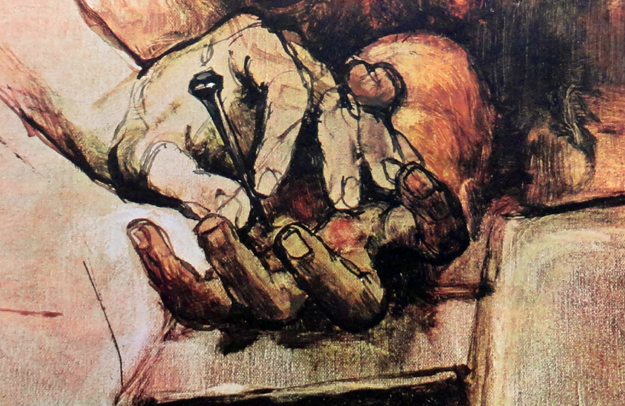
Notice David rejects the weapons of this world just as Christ rebuked Peter for fighting back in the flesh in Gethsemane (Matt 26:52).  Then we see David grab five stones, something solid out of something transitory, to prepare for his battle.  In like manner Christ took five piercing wounds to his body and in doing overcame the Devil through all time (Rev 13:8).


nails-in-the-hand-of-jesus


“…His sling was in his hand, and he approached the Philistine. 41 And the Philistine moved forward and came near to David, with his shield-bearer in front of him. 42 And when the Philistine looked and saw David, he disdained him, for he was but a youth, ruddy and handsome in appearance. 43 And the Philistine said to David, “Am I a dog, that you come to me with sticks?” And the Philistine cursed David by his gods. 44 The Philistine said to David, “Come to me, and I will give your flesh to the birds of the air and to the beasts of the field.”45 Then David said to the Philistine, “You come to me with a sword and with a spear and with a javelin, but I come to you in the name of the Lord of hosts, the God of the armies of Israel, whom you have defied. 46 This day the Lord will deliver you into my hand, and I will strike you down and cut off your head. And I will give the dead bodies of the host of the Philistines this day to the birds of the air and to the wild beasts of the earth, that all the earth may know that there is a God in Israel, 47 and that all this assembly may know that the Lord saves not with sword and spear. For the battle is the Lord‘s, and he will give you into our hand.” 48 When the Philistine arose and came and drew near to meet David, David ran quickly toward the battle line to meet the Philistine. 49 And David put his hand in his bag and took out a stone and slung it and struck the Philistine on his forehead. The stone sank into his forehead, and he fell on his face to the ground. 50 So David prevailed over the Philistine with a sling and with a stone, and struck the Philistine and killed him. There was no sword in the hand of David.” 1 Samuel 17:1-50 ESV


Just as Christ crushed the head of the snake (Gen 3:15) with no contest so David struck the head of Goliath.  Both victories are swift and final.  There has never been any contest, God has telegraphed his victory over Satan on human history itself.  And in doing so Christ has made a public spectacle of the Devil for all to see (Col 2:15-17) just as David did to Goliath.


13


Conclusion

Consider the true meaning of this story now and compare it against what modern Sunday School classes make it out to be.  At one point or another someone started cheapening the historic narrative of the Bible and presenting them as object lessons for the struggles and victories in our own lives.

Next time someone tells you to “step out of the boat” or to “conquer your Goliath” tell them that your peace, rest, and victory is in Christ who rules and has overcome all things (Matt 11:28)(Matt 28:18).

Posted in Armchair Lounge, Eschatology, Uncategorized | Tagged , | Leave a comment

The Lie Within and the Lie Without: The Law

liar


Seventh Day-Adventists believe that the Remnant, those who are saved, are marked by being the one Church that keeps the Ten Commandments.  Specifically of course they  mean the Sabbath that must be kept on Saturday.  While they will say that “Sunday Keepers” today have a pass, when probation closes you have to be on the right side of Sabbath keeping to be saved.

Too harsh?  Read some quotes I have assembled from Ellen White below to substantiate my claim:


“It means eternal salvation to keep the Sabbath holy unto the Lord.” – Ellen White, Testimonies Vol 6, Pg 356

“Those who are living upon the earth when the intercession of Christ shall cease in the sanctuary above are to stand in the sight of a holy God without a mediatorTheir robes must be spotless, their characters must be purified from sin by the blood of sprinkling. Through the grace of God and their own diligent effort they must be conquerors in the battle with evil. While the investigative judgment is going forward in heaven, while the sins of penitent believers are being removed from the sanctuary, there is to be a special work of purification, of putting away of sin, among God’s people upon earth.”  The Great Controversy, Pg. 425 Ellen White

“The woman is a symbol of the church, and the remnant of the church represents the Christians of the last generation of men, living just prior to the second advent. The dragon makes war on these for keeping the commandments of God, Sabbath and all, and having the testimony of Jesus Christ” – Ellen White, Spirit of Prophecy, Vol 3, Pg 26

“Look at the world, and see what they are doing. There is only a remnant who are keeping the Sabbath and who are explaining its importance to the people and urging them to keep the very day that God has specified.” Ellen White, MS 106 1906, Par 9

“I was shown in regard to the remnant people of God taking a name. Two classes were presented before me. One class embraced the great bodies of professed Christians. They were trampling upon God’s law and bowing to a Papal institution. They were keeping the first day of the week as the Sabbath of the Lord.  The other class were but few in number, and were bowing to the great Law-giver. They were keeping the fourth commandment. The peculiar and prominent features of their faith were the observance of the seventh day, and waiting for the appearing of our Lord from Heaven.” – Ellen White, Spiritual Gifts, Vol 4b, Pg 51


The first thing that stands out to me is that SDA don’t even meet their own definition of the remnant faith simply by the fact that they commit murder (abortions) in their hospitals for money.  If you want details on that click HERE.  In this post though I am mostly going to zero in on Sabbath keeping.

If keeping the Sabbath is a salvation level issue then it is fair to ask SDA how to keep the Sabbath.  If I am doing it wrong then that would mean I am going to burn for it so let’s see what they say I have to do.


“The gracious Creator, after the six days of Creation, rested on the seventh day and instituted the Sabbath for all people as a memorial of Creation. The fourth commandment of God’s unchangeable law requires the observance of this seventh-day Sabbath as the day of rest, worship, and ministry in harmony with the teaching and practice of Jesus, the Lord of the Sabbath. The Sabbath is a day of delightful communion with God and one another. It is a symbol of our redemption in Christ, a sign of our sanctification, a token of our allegiance, and a foretaste of our eternal future in God’s kingdom. The Sabbath is God’s perpetual sign of His eternal covenant between Him and His people. Joyful observance of this holy time from evening to evening, sunset to sunset, is a celebration of God’s creative and redemptive acts.” SDA Fundamental Belief #20


Notice how vague the above confession is on actually keeping the Sabbath.  To help clear it up I attempted to highlight all of the verbs they confess as being necessary.

Rest:  This is consistent with the language of the Commandment

“8 Remember the Sabbath day, to keep it holy. Six days you shall labor, and do all your work, 10 but the seventh day is a Sabbath to the Lord your God. On it you shall not do any work, you, or your son, or your daughter, your male servant, or your female servant, or your livestock, or the sojourner who is within your gates. 11 For in six days the Lord made heaven and earth, the sea, and all that is in them, and rested on the seventh day. Therefore the Lord blessed the Sabbath day and made it holy.” Exodus 20:8-11 ESV

When you get down to it this is a commandment to do nothing.  I can understand their difficulty in ascribing verbs to that.

Worship:  There is no specific command to worship on the Sabbath.  Traditionally this is what was done of course as the Jews would meet in the Synagogue for Liturgical worship on the Sabbath.  But there is no such command here, SDA have added that in.  Even though Worship is not commanded specifically in the Sabbath commandment,  SDA do command it in their fundamental beliefs.  So it begs the question as to the nature of worship.

Does it have to be traditional worship or is contemporary okay?  Does it specifically have to be worship addressed to the non-trinitarian deity they confess or is it okay to worship God in Trinity?  Do you worship only at church or all day long?  This is law we are talking about, some specifics are needed.

Ministry:  This is another thing SDA have added to the Sabbath commandment.  What kind of ministry are we talking about?  Is this a command for the pastor only or for everyone?  Is this to be done at Church only or all day?  What specific things do SDA command as a function of ministry?  This isn’t stated it’s left open to interpretation.

Joyful Observance:  This seems to mean that you have to like it.  If a child is crying in church does that mean they are sinning? Will that give them the mark of the beast after probation closes?  What exactly consists of observance that one must be joyful about anyways?


How do you Keep it?

Clearly SDA have proclaimed that keeping the Sabbath is of utmost importance.  It is a salvation issue, without it you won’t be sealed and won’t survive the end times.  But when it comes to actually keeping the Sabbath we have something that is wide open to interpretation.

Imagine if you had vague directions like this for flying and landing and airplane.  Just for fun let’s say it’s raining and you have to land in a war zone.  I don’t know about you but I would literally freak out, I am not a pilot and if I am expected to do something like that I am going to need specifics.  SDA have placed Sabbath keeping in the realm of eternal consequences and have given vague directions on how to do it.

The logical conclusion is that they either don’t care about the people they are confessing this belief to or they don’t even believe in the importance of keeping the Sabbath at all.

Culture of Moralism

Ask any SDA or former SDA and you will find that the rules of the Sabbath vary on region, congregation, and specific family.  If you grew up in California like me the rules are generally going to be a little more lax.  If you grew up in a more conservative area you had specific depth limits on where wading became swimming and thus transformed into a sin.

These vague rules manifest in strange ways because the language in the Bible just honestly doesn’t apply today.  For example, when the VCR was invented everyone had to debate on whether or not recording TV shows on the Sabbath was the same as having a maid servant or man servant work for you.  Of course not all congregations and families agreed so the rules varied.

Apply just a bit of logic to that, both cannot be correct.  Either it is okay to use a VCR on the Sabbath or it is not.  That means, if it is not all the congregations that ruled in favor were at risk of getting the mark of the beast.  If it is okay then all the congregations that denied VCR use are guilty of lying and adding to the Word of God.  One way or another huge percentages of Adventists are breaking the law and excluding themselves from their own remnant faith.  Now multiply that out by every single thing that has been invented in the past 30 years, now nobody is the remnant.

Essentially what you have here is not a confession of Biblical law, but a prescription for cultural legalistic moralism.  Everyone is allowed and encouraged to set their own bar on what Sabbath keeping is.  Some have extensive and nuanced rules and others are more laissez-fair.  Just think about it for a second, not only do you get to choose the standards of righteousness for yourself in this, but that also means you get to set the standard for others when it’s convenient.

Conclusion

What you are left with is the fact that SDA do not keep the Sabbath that they claim is a critical component of salvation in the end times.  Instead what they have is a legalistic construct by which members can make rules for others and exceptions for themselves.

By failing to provide any specifics in their corporate confession the General Conference has enabled this.  In doing so they lie to the public and to their own flock at the same time.  The public can gloss over the language and see Christian piety, while the members have the wiggle room to insert either a conservative or liberal approach to Sabbath keeping.

In my opinion the SDA confession of the Sabbath in modern times is nothing more than a political statement with the intent to keep the doctrinal house of cards together.  In this manner the leadership can keep the retirement check at the end of the day.  Why else would someone lie about what they believe?

Posted in Leaving Adventism, The Fundamental Beliefs | Tagged | 2 Comments

Sabbath in Genesis

sabbath-created-in-genesis2


As a Seventh Day-Adventist I was taught that one of the reasons that the Sabbath must be observed today is because it is a “creation ordinance”.  The argument is this; since the Sabbath was observed by God and Adam in the Garden every Saturday, man today must do so as well.  Though there are many sources to demonstrate this claim in SDA teaching, one simply need search the writings of Ellen White for a clear example.


“In Eden, God set up the memorial of His work of creation, in placing His blessing upon the seventh day. The Sabbath was committed to Adam, the father and representative of the whole human family. Its observance was to be an act of grateful acknowledgment, on the part of all who should dwell upon the earth, that God was their Creator and their rightful Sovereign; that they were the work of His hands and the subjects of His authority. Thus the institution was wholly commemorative, and given to all mankind.” – Patriarchs and Prophets, Pg 48, Ellen White

“Adam kept the Sabbath in his innocence in Eden; he still kept it when, fallen yet repentant, he was driven from the Garden. All the patriarchs from Abel to Noah, to Abraham, to Jacob kept the Sabbath. When the Lord delivered Israel from Egypt, He proclaimed His law to the emerging nation.” – Love Under Fire, Pg 188, Ellen White


Look carefully at the claims that Ellen White puts forward in her writings above.  Specifically, notice that she states that the Sabbath was committed to Adam, was observed in the Garden, and that it is given to all mankind.  She doubles down on this and then claims that all of the Patriarchs in Genesis prior to Moses also kept the Sabbath.

In the Bible however we see that man sinned before the law was even given, meaning that there is no requirement for Adam and Eve to have even heard of or seen any law to have sinned in the first place.


“Therefore, just as sin came into the world through one man, and death through sin, and so death spread to all men because all sinned—for sin indeed was in the world before the law was given, but sin is not counted where there is no law. Yet death reigned from Adam to Moses, even over those whose sinning was not like the transgression of Adam, who was a type of the one who was to come.” Romans 5:12-14 ESV


Also, we can see no record of the Ten Commandments or the Sabbath being given to Adam.


Thus the heavens and the earth were finished, and all the host of them. And on the seventh day God finished his work that he had done, and he rested on the seventh day from all his work that he had done. So God blessed the seventh day and made it holy, because on it God rested from all his work that he had done in creation. These are the generations of the heavens and the earth when they were created,in the day that the Lord God made the earth and the heavens.” Genesis 2:1-4 ESV


Read the above passage again if you have to, there is no mention of the Sabbath at all.  It says Seventh Day, but it doesn’t associate it with Evening and Morning so we don’t even know if it’s a 24 hour day like the others.  Also, we only see God keeping it, no mention of Adam and Eve receiving or keeping the Sabbath at all.  The only laws given to them in this narrative are Marriage and the forbidden fruit.  Read the rest of the story in Chapters 2 & 3 if you don’t believe me and see for yourself.

Since the concepts Ellen White conveys are foreign to the text it is fair to say she is not making a Biblical claim at all.  Thus when SDA say the sabbath is in Genesis, they are not making a Biblical claim either. The story of a Sabbath in Eden is simply Bible Fan-fiction.

One should not be willing to just assume something into scripture between the lines.  But for the sake of the argument let us run with this for a little bit.  What if the ten commandments were given prior to the fall.  Would that even make any sense according to the story in the Bible?

Below is a funny narrative that a friend of mine put together to illustrate this point.  This is purely for entertainment purposes only, try not to read too much into it.  But the point it does convey is the anachronism one must impose upon scripture to eisegete the Decalogue into Eden.


An Imaginary and Highly Improbably Eden Conversation – By Dave Melton

God: “I am the LORD your God, who brought you out of the land of Egypt, out of the house of slavery.”
Adam: “Um, LORD? Where is Egypt?”
God: “Well, Adam, it is a far-off land to the west that you have never seen.”
Adam: [Confused.] “Oh.”

Adam: “LORD, what is slavery.”

God: “That is where people own other people and make them labor for them, usually unwillingly.”

Adam: “ . . . other people . . .What other people? . . . Was I a slave?”

God: “Nevermind. I’m on a roll here . . .You shall have no other gods before me.”

Adam: “ . . . other gods . . .?”

God: “You shall not make for yourself a carved image, or any likeness of anything that is in heaven above, or that is in the earth beneath, or that is in the water under the earth. You shall not bow down to them or serve them, for I the LORD your God am a jealous God, visiting the iniquity of the fathers on the children to the third and the fourth generation of those who hate me, but showing steadfast love to thousands of those who love me and keep my commandments.”

Adam: “ . . . iniquity . . .? What are iniquities? Fathers? Children? Generations? . . . thousands of those who love you . . .? But LORD, it is just Eve and I here. I have no idea what you are talking about.”

God: “You shall not take the name of the LORD your God in vain, for the LORD will not hold him guiltless who takes his name in vain.”

Adam: “ . . . take you name in vain? Huh? And this guilt thing. What is that all about?”

God: “Remember the Sabbath day, to keep it holy. Six days you shall labor, and do all your work, but the seventh day is a Sabbath to the LORD your God. On it you shall not do any work, you, or your son, or your daughter, your male servant, or your female servant, or your livestock, or the sojourner who is within your gates. For in six days the LORD made heaven and earth, the sea, and all that is in them, and rested on the seventh day. Therefore the LORD blessed the Sabbath day and made it holy.”

Adam: “ . . . labor . . .? . . .son ? . . . daughter? LORD, what is a servant? A sojourner? What exactly is a gate?”

God: “Honor your father and your mother, that your days may be long in the land that the LORD your God is giving you.”

Adam: “LORD, You are my Father. I don’t know what a mother is. I don’t know if I like the idea of long days, though.”

God: “You shall not murder.”

Adam: “ . . . murder . . . What does that mean?”

God: “It means to take another innocent person’s life.”

Adam: “But we can’t die. How . . .? Why . . .? I’m confused.”

God: “You shall not commit adultery.”

Adam: “What is adultery?”

God: “Well, in your case, it would be having sex with someone other than your wife, Eve?”

Adam: “You mean, like the aardvark?”

God: “Not exactly . . . Never mind. Don’t worry about it.”

God: “You shall not steal.”

Adam: “ . . . steal . . .?”

God: “That means don’t take things that don’t belong to you.”

Adam: “But you said all of this belongs to us, except for the fruit of that one tree . . .”

God: “Right.”

God: “You shall not bear false witness against your neighbor.”

Adam: “I don’t have any neighbors . . .”

God: “You shall not covet your neighbor’s house; you shall not covet your neighbor’s wife, or his male servant, or his female servant, or his ox, or his donkey, or anything that is your neighbor’s.”

Adam: “But I don’t have any neighbors, right? What is a house? How could I covet my neighbor’s wife, servant or animals, if I don’t have a neighbor?”

God: “Adam, have you got all that?”

Adam: “Um. Yeah. I guess so. Don’t eat from that tree. And don’t have sex with the aardvark. Got it.”

Adam: “But LORD?”

God: “Yes?”

Adam: “You have really given me a lot of things to think about. I never even thought about doing any of the those things until you brought them up . . .”


Through the use of humor Dave Melton brings up some very good points in his above illustration.  The fundamental principles and purpose of the Ten Commandments simply have no meaning in the Garden.  To assert that they existed before the Garden and were given to man in the Garden is a grotesque abuse of scripture that inadvertently places sin before the fall, as the chief purpose of the law is to reveal sin.

There simply is no Sabbath in Genesis.  No Sabbaths of any kind are given to man until Exodus 16.


Wrapping Up

What are we left with when the concept of a creation sabbath ordinance is removed?  Putting it simply, we have a law just like many others given in the old covenant.  The Sabbath day had a specific purpose for a specific period of time that was fulfilled in Christ.  If you would like a comprehensive Biblical breakdown of this theme I recommend that you check out an older blog post on the Sabbath which you can find HERE.

In the mean time though simply know that if someone is claiming the Sabbath was given to man in Genesis, then the burden of proof is on them.  To fulfill that burden they must demonstrate a prescriptive command to man, or a descriptive example of man keeping it in Genesis.

Posted in Leaving Adventism | Tagged , | 2 Comments

Two Natures of Christ: Zwinglian or Lutheran?


the-last-supper-page-2

In an older post I presented a more general overview of the Two Natures of Christ that any Christian can get behind.  Specifically I gave a Biblical overview of the Hypostatic Union, if you want to take a look at that first please click HERE.

In this one I am going to dig in a bit deeper and demonstrate what I believe is the crux of one of the biggest and most relevant disputes in Protestantism.  One of the early reformers was a man by the name of Zwingli.  He was the first prominent theologian to formally deny the real presence of the Body and Blood of Christ in Holy Communion.

I welcome being corrected if I am misrepresenting his theology, but my understanding is that he believed that the reason Christ is not present in Communion is because he cannot be.  He literally doesn’t have the power to do it due to his Human Nature, which definitively, cannot be omnipresent.

“I insist that there must be a trope in the Lord’s Supper… Otherwise, a great difficulty would arise, namely, that, while Christ says he is in heaven, we should seek him in the Supper. For one and the same body cannot be in several places at the same time.” – Ulrich Zwingli

Obviously, I disagree with Zwinglian theology very much on this doctrine.  In this post I am going to present the Lutheran Confession’s with regards to this specific issue and then I will explain why I agree with them instead.


Lutheran Confessions


“Against this condemned heresy the Christian Church has always simply believed and held that the divine and the human nature in the person of Christ are so united that they have true communion with each other.  The natures are not mingled in one essence.  But, as Dr. Luther writes, they come together in one person.  So on account of this personal union and communion, the ancient teachers of the Church, before and after the Council of Chalcedon, frequently used the word mixture, in a good sense and with true discrimination.  To prove this, many testimonies of the Fathers, if necessary, could be quoted.  These are to be found frequently also in the writings of our divines, and they explain the personal union and communion using the illustration of the soul and body, and of glowing iron.  For the body and the soul, as also fire and iron, have communion with each other.  This is not by a phrase or mode of speaking, or in mere words, that is, so that it is merely a form of speech or mere words.  But the communion is true and real.  Nevertheless, there is no mixing or equalizing of the natures introduced like when mean is made from honey and water, which is no longer pure water or purse honey, but a mixed drink.” – The Solid Declaration of the Formula of Concord


Essentially, they are saying that the communion between the two natures of Christ is NOT like a mixture of chemicals but IS like what we would call a heat transfer:


simple-experiment


What does that mean and why does it matter?  Well in a Chemical Mixture you have two substances combining and forming a new substance, or new molecular compound if you want to use modern terms.  With iron heated by a fire all you have is iron molecules moving faster than before.  It doesn’t become something new, but it does take on new properties.  Like this, a Lutheran believes that the Human Nature of Christ can exhibit the properties of the Divine when and how Christ wills it to do so.

As I understand, Zwinglians accuse Lutherans of believing that Christ is not two natures, divine and human, but rather mixes into one new nature.  Lutherans accuse Zwinglians of splitting Christ into two persons, which would be the Nestorian heresy.  Both of these arguments rely on drawing additional conclusions outside of the stated confessions of each other.

The fact is, that Zwinglians do not outright confess two persons, and Lutherans do not confess a third substance.  Both confess two natures and one person, one must discern which is most intellectually honest and Biblically accurate.


Why Should we say there is Communion between the Two Natures?


This is more of a personal confession of mine.  I did not come to Lutheranism from a confessional framework (Book of Concord).  I initially came to it from a more Biblicist perspective.  After overwhelming Biblical evidence I simply felt I didn’t have any other honest choice.  Since then I find the confessions a great blessing, but I only hold to them because they teach the same thing as Scripture.

It is my assessment that the Zwinglian view uses philosophy to overcome and contradict clear scripture where as the Lutheran one holds directly to what the text says and accepts a little bit of mystery as to “how”.

We see in the Bible that Christ, according to his Body, filleth all (Eph 1:23).  We see that he forgave sins and spoke it through his mouth in the flesh (Luke 7:48)(Matt 9:5-6).  We see Christ in a body of flesh walk on water (Matt 14:22-23) and command the dead to rise (John 11:43).  We also see Jesus in the flesh walk through doors as well as appear and disappear in various locations (Luke 24:30-31) (Luke 24:36-39) (John 20:19-20).

The concept of communion between the natures as willed and wielded by the person of  Christ is consistent with all scripture.


“Which is his body, the fulness of him that filleth all in all.” Eph 1:23 KJV

“And he said unto her, Thy sins are forgiven.” Luke 7:48 KJV 

“For whether is easier, to say, Thy sins be forgiven thee; or to say, Arise, and walk?;  But that ye may know that the Son of man hath power on earth to forgive sins, (then saith he to the sick of the palsy,) Arise, take up thy bed, and go unto thine house.” Matt 9:5-6 KJV 

“And straightway Jesus constrained his disciples to get into a ship, and to go before him unto the other side, while he sent the multitudes away.  And when he had sent the multitudes away, he went up into a mountain apart to pray: and when the evening was come, he was there alone.” Matt 14:22-23 KJV 

“And when he thus had spoken, he cried with a loud voice, Lazarus, come forth.” John 11:43 KJV 

“And it came to pass, as he sat at the table with them, he took bread, and blessed it, and brake, and gave to them.; And their eyes were opened, and they knew him; and he vanished out of their sight.” Luke 24:30-31 KJV

And as they thus spake, Jesus himself stood in the midst of them, and saith unto them, Peace be unto you.; But they were terrified and affrighted, and supposed that they had seen a spirit.; And he said unto them, Why are ye troubled? and why do thoughts arise in your hearts?;  Behold my hands and my feet, that it is I myself: handle me, and see; for a spirit hath not flesh and bones, as ye see me have.” Luke 24:36-39 KJV

“Then the same day at evening, being the first day of the week, when the doors were shut where the disciples were assembled for fear of the Jews, came Jesus and stood in the midst, and saith unto them, Peace be unto you.; And when he had so said, he shewed unto them his hands and his side. Then were the disciples glad, when they saw the Lord.” John 20:19-20 KJV


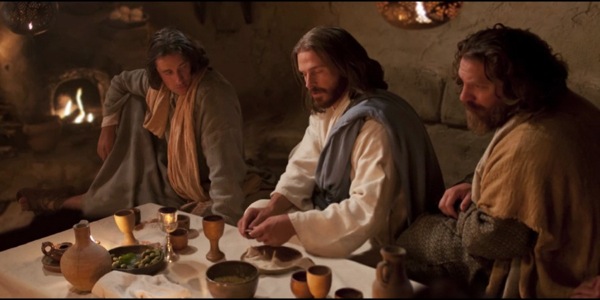
What this all truly comes down to though is whether or not we we take Christ at his Word when he says “this is my body”.


“And as they were eating, Jesus took bread, and blessed it, and brake it, and gave it to the disciples, and said, Take, eat; this is my body.” Matt 26:26 KJV 


To see my older posts addressing the above verse please click HERE.  You will see that I very much believe we should take him at his Word.  Thus this removes Zwinglian theology from the running entirely when it comes to Christology.  It’s not even a thing.  Zwinglian theology is just a strange aberrant teaching that came into existence 1500 or so years after Christ commissioned his Church, which is something I blogged on HERE.

I am not saying Evangelicals who hold to it are not Christians, but I am saying that this specific confession they hold to is not a Christian confession.  I would classify Zwinglian Christology in the same manner that I do Papal decrees and traditions that contradict scripture.

I recognize the disputing philosophical positions, and I am happy to see from the Book of Concord that Lutherans have addressed the Zwinglian view on that level.  But that is not the reason that I hold to the omnipresence of Christ in the flesh.  The reason I hold to it is because Jesus said “this is my body”.


And that is all we should need

And you know what?  Once you take the plunge on this the Bible becomes a lot less confusing.  To be intellectually consistent as a Zwinglian anything and everything in the Bible can be allegorized.  As a Lutheran you are locked into the text as it reads.

Posted in Armchair Lounge, Nature of God | Tagged , | 1 Comment

Original Sin

page_adem-ile-havva-200-250-bin-yil-once-mi-yasadi_573289454


In this article I will be taking on the topic of original sin. As Christians our primary focus should always be Christ. We maintain that a man is justified by faith apart from works of the law and this faith is a gift from God. The reason we must have faith is because of sin. I will attempt to lay out the different types of sin,  original and actual.

Actual sin is a breaking of God’s law found in the ten commandments. This is done in thought, word, and deed. By what we have done and by what we have left undone. When we sin as Christians, we eventually feel guilty. This guilt is a good thing brought on by the Holy Spirit to bring us to repentance.


“7 Nevertheless, I tell you the truth: it is to your advantage that I go away, for if I do not go away, the Helper will not come to you. But if I go, I will send him to you. 8 And when he comes, he will convict the world concerning sin and righteousness and judgment: 9 concerning sin, because they do not believe in me; 10 concerning righteousness, because I go to the Father, and you will see me no longer; 11 concerning judgment, because the ruler of this world is judged. 12 “I still have many things to say to you, but you cannot bear them now. 13 When the Spirit of truth comes, he will guide you into all the truth, for he will not speak on his own authority, but whatever he hears he will speak, and he will declare to you the things that are to come. 14 He will glorify me, for he will take what is mine and declare it to you.” John 16:7-14 ESV

What is Original Sin?

Original sin is a corrupted nature that is inherited by our original parents, Adam and Eve, When they disobeyed God and ate of the fruit from the tree of knowledge of good and evil, throwing the whole universe into a desperate state of despair and an inclined will of evil. When this occurred, God in his mercy acted and immediately promised a savior.


“I will put enmity between you and the woman, and between your offspring and her offspring; he shall bruise your head, and you shall bruise his heel.” Genesis 3:15 ESV

Original sin is the state that every single person since Adam is born into, hostile towards God and hating him by nature.


“21 And you, who once were alienated and hostile in mind, doing evil deeds, 22 he has now reconciled in his body of flesh by his death, in order to present you holy and blameless and above reproach before him” Col 2:1-21-22 ESV

“1 And you were dead in the trespasses and sins 2 in which you once walked, following the course of this world, following the prince of the power of the air, the spirit that is now at work in the sons of disobedience 3 among whom we all once lived in the passions of our flesh, carrying out the desires of the body and the mind, and were by nature children of wrath, like the rest of mankind.” Eph 2:1-3 ESV


There is no biblical text for an age of accountability or any other text for that matter that would leave anybody innocent in the sight of God without faith. We are born dead in trespasses and sins and we cannot make ourselves alive anymore than we can control weather.
So what does scripture teach us about all mankind and sin since Adam?


“Behold, I was brought forth in iniquity, and in sin did my mother conceive me.” Psa 51:5 ESV

“12 Therefore, just as sin came into the world through one man, and death through sin, and so death spread to all men because all sinned— 13 for sin indeed was in the world before the law was given, but sin is not counted where there is no law. 14 Yet death reigned from Adam to Moses, even over those whose sinning was not like the transgression of Adam, who was a type of the one who was to come. 15 But the free gift is not like the trespass. For if many died through one man’s trespass, much more have the grace of God and the free gift by the grace of that one man Jesus Christ abounded for many. 16 And the free gift is not like the result of that one man’s sin. For the judgment following one trespass brought condemnation, but the free gift following many trespasses brought justification.” Rom 5:12-16 ESV


Notice above the correlation between sin and death.  If one were to assert an age of accountability, it would also follow that nobody would die before the age of accountability.  We know that babies and small children are born in sin though, if for no other reason than because they can and sadly do die.


“22 to put off your old self, which belongs to your former manner of life and is corrupt through deceitful desires, 23 and to be renewed in the spirit of your minds, 24 and to put on the new self, created after the likeness of God in true righteousness and holiness.” Eph 4:22-24 ESV

“22 For as in Adam all die, so also in Christ shall all be made alive.” 1 Cor 15:22 ESV


Notice it says that “all die” at the point of Adam.  Not everyone was even born yet at this point yet all were condemned.

So we can conclude from scripture that we are by nature born children of wrath and hostile towards God in original sin. We believe, teach, and confess that Christ has died for all and that God grants faith through word and sacrament. We know infants can have faith and that God desires all to be saved.


“41 And when Elizabeth heard the greeting of Mary, the baby leaped in her womb. And Elizabeth was filled with the Holy Spirit, 42 and she exclaimed with a loud cry, “Blessed are you among women, and blessed is the fruit of your womb!” Luke 1:41-42 ESV


Here we have an infant ( John the Baptist) leaping in the womb at the unborn Christ. Faith is always accompanied by works as a fruit of the Holy Spirit and John has this from the word being preached, responding with faith.


“16 But Jesus called them to him, saying, “Let the children come to me, and do not hinder them, for to such belongs the kingdom of God. ” Luke 18:16 ESV


Here we have the command of Christ telling us to bring the children, with no age restrictions, to hear his word and to be granted faith.


Summary 


Original sin and death is what we inherited from Adam. The wages of sin is death and we see death often. If people did not inherit original sin there would be no death. My advice is to always trust scripture alone. If you are pregnant, get to Church, read your bible out loud, and have your child baptized. Baptism is all grace and a covering of Christ righteousness as a gift from God, but I will save that for another time. The peace of Christ be with you all.

Posted in Armchair Lounge, Law | Tagged , | 26 Comments

Clear Word vs Bible: The New Covenant

the-last-supper-600


If you have read my series on the New Covenant you know that it was treasure I had found in the Bible that led me out of Adventist Beliefs.  If you want a positive presentation of it I recommend you follow the link above and set aside some time in your day to dig in,  if your story is like mine was you won’t want to stop.

For those who are familiar with this Biblical teaching though I am going to present a sample of the passages that the Bible teaches the New Covenant doctrine in and compare them to those found in the Clear Word.

Did the author of the Clear Word feel the need to change New Covenant texts?  Did these texts bug him at all?  Or did he leave them be?  Let’s take a look!


The Holy Bible

The Clear Word

“7 For if that first covenant had been faultless, then no place would have been sought for a second.” Heb 8:7 NKJV “If the Levitical covenant made at Sinai under the leadership of Moses had been faultless and final, then why would there be a need for a new priestly covenant under the leadership of Christ?”


Something important to understand is that when the Bible refers to the Old Covenant it consistently does so in a broader sense, as a whole.  There is no distinguishing between say, the Law of Moses and the Ten Commandments like SDA like to assert.

You can see above that the writer of the clear word may have been picking up on this because he narrowed the text for his reader so that it only applies to something “Levitical” and pertaining to “Moses”.  The casual reader will probably miss this but those accustomed to Adventist lingo will not.


The Holy Bible

The Clear Word

“13 In that He says, “A new covenant,” He has made the first obsolete. Now what is becoming obsolete and growing old is ready to vanish away.” Heb 8:13 NKJV “When God talked about a new covenant, He was not talking about doing away with the covenant of righteousness He had made with Abraham, but the Levitical covenant which has now become obsolete and old”


Where did Abraham come from in this verse?  He isn’t mentioned at all in the Holy Bible.  Also, why are positive statements of something becoming obsolete and being done away with changed into negative statements of “NOT” doing away with?  It’s a complete reversal of meaning.

Also, we see the old covenant narrowed to Levitical and juxtaposed against Abraham.  These themes are not conveyed in the Holy Bible.  If the writer believed that Hebrews taught SDA theology why did he feel the need to monkey around with the text?


The Holy Bible

The Clear Word

31 “Behold, the days are coming, says the Lord, when I will make a new covenant with the house of Israel and with the house of Judah—32 not according to the covenant that I made with their fathers in the day that I took them by the hand to lead them out of the land of Egypt,My covenant which they broke, though I was a husband to them, says the Lord. 33 But this is the covenant that I will make with the house of Israel after those days, says the Lord: I will put My law in their minds, and write it on their hearts; and I will be their God, and they shall be My people. ” Jer 31:31-33 NKJV “In the days to come I will offer my everlasting covenant to Israel again.  It will seem like a new covenant to them, different from the covenant I offered to their ancestors when I brought them out of Egypt.  But it is not.  They broke that covenant and made their own, though I was their husband and always loved them.  This is the covenant that I will offer the descendants of Jacob: I will put my laws in their minds and write them on their hearts, I will be their God, and they will be my people.”


Notice that in the Holy Bible you have two distinctly different covenants juxtaposed against each other.  The new is replacing the old.  Also, the New Covenant is “not according” to the Old.  This is consistent with the language from Hebrews 8 I quoted above.

Notice when we were in Hebrews the author of the Clear Word felt the need to narrow the covenant to a Levitical / Moses thing.  But here in Jeremiah he is handling the same language and doesn’t even render it in the same manner that he did Hebrews.  Instead, now we have an everlasting covenant that only seems like a new one but isn’t.  And he puts in an extra covenant created by the Israelites.  What????

The passage in Hebrews is quoting and interpreting Jeremiah.  How can the author of the Clear Word think that they are not talking about the same thing?  Why does he feel the need to change both of these, and make the same essential text teach and convey completely different meanings while both squeeze in room for SDA beliefs by alternate means?


The Holy Bible

The Clear Word

“20 Likewise He also took the cup after supper, saying, “This cup is the new covenant in My blood, which is shed for you.” Luke 22:20 NKJV “He also took the cup after it had made the rounds and said, “this pure juice represents my blood which will be shed for you to fulfill God’s covenant


This one makes me very sad to read.  The author of the Clear Word removes new covenant completely from the text and then adds in a symbolic referent.  The New Covenant is not symbolic, it is the literal body and blood of Christ.  Let us agree that here, it is clear that the author has exactly what he says he has.

He does not have a New Covenant in the Body and Blood of Christ.  He has grape juice representing the Old Covenant, and that’s not what Christ instituted.  This is a false Christ and and false institution of a “symbolic” covenant being taught in the Clear Word.


The Holy Bible

The Clear Word

“5 Not that we are sufficient of ourselves to think of anything as being from ourselves, but our sufficiency is from God, ; 6 who also made us sufficient as ministers of the new covenant, not of the letter but of the Spirit; for the letter kills, but the Spirit gives life.; ” 2 Cor 3:5-6 NKJV “We are not trying to tell you what great workers we are, nor are we qualified to assess or own work.  Our strength and competence comes form the Lord Jesus Christ.  It is God who has made us ministers of the new covenant.  He has helped us share the gospel with you, not as attorneys, but as ambassadors.  The law can’t give you life; it can only point out sin.  It’s the Holy Spirit who gives life.  


Notice that the Holy Bible demonstrates the law as being overcome by the Gospel.  The Clear Word however transforms this concept into one of Moralism, and in doing so removes all meaning from the Gospel.  So at the end of the day you are left with neither.


The Holy Bible

The Clear Word

“7 But if the ministry of death, written and engraved on stones, was glorious, so that the children of Israel could not look steadily at the face of Moses because of the glory of his countenance, which glory was passing away, ; 8 how will the ministry of the Spirit not be more glorious? ” 2 Cor 3:7-8 NKJV “At Sinai [DELETED BY SDA] God wrote the law on tables of stone.  The giving of the commandments was accompanied by such glory that when Moses came down from the mountain, the Israelite’s could’t even look at him.  But that glory had to pass away.  When you think of the Holy Spirit writing the law on people’s hearts, isn’t that more glorious than God writing His law on tablets of stone?”


Notice right at the outset the term “ministry of death” applied to the Ten Commandments was completely removed.  Why did the SDA feel the need to remove that?  In my opinion this is simply because the Ten Commandments is their gospel.  Here Paul has profaned the gospel of the Adventist Church by calling it the Ministry of Death.  Obviously that had to be deleted.

Carefully read the text of the Holy Bible on the left.  Notice that the referent to Glory is the law engraved on stones.  The face of Moses shines as an effect of the Glory, but the referent to glory itself is not his face.  Thus the referent to passing away is that which was engraved on stones as well.  There is no escaping this without changing the words around and adding in new concepts not in the text.  Which is what SDA have done.

Notice that the Glory in the Clear Word is changed to the face of Moses only.  They switch it so that it is the shine on his face that is passing away instead of that engraved on stones.  Then they add in a juxtaposition of what was written on stones being written on the heart.

Nowhere in the Bible does it say the ten commandments are written on the heart.  The Bible will use the word law but it doesn’t use the term “Ten Commandments”.  SDA want this in there badly which is apparent in that they felt the need to change the Bible to incorporate it.


The Holy Bible

The Clear Word

“; 9 For if the ministry of condemnation had glory, the ministry of righteousness exceeds much more in glory. 10 For even what was made glorious had no glory in this respect, because of the glory that excels. ; 11 For if what is passing away was glorious, what remains is much more glorious.; ” 2 Cor 3:9-11 NKJV “If that system of religious services containing only promises of salvation was full of glory, how much more glorious is God’s offer of salvation today now that those Old Testament promises have been fulfilled and ratified by Jesus Christ!  Because of the unspeakable glorious act of God in giving His Son to die for us, the Old Testament services are now at an end.  If that which lasted for only a short time was so glorious, how much more glorious is that which lasts forever!”


Notice in the Holy Bible the referent for ministry of condemnation is the ministry of death associated with that which was engraved on the tablets of stone in the context of the preceding verses.  This is juxtaposed over and against the Ministry of Righteousness which remains, while the prior is passing away.

The Clear Word narrows these broad statements and juggles the referent around.  Words like promises and services and put in to obfuscate referent and bring to mind specific elements of the Old Covenant rather than the whole entire thing.  Why did the writer of the Clear Word feel the need to narrow broad terms?  If he truly believed that the Bible taught Adventist beliefs would he not be able to keep it as it was?


The Holy Bible

The Clear Word

“12 Therefore, since we have such hope, we use great boldness of speech— ; 13 unlike Moses, who put a veil over his face so that the children of Israel could not look steadily at the end of what was passing away. ; 14 But their minds were blinded. For until this day the same veil remains unlifted in the reading of the Old Testament, because the veil is taken away in Christ. ;” 2 Cor 3:12-14 NKJV “That’s why we can preach with such confidence and boldness, because the hope we have has been secured by Jesus Christ.  The glory we proclaim is much more radiant than that of Moses.  He had to have a veil over his face to hide his glory when he talked to the people.  But that glory faded away.  It had to give way to the radiance of the cross.  In one sense the Israelites are wearing a veil over their faces today when they read the Old Testament and misapply what they read, because only in Christ can those Old Testament services be understood.””


Notice that the Holy Bible maintains the referent of the passing Glory as apart from the face of Moses while the Clear Word draws them together.  This is because the author of the Clear Word doesn’t seem to like the idea of the tablets of stone passing away.

Notice this even comes out in the Clear Word, he has to narrow this veil to “in one sense” and insert the concept of “misapply[ing]” it.  With regards to the author of the clear word and those who hold to it’s teachings, the veil spoken of in this passage applies to them as well.  This is apparent from reading this passage alone in the Clear Word, as the meaning of the Holy Bible must be hidden from them and altered for SDA doctrine to survive.


Conclusion

One can easily discern from how SDA have had to mangle just a few passages on this topic that they simply don’t believe in the New Covenant taught by the Bible.  They have a different covenant not instituted by Christ.  Make no mistake, as you read the Bible under SDA teaching you need to re-arrange those words in your mind.  The Clear Word has simply given us a visual display of this brain washing.

I hope by following this series you are seeing that this is how SDA expect you to understand the words.  You end up losing the Bible, though you have it in your hand all the words need to be filtered through a lens whenever you approach something that contradicts SDA teaching.

The sad part is, that in doing so you lose the New Covenant Christ instituted.  You end up with a false covenant and a false gospel given by a false prophet.  It’s is a cheap and burdensome exchange.

Posted in Leaving Adventism, The Clear Word | Tagged , | 1 Comment

Two Natures of Christ

Dali-840x350

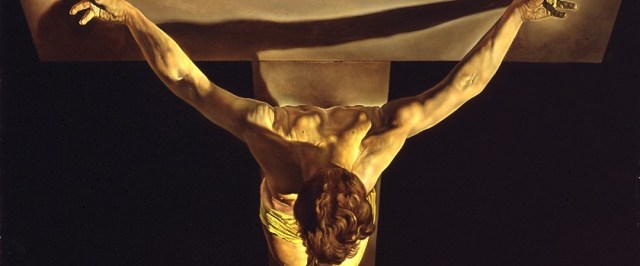
In the oldest creeds of Christianity we have the confession that Jesus Christ is Fully God and Fully Man.  Biblically, this doctrine is equally important to that of the Deity of Christ.  The technical term for this teaching is the Hypostatic Union.  This is a very important doctrine to learn especially when coming out of a Cult with Arian tendencies.


“For the right faith is, that we believe and confess that our Lord Jesus Christ, the Son of God, is God and Man; God of the Substance of the Father, begotten before the worlds; and Man of the substance of His mother, born in the world; Perfect God and perfect Man” – Athanasian Creed


Why is this so important?  Well besides the fact that this is what the scriptures teach, without a proper understanding of the doctrine it becomes easier for cults to deceive people.


“One of the most common errors that non-Christian cults make is not understanding the two natures of Christ.  For example, the Jehovah’s Witnesses focus on Jesus’ humanity and ignore His divinity.  They repeatedly quote verses dealing with Jesus as a man and try to set them against Scripture showing that Jesus is also divine.  On the other hand, the Christian Scientists do the reverse.  They focus on the Scriptures showing Jesus’ divinity to the extent of denying His true humanity.” – CARM


With that stated, to present a positive case for this doctrine I am going to put forward clear passages teaching both theses.

Humanity of Christ


In my opinion, most of us laity tend to overlook this teaching from scripture.  Biblically, Jesus was fully man.  He got tired, hungry, and sleepy.  Jesus worshiped the Father and submitted to him as we are commanded to do.  Read the verses below and see for yourself.


“Now Jacob’s well was there. Jesus therefore, being wearied with his journey, sat thus on the well: and it was about the sixth hour.” John 4:6 KJV 

“And he was in the hinder part of the ship, asleep on a pillow: and they awake him, and say unto him, Master, carest thou not that we perish?” Mark 4:38 KJV 

“And on the morrow, when they were come from Bethany, he was hungry” Mark 11:12 KJV 

“And when he had fasted forty days and forty nights, he was afterward an hungred.” Matt 4:2 KJV 

“And Jesus increased in wisdom and stature, and in favour with God and man.” Luke 2:52 KJV 

“Behold my hands and my feet, that it is I myself: handle me, and see; for a spirit hath not flesh and bones, as ye see me have.” Luke 24:39 KJV 

“And this is life eternal, that they might know thee the only true God, and Jesus Christ, whom thou hast sent.” John 17:3 KJV 

“But we see Jesus, who was made a little lower than the angels for the suffering of death, crowned with glory and honour; that he by the grace of God should taste death for every man.” Heb 2:9 KJV 


How do you confess the Humanity of Christ in a way that doesn’t Contradict the doctrines of the Trinity or the Immutability of God?  You do so by referring to the incarnation (God in flesh) as the assumed human nature.  Thus, Christ did not change into having a human nature, but assumed such from Mary.

How did Mary give Christ a Human Nature without transferring along with it original sin?

I have NO idea!

To prevent confessing heresy, in my opinion, it is generally best to stop your speculation at this point and enjoy a little bit of mystery in your life.  The Bible doesn’t give us enough information to reflect on this any further with conviction.


Divinity of Christ


Also conveyed in scripture is the Deity of Christ.  I have written a post dedicated to this that you can find HERE if you want to go into greater detail.  But for the purposes of this post I am just going to present a sample of the clearest passages.  Notice that Jesus calls himself “I AM”.  And that he is said to know everything, is called God, and the creation of all things is ascribed to his actions.


“He saith unto him the third time, Simon, son of Jonas, lovest thou me? Peter was grieved because he said unto him the third time, Lovest thou me? And he said unto him, Lord, thou knowest all things; thou knowest that I love thee. Jesus saith unto him, Feed my sheep.” John 21:17 KJV 

“Jesus said unto them, Verily, verily, I say unto you, Before Abraham was, I AM.” John 8:58 KJV

“I and my Father are one.” John 10:30 KJV

“And Thomas answered and said unto him, My Lord and my God.” John 20:28 KJV 

“Who is the image of the invisible God, the firstborn of every creature:;  For by him were all things created, that are in heaven, and that are in earth, visible and invisible, whether they be thrones, or dominions, or principalities, or powers: all things were created by him, and for him:;  And he is before all things, and by him all things consist.;  And he is the head of the body, the church: who is the beginning, the firstborn from the dead; that in all things he might have the preeminence.” Col 1:15-18 KJV

“Let this mind be in you, which was also in Christ Jesus: Who, being in the form of God, thought it not robbery to be equal with God: But made himself of no reputation, and took upon him the form of a servant, and was made in the likeness of men: And being found in fashion as a man, he humbled himself, and became obedient unto death, even the death of the cross. Wherefore God also hath highly exalted him, and given him a name which is above every name:  That at the name of Jesus every knee should bow, of things in heaven, and things in earth, and things under the earth;  And that every tongue should confess that Jesus Christ is Lord, to the glory of God the Father.” Php 2:5-11 KJV

“For in him dwelleth all the fulness of the Godhead bodily.” Col 2:9 KJV

“And without controversy great is the mystery of godliness: God was manifest in the flesh, justified in the Spirit, seen of angels, preached unto the Gentiles, believed on in the world, received up into glory.” 1 Tim 3:16 KJV

“Take heed therefore unto yourselves, and to all the flock, over the which the Holy Ghost hath made you overseers, to feed the church of God, which he hath purchased with his own blood.”  Acts 20:28 KJV

Conclusion


Here is the idea, if  Jehovah’s Witness come to your home and try to convert you or a family member, one of the things they are going to focus on is the passages detailing the humanity of Christ.  They will generally use many of the verses that I posted above, though there are more along such lines.

The sad part is that it is easy for laity like us to fall into one of two traps when Arians do this.  Either you are going to convert and go along with them, or you are going to start twisting the verses teaching the humanity of Christ to defend the Deity.  Sadly, in this respect the Arians they get you coming or they get you going.

The proper way to understand these passages, and pretty much any doctrine, is that they are all true at the same time.  The key theologically speaking is to confess each teaching in a way that is consistent with the whole council of scripture.  Christ is both God and Man, both are true at the same time.  No this doesn’t make any sense, and we shouldn’t expect it to.  It can only be confessed.


Posted in Armchair Lounge, Nature of God | Tagged , | Leave a comment

The Lie Within and The Lie Without: The SDA False Gospel

7-leadership-lies-need-stop-believing


For those of you who are wondering, yes the lady pictured above represents Ellen White.   The doctrine of Salvation in Adventism is a sad thing.  They try to confess it in a way that doesn’t contradict the teachings of Ellen White or the Apostle Paul. In doing this they end up contradicting both at the same time.  To demonstrate this, we must first take a look at the belief itself, see below:


“In infinite love and mercy God made Christ, who knew no sin, to be sin for us, so that in Him we might be made the righteousness of God. Led by the Holy Spirit we sense our need, acknowledge our sinfulness, repent of our transgressions, and exercise faith in Jesus as Saviour and Lord, Substitute and Example. This saving faith comes through the divine power of the Word and is the gift of God’s grace. Through Christ we are justified, adopted as God’s sons and daughters, and delivered from the lordship of sin. Through the Spirit we are born again and sanctified; the Spirit renews our minds, writes God’s law of love in our hearts, and we are given the power to live a holy life. Abiding in Him we become partakers of the divine nature and have the assurance of salvation now and in the judgment.” – SDA Fundamental Belief #10


The above confession reads like the Roman Catholic Council of Trent in that it obscures it’s thesis in verbosity.  Notice that the power to live a holy life is presented as the objective reality of one who has received and performed all the preceding verbs in the right order.  And in the very next sentence it hinges this upon assurance of salvation itself.  To hold to that you either need to lower holiness down to the level of fallen man or claim that man can actually live sinlessly in this life.

This is an absurd notion that will either cause one to doubt their salvation in despair when they fail to meet the standard or to be puffed up in pride when they lower the standard to their liking.  Even Paul was a Sinner (Click HERE).  And in his despair he was encouraged, as are we, that the Grace of God is sufficient even in our weakness.  Not to bring us to perfection in this life but rather to be our penal substitute.


“7 So to keep me from becoming conceited because of the surpassing greatness of the revelations, a thorn was given me in the flesh, a messenger of Satan to harass me, to keep me from becoming conceited. ; 8 Three times I pleaded with the Lord about this, that it should leave me. ; 9 But he said to me, “My grace is sufficient for you, for my power is made perfect in weakness.” Therefore I will boast all the more gladly of my weaknesses, so that the power of Christ may rest upon me. 10 For the sake of Christ, then, I am content with weaknesses, insults, hardships, persecutions, and calamities. For when I am weak, then I am strong.” 2 Cor 12:7-10 ESV


It is very important in SDA theology though for this concept of receiving the power of Holy Living.  You are expected in Adventism to reach a state of total perfection in word thought and deed, especially in Sabbath keeping.

That is because of two things, first of all Adventism teaches the “Prophetic Authority” of Ellen White in Fundamental Belief #18.


“The Scriptures testify that one of the gifts of the Holy Spirit is prophecy. This gift is an identifying mark of the remnant church and we believe it was manifested in the ministry of Ellen G. White. Her writings speak with prophetic authority and provide comfort, guidance, instruction, and correction to the church. They also make clear that the Bible is the standard by which all teaching and experience must be tested.” – Fundamental Belief #18


The second reason is became Ellen White taught that you have to reach a state of perfection before the close of probation, at which time you would stand before God without Christ.


“Those who are living upon the earth when the intercession of Christ shall cease in the sanctuary above are to stand in the sight of a holy God without a mediatorTheir robes must be spotless, their characters must be purified from sin by the blood of sprinkling. Through the grace of God and their own diligent effort they must be conquerors in the battle with evil. While the investigative judgment is going forward in heaven, while the sins of penitent believers are being removed from the sanctuary, there is to be a special work of purification, of putting away of sin, among God’s people upon earth.”  The Great Controversy, Pg. 425 Ellen White


To maintain fundamental belief #18 Adventist doctrine on salvation cannot contradict the above statements from the Great Controversy.  That’s why they will use language more compatible with reformation theology on sola-fide at the outset, but then put forward perfection as the proof salvation has occured.

Intimately tied to this is the keeping of the Sabbath day, which by this theology must also be kept perfectly in order to be saved at the close of probation.  It is a part of your “own diligent effort” etc.  This is how SDA wrap up a veiled exclusive hold on salvation as Sabbath keeping is rare enough in Christianity that it can be counted as an SDA particular.  The not so subtle conclusion is that Adventism claims for itself corporate ownership of salvation in the End Times.


Conclusion

Notice that the Fundamental belief on Salvation does not directly quote Ellen Whites comments but allows for them in the wording with placing divine power for holy living in this life.  In doing so they have crafted a confession that attempts to confess both works righteousness and salvation by faith at the same time.  This is because an honest soul who has not become perfect is going to logically question whether or not they have faith at all.

Why the deception?  Why give the appearance of attempting to confess two contradicting beliefs at the same time?

To answer that I can only give you my best guess.  I believe that by confessing something confusing the reader will generally pick the understanding they prefer.  An evangelical unaccustomed with Ellen White might gloss over the fine print and read sola fide into the text.  Conversely, an Adventist might gloss over the language intended for the evangelical and focus on the meaning of Holy Living as catechized by Ellen White, whom he would be familiar with.

So as with the other fundamentals of Adventism you have a political statement rather than a confessional one.  SDA theologians are educated in the nuances of theological terms.  They didn’t have to put out a public political compromise.  At the end of the day  they have chosen to lie to both their membership and the public about what they believe.


Posted in Leaving Adventism, The Fundamental Beliefs | Tagged , | 3 Comments