This is another entry in my series on difficult passages in the Bible. This time I want to address a passage that mentions baptism for the dead. As before I will present the passage, professional commentary, and then at the end I will weigh in with my own thoughts.
“29 Otherwise, what do people mean by being baptized on behalf of the dead? If the dead are not raised at all, why are people baptized on their behalf?” 1 Cor 15:29 ESV
Wow! What the heck is that? Does that mean we are supposed to baptize for people who have already died? Why would we do that? Is everyone getting this wrong and missing out?
Commentaries
“Having been carried forward by his argument of the consequences of Christ’s resurrection to a triumphant burst of victory, the apostle now returns to his general proposition, his object being to show here the futility of all Christian devotion in case death is the final end. Referring to a rite which was then in use in some Christian communities, either that people were baptized on behalf of, instead of, dead persons, in the foolish belief that the benefits of the Sacrament would be credited to the dead, or that some Christians chose to be baptized over the graves of the sainted dead, as a confession of their belief that the blessings of Christ’s resurrection are transmitted in Baptism, and that the baptized believers will rise to eternal life with Christ, Paul states that this custom would be without sense and reason if there is no resurrection of the body. For that was the slogan of the unbelievers: The idea of a bodily resurrection is absolutely false! Referring to his own case, Paul asks: And why do we run hazards every hour? What object would there be in his braving death from day to day if there were no hope of reward for the apostles, for the pains of their self-denial, in the state of resurrection ? Take away a Christian’s hope of a future life with Christ, and you render the misery and tribulation of this present life unbearable. Paul emphasizes this point with the greatest vehemence: Daily I am dying; on account of the many dangers besetting me I am always on the brink of death. There was not a day, not an hour of the day, in which he might not expect to be seized and led forth to his execution. And to arouse the Corinthians to a realization of the meaning he wishes to convey, he adds the solemn oath: By your glorying, brethren, which I have in Christ Jesus, our Lord. The Corinthian believers themselves were the glory of Paul which, as their apostle, he had in Christ Jesus, chap. 9, 1. 2, which he had laid up as a precious possession in the hands of his Savior.” – Kretzmann Commentaries
“In verses 1-19, the fact of Christ’s resurrection is detailed by Paul. Beginning in verse 20 and going through verse 23, Paul speaks about the order of the resurrection. Christ was the first one raised – in a glorified body – and next will be those who are His at His return. Verses 24 – 29 then mention Christ’s reign and the abolition of death. This is when this controversial verse occurs: “Otherwise, what will those do who are baptized for the dead? If the dead are not raised at all, why then are they baptized for them?”
Just north of Corinth was a city named Eleusis. This was the location of a pagan religion where baptism in the sea was practiced to guarantee a good afterlife. This religion was mentioned by Homer in Hymn to Demeter 478-79.1 The Corinthians were known to be heavily influenced by other customs. After all, they were in a large economic area where a great many different people frequented. It is probable that the Corinthians were being influenced by the religious practices found at Eleusis where baptism for the dead was practiced.” – CARM
What does it mean?
I like how the commentaries above bring in some historic perspective on this. The overall teaching of the passage is about the truth of the Bodily Resurrection of believers that we all have to look forward to. Paul seems to use this anecdote of baptism of the dead to support his case. But it is not entirely clear from the text what he meant by that.
“12 Now if Christ is proclaimed as raised from the dead, how can some of you say that there is no resurrection of the dead? ; 13 But if there is no resurrection of the dead, then not even Christ has been raised. ; 14 And if Christ has not been raised, then our preaching is in vain and your faith is in vain. ; 15 We are even found to be misrepresenting God, because we testified about God that he raised Christ, whom he did not raise if it is true that the dead are not raised. ; 16 For if the dead are not raised, not even Christ has been raised. ; 17 And if Christ has not been raised, your faith is futile and you are still in your sins. ; 18 Then those also who have fallen asleep in Christ have perished. ; 19 If in Christ we have hope in this life only, we are of all people most to be pitied. ; 20 But in fact Christ has been raised from the dead, the firstfruits of those who have fallen asleep. ; 21 For as by a man came death, by a man has come also the resurrection of the dead. ; 22 For as in Adam all die, so also in Christ shall all be made alive. ; 23 But each in his own order: Christ the firstfruits, then at his coming those who belong to Christ. ; 24 Then comes the end, when he delivers the kingdom to God the Father after destroying every rule and every authority and power. ; 25 For he must reign until he has put all his enemies under his feet. ; 26 The last enemy to be destroyed is death. ; 27 For “God has put all things in subjection under his feet.” But when it says, “all things are put in subjection,” it is plain that he is excepted who put all things in subjection under him. ; 28 When all things are subjected to him, then the Son himself will also be subjected to him who put all things in subjection under him, that God may be all in all. ; 29 Otherwise, what do people mean by being baptized on behalf of the dead? If the dead are not raised at all, why are people baptized on their behalf? ; 30 Why are we in danger every hour? ; 31 I protest, brothers, by my pride in you, which I have in Christ Jesus our Lord, I die every day! ; 32 What do I gain if, humanly speaking, I fought with beasts at Ephesus? If the dead are not raised, “Let us eat and drink, for tomorrow we die.” ; 33 Do not be deceived: “Bad company ruins good morals.” ; 34 Wake up from your drunken stupor, as is right, and do not go on sinning. For some have no knowledge of God. I say this to your shame.” 1 Cor 15:12-34 ESV
If you’re only looking at the above passage, and not bringing in anything else you cannot tell for certain any of the following:
How do you baptize for the dead?
Is it a good thing?
Is it a bad thing?
What is it’s purpose?
Were Christians doing it?
The answer to each one of those questions has to be assumed if you are purely exegeting the text. The historic evidence is interesting but without it this is a dead end. Because of that I do not believe this is a clear text. And without anything else to compare it to we should very resolutely not draw any conclusions or practices from it.
You may ask, why did I write a whole post on how we should do nothing? Well the answer is that it is important in and of itself to know when you should intentionally not draw any conclusions from a Biblical text. When it is not clear and cannot be cross referenced simply leave it alone. This is a very good Biblical principle that protects us from error.
I have already covered in an older post Ellen White’s teachings on non-white races being part animal in her eyes. For more on that click HERE. In addition to that there are some other curious statements that she makes which I think should be considered.
Take a close look at the quotations I have assembled below, they don’t really need much analysis, make up your own mind as you read them.
Since we don’t know what Jesus looked like, pictures of him irrespective of skin color are simply a confession of the incarnation. The picture itself is not to be taken literally.
Ellen White however seems to believe that Christ is literally white skinned and that black people can aspire to also having white skin one day when they get to heaven. I don’t even have the words for how dumb and offensive this is.
That’s just the tip of the iceberg though keep reading….
“The cities of the South are to be worked, and for this work the best talent is to be secured, and that without delay. Let white workers labor for the white people, proclaiming the message of present truth in its simplicity. They will find openings through which they may reach the higher class. Every opportunity for reaching this class is to be improved.
Let colored laborers do what they can to keep abreast, working earnestly for their own people. I thank God that among the colored believers there are men of talent who can work efficiently for their ownpeople, presenting the truth in clear lines. There are many colored people of precious talent who will be converted to the truth if our colored ministers are wise in devising ways of training teachers for the schools and other laborers for the field.
The colored people should not urge that they be placed on an equality with white people. The relation of the two races has been a matter hard to deal with, and I fear that it will ever remain a most perplexing problem. So far as possible, everything that would stir up the race prejudice of the white people should be avoided. There is danger of closing the door so that our white laborers will not be able to work in some places in the South.
I know that if we attempt to meet the ideas and preferences of some of the colored people, we shall find our way blocked completely. The work of proclaiming the truth for this time is not to be hindered by an effort to adjust the position of the Negro race. Should we attempt to do this we should find that barriers like mountains would be raised to hinder the work that God desires to have done.” – Ellen White, Testimonies, Vol 9, Pg 214
“Where demanded by custom or where greater efficiency is to be gained, let the white believers and the colored believers assemble in separate places of worship.” Ellen White, Testimonies, Vol 9, Pg 208
“Opportunities are continually presenting themselves in the Southern States, and many wise, Christian colored men will be called to the work. But for several reasons white men must be chosen as leaders.” – Ellen White, Testimonies, vol. 9, p. 202
“God cannot take to heaven the slave who has been kept in ignorance and degradation, knowing nothing of God or the bible, learning nothing but his master’s lash, and holding a lower position than the brutes, but He does the best thing for him that a compassionate God can do. He permits him to be as though he had never been.” Ellen G. White Early Writings, pg. 276. VS. the bible “All shall stand before the Judgement seat of God”! Who is lying here? Ellen G. White or John the Revelator?
“But there is an objection to the marriage of the white race with the black. All should consider that they have no right to entail upon their offspring that which will place them at a disadvantage; they have no right to give them as a birthright a condition which would subject them to a life of humiliation. The children of these mixed marriages have a feeling of bitterness toward the parents who have given them this lifelong inheritance. For this reason, if there were no other, there should be no intermarriage between the white and the colored race.” – Ellen White, Manuscript 7, 1896. Selected Messages Book 2, page 343, paragraph 2
“In reply to inquiries regarding the advisability of intermarriagebetween Christian young people of the white and black races, I will say that in my earlier experience this question was brought before me, and the light given me of the Lord was that this step should not be taken; for it is sure to create controversy and confusion. I have always had the same counsel to give. No encouragement to marriages of this character should be given among our people. Let the colored brother enter into marriage with a colored sister who is worthy, one who loves God, and keeps His commandments. Let the white sister who contemplates uniting in marriage with the colored brother refuse to take this step, for the Lord is not leading in this direction. Time is too precious to be lost in controversy that will arise over this matter. Let not questions of this kind be permitted to call our ministers from their work. The taking of such a step will create confusion and hindrance. It will not be for the advancement of the work or for the glory of God”. – Ellen White, Letter 36, 1912. Selected Messages, Book 2, page 344, paragraphs 1,2.
“You have no license from God to exclude the colored people from places of worship. Treat them as Christ’s property, which they are, just as much as yourselves. They should hold membership in the church with the white brethren. Every effort should be made to wipe out the terrible wrong [slavery] which has been done them. At the same time we must not carry things to extremes and run into fanaticism on this question. Some would think it right to throw down every partition wall and intermarry with the colored people, but this is not the right thing to teach or practice.” – Ellen White, The Southern Work, p. 15
The teachings that she presents in the above quotations are repugnant in our day and age, but it would be fair to say she was middle of the road in her time. She was taking a stand against slavery but supporting Jim Crow esque separation and forbidding inter-racial marriage.
The problem is that she ascribes these revelations as given to her by God. The very God who teaches that all are equal.
“There is neither Jew nor Greek, there is neither slave nor free, there is no male and female, for you are all one in Christ Jesus.” Gal 3:28 ESV
Would we not expect a little more prophetic insight and objectivity if her revelations were truly from God? Would we not expect her teachings to be in line with scripture? Instead she seeks to put “colored” people in a place that is convenient for her in the time she lived. It’s very sad and should be condemned as the garbage that it is.
I believe in the Biblical doctrine of Cessationism. What does that mean? That means I believe what the Bible teaches, in that certain Gifts of the Holy Spirit were only intended to be with the Church for the apostolic era. And that in this present day they are gone. This doesn’t apply to all gifts, the ones that are identified as being ceased are the following:
Prophecy
Words of Knowledge
Tongues
Miraculous Healing via Human agent
In this post I am going to present an overview of the key points that convinced me this was true. And in the future I will dig into the nuance in greater depth.
Keep in mind, if you currently believe in a particular post apostolic 19th Century Prophet. Or if you are a strong believer in Pentacostal / Charistmatic theology this post is going to make you very mad. I myself believed in a few modern prophets before I came to accept this doctrine. It wasn’t an easy thing to do, if you have read my posts in the past you know I grew up believing Ellen White was a prophet. All I ask is that you read with an open Bible.
Prophetic Gifts Prophecied to End
First I am going to present a passage in Daniel 9. You have probably heard this passage used with regards to eschatology in one fashion or another. I am going to attempt to avoid going there with it. Instead I am going to bring out some of the teachings in this passage that seem to get overlooked.
“Seventy weeks are decreed about your people and your holy city, to finish the transgression, to put an end to sin, and to atone for iniquity, to bring in everlasting righteousness, to seal both vision and prophet, and to anoint a most holy place. Know therefore and understand that from the going out of the word to restore and build Jerusalem to the coming of an anointed one, a prince, there shall be seven weeks. Then for sixty-two weeks it shall be built again with squares and moat, but in a troubled time. And after the sixty-two weeks, an anointed one shall be cut off and shall have nothing. And the people of the prince who is to come shall destroy the city and the sanctuary. Its end shall come with a flood, and to the end there shall be war. Desolations are decreed. And he shall make a strong covenant with many for one week, and for half of the week he shall put an end to sacrifice and offering. And on the wing of abominations shall come one who makes desolate, until the decreed end is poured out on the desolator.” Dan 9:24-27 ESV
Most of the material I have read on the above passage focuses on how to calculate the 70 weeks and then overlay it across human history. The best means of calculating the days seems to be based upon whose methodology overlays with history the best. I think this is a mistake and in practice, focusing on the time prophecy tends to de-emphasize the associated Gospel promises. In the text we see a messianic prophecy that the following things will happen:
“finish the transgression”
“put an end to sin”
“atone for iniquity”
“bring in everlasting righteousness”
“seal both vision and prophet“
“anoint a most holy place”
My contention is that the above prophecies have already been fulfilled in Christ. Certainly the “atonement” has already passed, and Jesus did in fact say “it is finished”. This act has brought the everlasting righteousness of God into the hearers of the word (Rom 10:17)(Eph 2:8-9)(Php 3:9). Also, the New Covenant believer is literally the Temple of God as we are anointed by the presence of God the Holy Spirit within us (1 Cor 6:19)(Eph 1:13).
However you interpret the 70 weeks, and however that fits into your eschatology, the point is that this apocalyptic passage in Daniel 9 speaks to a fulfillment in Christ’s atoning sacrifice on the Cross. A fulfillment which has already transpired long before today. To separate “seal both vision and prophet” from this would call into question the other things that have been fulfilled.
Jesus Teaches Sufficiency of Scripture
When people call into question the sufficiency of scripture, particularly that of the New Testament, I point out this particular verse in John 14:
“26 But the Helper, the Holy Spirit, whom the Father will send in my name, he will teach you all things and bring to your remembrance all that I have said to you.” John 14:26 ESV
Charismatics like to use this text above to argue that the Holy Spirit gives you and I fresh revelation after the close of canon. But the problem is that in the context of the above verse, Jesus is speaking to the apostles not to you and me directly. The promise for us is very comforting though because that means we can expect to find the fulfillment of this promise in what the Apostles have left for us, specifically, the New Testament. To those who would deny this I simply ask them:
“Can God do what he said he would do in verse 26? Or can he not?”
The implications of how one answers that question is staggering. You come out either accepting the Bible as sufficient or not believing that God can keep his promises. Both of those conclusions have enormous implications for Cessationism vs Continuationism. Just think it through logically, if God cannot keep this promise to the apostles then you don’t know if your salvation is any good or not. If he can keep this promise to the apostles then you know your New Testament is sufficient for “all things” God wanted us to have. This in and of itself makes Continuationism an intellectually suicidal doctrine for a Christian to hold to.
Paul Teaches Cessationism
“… As for prophecies, they will pass away; as for tongues, they will cease; as for knowledge, it will pass away. For we know in partand we prophesy in part, but when the perfect comes, the partial will pass away. When I was a child, I spoke like a child, I thought like a child, I reasoned like a child. When I became a man, I gave up childish ways. For now we see in a mirror dimly, but then face to face. Now I know in part; then I shall know fully, even as I have been fully known. So now faith, hope, and love abide, these three; but the greatest of these is love.” 1 Cor 13:8-13 ESV
The idea is that prophecies given to the early Church, which did not have a new testament yet, are now gone. Tongues used to preach the Gospel without having to learn a new language have ceased. And words of knowledge like those used by Peter with Ananias (Acts 5:3-4) have passed away. These gifts served a purpose in the early days of the Church, and that purpose passed with the closing of the canon.
I am not trained in Greek, but to help with understanding the part vs perfect in the above passage I am going to quote someone who is.
“[The words] “complete” and “piecemeal” have been used to translate the words that traditional English versions render “perfect” and “imperfect” The versions have presumably chosen the latter terms for the sake of euphony, and they are acceptable translations if properly understood ( as meaning “complete” and “piecemeal” respectively); but in contemporary English perfect and imperfect usually carry a moral connotation that is alien to the passage under consideration.” – Douglas Judisch, An Evaluation to the Claims of the Charismatic Gifts, Pg 45
That is actually very clarifying, the implication is that the early Church received in parts and pieces through the gift of prophecy what we receive today in the complete form of a closed canon. Does this mean that faith, hope, and love have ceased too? Of course not, the author of the book continues with the following analysis:
“The fourth consideration that excludes the possiblity of prophetic gifts in the postapostolic era is the explicit testimony of the apostle Paul concerning the time of their disappearance. The pertinent passage occurs in the course of Paul’s demonstration in I Corinthians of the superioirty of love to all other gifts of the Spirit, including the more spectacular prophetic gifts. In chapter 13 Paul argued that one evidence of love’s superioirty is that it, like faith and hope, will outlast the prophetic gifts in the church. The force of Paul’s argument is this: faith, hope and love will outlast the gifts of the prophesying, speaking in tongues, and knowing divine truths by direct revelation; therefore, faith, hope, and love are superior to these prophetic gifts. Paul goes on to conclude that love is even greater than faith and hope . He does not rehearse the whole argument. The apostle assumes his readers realize that love will outlast faith and hope (just as faith and hope will outlast the prophetic gifts), since he has stated at the beginning of the paragraph that love never comes to an end. (He does not have to state of course that faith and hope come to an end eventually; everyone knows that.) According to Paul, then, the prophetic gifts will com to an end at the least by the time “the complete thing” arrives. (He does not actually tell us whether speaking in unlearned tongues will last, like prophesying and prophetic knowledge, until that time, or whether it will cease before the other two gifts.) If “the complete thing” has already arrived, then any claim to prophetic gifts in our times is automatically invalid.” – Douglas Judisch, An Evaluation to the Claims of the Charismatic Gifts, Pg 45-46
As stated above we can expect Faith, Hope, and Love to last through this age. The former two will not be necessary in the age to come as such will be fulfilled then just as prophecy, words of knowledge, and tongues are now. But Love is greater than all of these as it will continue into the age to come.
Juxtaposition of Christ and Prophecy
Another passage I am going to bring up is one in Hebrews, it is not as comprehensive as the others but I want to mention it because when compared with those I have presented it adds clarity.
“Long ago, at many times and in many ways, God spoke to our fathers by the prophets, but in these last days he has spoken to us by his Son, whom he appointed the heir of all things, through whom also he created the world.” Heb 1:1-2 ESV
Notice that one is juxtaposed over and against the other. This gives an either/ or dichotomy which is important to present in any doctrine that claims such a strong polemic as the one I have presented in this post. In times past we expect prophets and prophecy and in times present we expect Jesus Christ. To cling to the former is to partially or fully deny the sufficiency of the latter.
What about Faith Healing?
I am not claiming that God doesn’t heal anyone today. Of course he does, I would venture so far as to say that every Christian has experienced, witnessed, or at least heard of this in some capacity. The distinction is that in our day and age we pray for this, and hope for it, but we don’t get to makeit happen, and it is not contingent upon our faith or piety as to whether or not we receive it. Compare that to what we see in scripture here:
“12 Now many signs and wonders were regularly done among the people by the hands of the apostles. And they were all together in Solomon’s Portico. ; 13 None of the rest dared join them, but the people held them in high esteem. ; 14 And more than ever believers were added to the Lord, multitudes of both men and women, ; 15 so that they even carried out the sick into the streets and laid them on cots and mats, that as Peter came by at least his shadow might fall on some of them. ; 16 The people also gathered from the towns around Jerusalem, bringing the sick and those afflicted with unclean spirits, and they were all healed.” Acts 5:12-16 ESV
“11 And God was doing extraordinary miracles by the hands of Paul, ; 12 so that even handkerchiefs or aprons that had touched his skin were carried away tothe sick, and their diseases left them and the evil spirits came out of them.” Acts 19:11-12 ESV
Notice that in the above passages we see that Paul and Peter were healing everyone. This was not a faith healing as taught by Pentacostals and Charismatics. They will place the burden of miracle upon the one seeking healing and teach that receiving said blessing is contingent upon the amount of faith one has or can be withheld based on the presence of secret sins. With fine print that loose its a wonder anyone is ever healed.
Instead, true Apostolic healing had a success rate of 100%. Neither the quantity of faith nor the presence of sin impeded it’s power. From the text it states that the impact of this was that many believed in the teaching of the apostles. It is my belief that this was the purpose of these blessings, and it explains why Christianity spread so far and so fast, something that to this day baffles modern historians. Compare the narrative in Acts to one of Paul’s letters written late in his ministry to Timothy:
“23 (No longer drink only water, but use a little wine for the sake of your stomach and your frequent ailments.)” 1 Tim 5:23 ESV
Why isn’t Paul instructing Timothy to seek healing from someone bearing that gift or another apostle? Instead he gives him reasonable medical advice for the day they were living in, water generally wasn’t very clean back then which is why wine was such a staple.
The implication is that the primary purpose of the signs and wonders in Acts was completed even in the Apostles lifetimes. It is logical to assert such things were even fading in their time as the canon was ebbing closer and closer to completion. Today, even the most devout leaders of the New Apostolic Reformation must concede that their track record of faith healings comes no where close to Paul or Peter in the book of Acts. Even if you accept that some are true who can claim a record of 100%?
This means that to one extent or another EVERYONE believes in Cessationism. Taking that one step further, since everyone is compelled to believe in it to one degree or another, it follows that there is even greater reason to understand the verses teaching Cessationism as they plainly read.
These are fair observations to point. Amidst our generation of apostasy where so many are claiming to be an Apostle or a Prophet, and so many supposed prophecies fail to materialize, I cannot help but be reminded of the words of Christ in the Olivet Discourse.
“24 For false christs and false prophets will arise and perform great signs and wonders, so as to lead astray, if possible, even the elect.” Mat 24:24 ESV
It is because of this that Cessationism is such a great peace and comfort. Christ promised there would be false prophets in the latter days. Instead of trying to distinguish each one apart we know from scripture that they are allwrong. Trust in Christ and his Word that is written down. If a prophecy is false you don’t want it, and if it is true you don’t need it for God’s Word is sufficient.
“16 All Scripture is breathed out by God and profitable for teaching, for reproof, for correction, and for training in righteousness, ; 17 that the man of God may be complete, equipped for every good work.” 2 Tim 3:16-17 ESV
Conclusion
There’s a great deal more nuance to this doctrine that I do very much intend to dig into in the future. Once that happens I will group them together as I have done with other series in the past.
If you do not want to wait for the rest though I highly recommend a book that has helped me understand this teaching. It is currently being sold by Concordia Theological Seminary, you can find it HERE for $5. It’s worth every penny and has been a blessing to me.
I am revising this post a bit after some helpful critique I received on it. When I first published this there was some important context to the passage I left out, and I didn’t make it clear enough when I switched to hermenuetics. So my intent now is to address both of those.
Another difficult passage is a verse in Philippians that is often quoted by those advocating for works righteousness. SDA in particular quote this one quite frequently because they seem to think Paul is saying “keep the Sabbath with fear and trembling”.
Take a look for yourself and then I will see if we cannot understand it’s meaning.
“12 Therefore, my beloved, as you have always obeyed, so now, not only as in my presence but much more in my absence, work out your own salvation with fear and trembling, ; 13 for it is God who works in you, both to will and to work for his good pleasure. ; 14 Do all things without grumbling or disputing, ; 15 that you may be blameless and innocent, children of God without blemish in the midst of a crooked and twisted generation, among whom you shine as lights in the world, ; 16 holding fast to the word of life, so that in the day of Christ I may be proud that I did not run in vain or labor in vain. ; 17 Even if I am to be poured out as a drink offering upon the sacrificial offering of your faith, I am glad and rejoice with you all. 18 Likewise you also should be glad and rejoice with me.” Php 2:12-18 ESV
Before weighing in I am going to appeal to the Kretzmann Commentary, which can be found free online HERE.
Commentaries
“The apostle here draws a conclusion and makes a practical application: Wherefore, my beloved, as you have always been obedient, not only in my presence, but now much more in my absence, with fear and trembling work out your own salvation. In accordance with all these considerations that urge Christians to walk and have their conversation, lead their life, in a manner worthy of the Gospel of Jesus Christ, they should continue in their obedience as heretofore. Paul gives them the testimony of having been obedient both when he was present with them and when he was absent. And with the full knowledge of this, with a willingness to pursue the course marked out before them also in the future, he urges them to feel the responsibility of their salvation before God. The salvation, complete and ready for all, they should strive after, make it their business to obtain that. It is true, of course, that salvation is not earned by obedience, it is complete and perfect in Christ. But it may so easily be lost through disobedience, and therefore striving after it with fear and trembling, with the consciousness of inherent weakness and of the dreadful power of temptation, is essential in sanctification. There is here no contradiction of chap. 1, 6, where Paul states that he was sure that God would continue the good work to the end. A Christian must be sure that God will give him firmness and confidence and faithfulness, keep him from falling from grace, and he must still be in fear, lest he lose his salvation by his own foolishness. If a Christian looks upon his own flesh, he may well tremble, because it is weak and a willing ally of all enemies; but if a Christian looks to God, he is sure that he will remain in the faith, that he will overcome all the dangers which threaten his faith, that he will finally be victorious over world, flesh, and Satan. This admonition in itself is a means and instrument in the hands of God to keep the Christian in the way of sanctification.” – Kretzmann Commentaries
What does it mean?
As the commentator above pointed out I am going to present the text once again and then highlight in red the area that some seem to ignore.
5 Have this mind among yourselves, which is yours in Christ Jesus, ; 6 who, though he was in the form of God, did not count equality with God a thing to be grasped, ; 7 but emptied himself, by taking the form of a servant, being born in the likeness of men. ; 8 And being found in human form, he humbled himself by becoming obedient to the point of death, even death on a cross. ; 9 Therefore God has highly exalted him and bestowed on him the name that is above every name, 10 so that at the name of Jesus every knee should bow, in heaven and on earth and under the earth, ; 11 and every tongue confess that Jesus Christ is Lord, to the glory of God the Father. ; 12 Therefore, my beloved, as you have always obeyed, so now, not only as in my presence but much more in my absence, work out your own salvation with fear and trembling, ; 13 for it is God who works in you, both to will and to work for his good pleasure. ; 14 Do all things without grumbling or disputing, ; 15 that you may be blameless and innocent, children of God without blemish in the midst of a crooked and twisted generation, among whom you shine as lights in the world, ; 16 holding fast to the word of life, so that in the day of Christ I may be proud that I did not run in vain or labor in vain. ; 17 Even if I am to be poured out as a drink offering upon the sacrificial offering of your faith, I am glad and rejoice with you all. 18 Likewise you also should be glad and rejoice with me.” Php 2:5-18 ESV
Contextual Analysis
Notice in the context that Paul is teaching in verse 12 a response to the humility of Christ that we are instructed to keep in mind in verse 5. And in verse 13 this is taught to be a work of God that is done in us.
This text is actually a good example of the distinction between law and gospel. I don’t find it to be a particularly difficult passage it just needs to be read as part of the whole. For example, is Paul contradicting his teachings from the very next chapter?
“9 and be found in him, not having a righteousness of my own that comes from the law, but that which comes through faith in Christ, the righteousness from God that depends on faith” Php 3:9 ESV
Of course Paul is speaking of Good works in this passage, but notice that he ascribes the credit to God’s work rather than man. In the context one must accept both Php 3:9 and 2:12 as being true at the same time. It is disingenuous to privilege one over the other. Fortunately, 2:13 clears this up for us by ascribing the work to God.
A friend of mine online made some good points on this passage and I would like to quote his analysis:
“Philippians 2:1-11 is necessary to the context because it establishes Christ’s humility and our need to be humble ourselves, and the tragic effects of not being humble. Because of the foregoing–“therefore”–work out your salvation with fear and trembling.
Fear of what? Fear of not having humility ourselves. The ultimate lack of humility is thinking you contribute to your own salvation. This results in the divisiveness, rivalry, conceit and self interest Paul warns against in Philippians 2:1-11.
Why stay humble? Because God Himself works in you, and what do you think you would contribute to that? Sanctification is not us working harder to be holy, because that’s law and we’ll fail and become worse. Sanctification is God working in us the gradual changing of our will to no longer want our sinfulness and sinful ways, but to will and work as He wants.
We can resist God’s work in us. We can resist the humility by being synergists. We can resist sanctification by remaining self-willed, self-interested, conceited, sin-seeking, etc. Our resistance is not futile; if we want to unwittingly declare ourselves greater than the God who desires to work within us, we can easily lose faith in a God we place below ourselves. (This is, more or less, what liberal Christianity has done to itself.)” – Reese Currie
Hermeneutical Analysis
In Philippians 2 in notice that Paul is speaking to the Church as a whole. I would understand this work of God in us as being the same thing as “obey[ing] the gospel” (2 Thes 1:8) in the sense of the Great Commission (Matt 28:9-20). While Php 2:13 does identify the work as being performed in us by God, scripture as a whole teaches that this work is received by means.
Thus, appealing to hermeneutics from prior studies on Justification and Grace I would argue that this passage in Philippians is speaking to monergistic Grace through means. And in this sense we are to obey the gospel by word and sacrament.
Do Churches fail in proclaiming the Word and administering the sacraments today?
The answer is no, and that is because those who don’t do these things anymore are not really Churches. If your “pastor” isn’t preaching the Gospel, and only gives motivational seminars on finances and how the Bible is a parable of your life then you’re not hearing the Word preached. If your pastor performs non-trinitarian baptisms while Hillsong plays over the speakers then you’re just getting wet. Absent the Word there is no sacrament and absent both there is no faith.
Conclusion
The warning in this passage is real and couldn’t be more relevant today. I would read it more as a warning to the Church at large than to an individual sitting in a pew though. How are we as laity to respond to this passage? I would say it is a good reason why we should take great care in which Church we take our families to. If the pastor isn’t preaching Christ and him crucified it’s time to go.
This is the first post in an on-going series on Difficult Passages in the Bible. What makes a passage difficult? Well, when it isn’t explained very well in the context and there isn’t much to cross reference it with you end up with a myriad of interpretations out there. Some are very good and some not so much. I believe we have a degree of Christian Liberty in interpreting such passages as long as we stay consistent with the full council of scripture.
If you have read more than one or two of my blog posts you know that I frequently say we should read the Bible and believe what it plainly teaches at face value. And this is true, when you have multiple clear texts that can be cross referenced. When this isn’t the case a hermenuetical approach should be utilized to protect from error.
In each one of these posts I am going to present a few different commentaries and then at the end I’ll weigh in with my opinion. Feel free to sound off in the comments if it suits you. But first, let’s look at the text.
“And the scribes who came down from Jerusalem were saying, “He is possessed by Beelzebul,” and “by the prince of demons he casts out the demons.” And he called them to him and said to them in parables, “How can Satan cast out Satan? If a kingdom is divided against itself, that kingdom cannot stand. And if a house is divided against itself, that house will not be able to stand. And if Satan has risen up against himself and is divided, he cannot stand, but is coming to an end. But no one can enter a strong man’s house and plunder his goods, unless he first binds the strong man. Then indeed he may plunder his house. “Truly, I say to you, all sins will be forgiven the children of man, and whatever blasphemies they utter, but whoever blasphemes against the Holy Spirit never has forgiveness, but is guilty of an eternal sin” — for they were saying, “He has an unclean spirit.” Mark 3:22-30 ESV
Wow!! That is a scary passage.
That means there is one sin that will never be forgiven!! Obviously none of us want to be guilty of that! But what exactly is Blasphemy of the Holy Spirit anyways?
Bible Commentaries
“With solemn emphasis Jesus gives the Pharisees this warning. Jesus knew that the scribes did not believe their own theory as to His ability to cast out devils. “You are not merely mistaken theorists, you are men in a very perilous moral condition. Beware!” 9) God’s mercy is as wide as heaven and earth; His forgiveness actually embraces all sins, even the ordinary blasphemies, wherewith so many people continually offend against Him. But there is one great exception, namely, when the blasphemy is directed against the Holy Ghost. This sin is unpardonable, its guilt lasts forever, it has no forgiveness forever. He that commits it is guilty of a transgression whose consequences will last throughout eternity. This solemn and complete declaration was called forth by the charge of the Jews that Jesus had an unclean spirit. Thus the blasphemy was directed against the Spirit of God that lived in Christ, and hence His warning. If the scribes had been ignorant, or if they had misunderstood the Lord and had been seeking some explanation of His strange power over demons, that would have been a sin against the Son of Man, and therefore pardonable. But they spoke against better knowledge; their charge was a deliberate, malicious blasphemy, and therefore their charge cast mockery upon the Holy Ghost.” – Kretzmann Commentaries
“In danger of eternal damnation.—Better, eternal judgment, the Greek word not necessarily carrying with it the thoughts that now attach to the English. The best MSS., however, give, “in danger of an eternal sin”—i.e., of one which will, with its consequences, extend throughout the ages. It is, of course, more probable that a transcriber should have altered “sin” into “judgment,” substituting an easier for a more difficult rendering, than the converse.” – Ellicott’s Commentary
“It was plain that the doctrine of Christ had a direct tendency to break the devil’s power; and it was as plain, that casting of him out of the bodies of people, confirmed that doctrine; therefore Satan could not support such a design. Christ gave an awful warning against speaking such dangerous words. It is true the gospel promises, because Christ has purchased, forgiveness for the greatest sins and sinners; but by this sin, they would oppose the gifts of the Holy Ghost after Christ’s ascension. Such is the enmity of the heart, that unconverted men pretend believers are doing Satan’s work, when sinners are brought to repentance and newness of life.” – Matthew Henry’s Concise Commentary
“The great exception, blasphemy against the Holy Ghost.—εἰς τὸν αἰῶνα: hath not forgiveness for ever. Cf. the fuller expression in Mt.—ἀλλʼ ἔνοχός ἐστιν, but is guilty of. The negative is followed by a positive statement of similar import in Hebrew fashion.—αἰωνίου ἁμαρτήματος, of an eternal sin. As this is equivalent to “hath never forgiveness,” we must conceive of the sin as eternal in its guilt, not in itself as a sin. The idea is that of an unpardonable sin, not of a sin eternally repeating itself. Yet this may be the ultimate ground of unpardonableness: unforgivable because never repented of. But this thought is not necessarily contained in the expression.” – Expositors Greek Testament
So what does it mean?
Let’s look a the passage one more time, this time I will highlight the areas that stand out that I think help with understanding.
“And the scribes who came down from Jerusalem were saying, “He is possessed by Beelzebul,” and “by the prince of demons he casts out the demons.” And he called them to him and said to them in parables, “How can Satan cast out Satan? If a kingdom is divided against itself, that kingdom cannot stand. And if a house is divided against itself, that house will not be able to stand. And if Satan has risen up against himself and is divided, he cannot stand, but is coming to an end. But no one can enter a strong man’s house and plunder his goods, unless he first binds the strong man. Then indeed he may plunder his house. “Truly, I say to you, all sins will be forgiven the children of man, and whatever blasphemies they utter, but whoever blasphemes against the Holy Spirit never has forgiveness, but is guilty of an eternal sin” — for they were saying, “He has an unclean spirit.” Mark 3:22-30 ESV
Here is the deal, they clearly didn’t believe in Jesus Christ. Obviously they reject him as being God, and have no faith in him. This is evidenced by the fact that they are confessing him as a servant of Satan. Locked in this confession there can be no faith in Christ, their hearts are hardened in unbelief. With no faith there is no salvation.
We are saved by Grace through Faith in Christ unto the forgiveness of sins. If one hardens their heart in unbelief there is no faith and no salvation, hence no forgiveness. This is blasphemy of the Holy Spirit.
What hermeneutic am I using to come to this conclusion? In this case it is my studies on Salvation by Grace alone through Faith alone. To get a breakdown on that see an older post on Justification.
The dispute over the use of images of God in the Church has a long history. Some believe that we are not to use them at all. They claim that to do so is a violation of the Ten Commandments, and will go so far as to say you cannot even have a Nativity in front of your house.
I found a very helpful post on the Just and Sinner blog by Pastor Jordan Cooper which you can find HERE. Below I am going to use some similar scriptures that he does to present a Biblical case for the correct use of Christian Images. I would also like to address the Reformed position and why I disagree with it. This isn’t intended to be a slam on the reformed, but without stating what they believe and why arguing the opposite position becomes less clear.
Reformed Iconoclasm
When I speak to well meaning Reformed believers the first thing they usually bring up to support an Iconoclast position is the below excerpt from the Westminster Larger Catechism:
109. What are the sins forbidden in the second commandment?
The sins forbidden in the second commandment are, all devising, counselling, commanding, using, and anywise approving, any religious worship not instituted by God himself; tolerating a false religion; the making any representation of God, of all or of any of the three persons, either inwardly in our mind, or outwardly in any kind of image or likeness of any creature whatsoever; all worshipping of it, or God in it or by it; the making of any representation of feigned deities, and all worship of them, or service belonging to them, all superstitious devices, corrupting the worship of God, adding to it, or taking from it, whether invented and taken up of ourselves, or received by tradition from others, though under the title of antiquity, custom, devotion, good intent, or any other pretence whatsoever; simony; sacrilege; all neglect, contempt, hindering, and opposing the worship and ordinances which God hath appointed.
Notice it doesn’t even specifically condemn veneration, this document condemns all use of images or icons for any purpose. In my experience, when Reformed believers object to the use of Icons they lean heavily on the above quoted text. It’s not that they won’t cite the Bible at all. But they cannot lean on scripture because it simply doesn’t say everything they really want it to when read in context, and is flat out contradicted when tested hermeneutically. I think this is why they usually have this particular debate in house.
Below is the Biblical text that I do see them use though when you ask for one. They will emphasize the first section of verse 4.
“3 Thou shalt have no other gods before me.; 4 Thou shalt not make unto thee any graven image, or any likeness of any thing that is in heaven above, or that is in the earth beneath, or that is in the water under the earth:; 5 Thou shalt not bow down thyself to them, nor serve them: for I the Lord thy God am a jealous God, visiting the iniquity of the fathers upon the children unto the third and fourth generation of them that hate me; 6 And shewing mercy unto thousands of them that love me, and keep my commandments.” Exodus 20:3-6 KJV
Apology of the Biblical use of Icons
Since I do not hold to their confessions I really don’t have a problem rejecting the Westminster Larger Catechism. So I am not going to bother even dealing with it. I don’t mean this to be disrespectful, I appreciate that they wrote their beliefs down in black and white. But it bears no authority over me at all so there you go. My only concern with it is whether or not it coveys a Biblical confession, and on that point I do notbelieve that it does.
This is because in the body of the text it cites what they teach as the second commandment. To that end I am going to post the passage again and highlight the parts that I think the Westminster theologians seem to have overlooked.
“3 Thou shalt have no other gods before me.; 4 Thou shalt not make unto thee any graven image, or any likeness of any thing that is in heaven above, or that is in the earth beneath, or that is in the water under the earth:; 5 Thou shalt not bow down thyself to them, nor serve them: for I the Lord thy God am a jealous God, visiting the iniquity of the fathers upon the children unto the third and fourth generation of them that hate me; 6 And shewing mercy unto thousands of them that love me, and keep my commandments.” Exodus 20:3-6 KJV
The obvious context of the command is with regards to worship. Let me ask you a question, if you have a Crucifix in your Church or around your neck do you do any of the following?
Do you pray directly to it?
Do you worship the inanimate object?
Do you place your trust in it for your soul?
Do you compose songs for and sing to it in worship?
If you answered yes to those then I think the commandment has some applications. But if those do not apply then I think the Commandment is irrelevant to this issue. An important question is does a Biblical use of icons exist? The answer is yes, we see Icons used and commanded to be used in the Old Covenant.
“17 And thou shalt make a mercy seat of pure gold: two cubits and a half shall be the length thereof, and a cubit and a half the breadth thereof.; 18 And thou shalt make two cherubims of gold, of beaten work shalt thou make them, in the two ends of the mercy seat.; 19 And make one cherub on the one end, and the other cherub on the other end: even of the mercy seat shall ye make the cherubims on the two ends thereof.; 20 And the cherubims shall stretch forth their wings on high, covering the mercy seat with their wings, and their faces shall look one to another; toward the mercy seat shall the faces of the cherubims be.; 21 And thou shalt put the mercy seat above upon the ark; and in the ark thou shalt put the testimony that I shall give thee.; 22 And there I will meet with thee, and I will commune with thee from above the mercy seat, from between the two cherubims which are upon the ark of the testimony, of all things which I will give thee in commandment unto the children of Israel.” Exodus 25:17-22 KJV
I would caution the reader not to disregard the Cherubim as simply stand ins for an angel. Notice that they designate the meeting place of God and the people of Israel. For it is between the Cherubim that God promised to locate himself. I would argue that the Cherubim meant to the Old Covenant Israelite’s what a Cross or Crucifix does to us today. It symbolizes the presence, power, and blessings of God. When you see one you think of the other and in this sense the Word is proclaimed with an image.
“1 Moreover thou shalt make the tabernacle with ten curtains of fine twined linen, and blue, and purple, and scarlet: with cherubims of cunning work shalt thou make them.” Exodus 26:1 KJV
“31 And thou shalt make a veil of blue, and purple, and scarlet, and fine twined linen of cunning work: with cherubims shall it be made; 32 And thou shalt hang it upon four pillars of shittim wood overlaid with gold: their hooks shall be of gold, upon the four sockets of silver. 33 And thou shalt hang up the veil under the taches, that thou mayest bring in thither within the veil the ark of the testimony: and the veil shall divide unto you between the holy place and the most holy.” Exodus 26:31-33 KJV
“23 And within the oracle he made two cherubims of olive tree, each ten cubits high.; 24 And five cubits was the one wing of the cherub, and five cubits the other wing of the cherub: from the uttermost part of the one wing unto the uttermost part of the other were ten cubits.; 25 And the other cherub was ten cubits: both the cherubims were of one measure and one size.; 26 The height of the one cherub was ten cubits, and so was it of the other cherub.; 27 And he set the cherubims within the inner house: and they stretched forth the wings of the cherubims, so that the wing of the one touched the one wall, and the wing of the other cherub touched the other wall; and their wings touched one another in the midst of the house.; 28 And he overlaid the cherubims with gold.; 29 And he carved all the walls of the house round about with carved figures of cherubims and palm trees and open flowers, within and without.; 30 And the floor of the house he overlaid with gold, within and without.” 1 Kings 6:23-30 KJV
“10 And in the most holy house he made two cherubimsof image work, and overlaid them with gold.; 11 And the wings of the cherubimswere twenty cubits long: one wing of the one cherub was five cubits, reaching to the wall of the house: and the other wing was likewise five cubits, reaching to the wing of the other cherub.; 12 And one wing of the other cherub was five cubits, reaching to the wall of the house: and the other wing was five cubits also, joining to the wing of the other cherub.; 13 The wings of these cherubims spread themselves forth twenty cubits: and they stood on their feet, and their faces were inward.; 14 And he made the veil of blue, and purple, and crimson, and fine linen, and wrought cherubimsthereon.” 2 Chr 3:10-14 KJV
My point with the passages above is that we can see that in the Bible there is a distinction between uses of images. At the same time that God forbade the worship of graven images of false gods he commanded the use of images of the Cherubim. Obviously he did not command the worship of the Cherubim, thus simply having an icon for other purposes than worship was not only allowed but commanded in the Old Covenant.
Is there a commandment to use icons in the New Covenant? No.
Is there a commandment forbidding icons in the New Covenant? No.
Such things in the New Covenant can rightly be classified as adiaphora. That is a reformation term that means things neither commanded nor forbidden. Thus it is wrongto make a law in either direction as we don’t have the scriptural authority to do so.
Don’t miss the distinction that adiaphora makes. It doesn’t mean we are free to have our own opinions about the law of the Bible. It means that it is wrong to teach a law where none exists because to do so is to add to the word of God.
So here is a valid question, if you have a Crucifix why do you have one? Is it to worship the object or is it a confession of the incarnation?
“14 And the Word was made flesh, and dwelt among us, (and we beheld his glory, the glory as of the only begotten of the Father,) full of grace and truth.” John 1:14 KJV
“1 That which was from the beginning, which we have heard, which we have seen with our eyes, which we have looked upon, and our hands have handled, of the Word of life” 1 John 1:1 KJV
The Glory of God is something we have witnessed in human history. Icons, art, and images rightly used confess this Glory. Rather than re-state the obvious I am going to quote Pastor Jordan Cooper on this topic:
“We use them as tools to instruct and remind us of our faith. The crucifix is a constant reminder of the gospel. It is often placed in the sanctuary to remind both the pastor and the congregation that Christ, and his cross are the center of the church’s worship life.” – Just and Sinner
Conclusion
Simply put, if you choose in Christian freedom to have a Christian icon then feel free to do so. If you choose to not have one for the same reasons then know that you are free there as well. What we should be careful of is binding people’s consciences to fake laws that we do not have the scriptural authority to back up. If you feel I have wrongly called out the Westminster theologians, or if I missed something contextual in their teachings, please feel free to let me have it in the comments.
The most important doctrine that should concern every Christian first and foremost is the doctrine of justification before God. Christ should be and remain the center focus of every Christian. We hold that a man is justified by faith in Christ apart from works of the law and that faith is a gift from God and man does not possess the power to believe without being regenerated by the means of grace ( word and sacrament). This can be found all throughout scripture, Ephesians 2:8-9, Titus 3:5, 1 Corinthians 2:14, etc…
After we understand the doctrine of justification we need to understand what Biblical Repentance is. This doctrine is vital as it often goes hand in hand with faith. We hear in the Old Testament to repent, and we hear in the New Testament to repent, so we must break down this vital doctrine to understand what Repentance is.
What is Repentance?
Who’s work is Repentance?
How often should a person Repent?
When we Repent, what should we do next?
In this article I will break down all of these questions on Repentance. My goal is to loose the burden on the conscience of people who are overwhelmed with terror from their sins. I will lay out scripture to support every angle of evidence concerning the important doctrine of Repentance. Let’s begin!
1. What is Repentance?
To repent in the Old Testament means “to turn and go the other way,” whereas in the language of the New Testament, to repent means to be “of a changed mind” or to “think differently.” This has to do with acknowledge one’s sin against God, desiring, and turning in a godly direction, and to think differently about God, one’s self, sin, faith, as well as life and death. It is to learn to think in accordance with God’s Word.
Matthew 3:2 ESV
2 “Repent, for the kingdom of heaven is at hand.”
Luke 13:3 ESV
3 No, I tell you; but unless you repent, you will all likewise perish
Acts 3:19-20 (ESV
19 Repent therefore, and turn back, that your sins may be blotted out, 20 that times of refreshing may come from the presence of the Lord, and that he may send the Christ appointed for you, Jesus
2. Who’s work is Repentance?
To consider this we need to consider the fact of Scripture that God speaks to us with two key distinct ways – God’s law and God’s Gospel. The law is what God tells us to do and not to do. The Ten Commandments are a summary form of God’s moral law. God’s moral law is descriptive of His design for us in His creation – the way things are designed to be by Him. The law shows us the problem. The law’s main function is to show us our sin, like a mirror or an X-Ray. It shows our problem (sin and death) but does not heal us. But it is good that we are enlightened by this. For we not only do bad things, but they come from a heart and mind that are fatally infected with original sin (Psalm 51:5).
The Gospel, meaning “good news,” is the specific message of the free gift of salvation in Jesus Christ. The Gospel proclaims and bestows upon us forgiveness of sins before God, eternal life, and salvation in body and soul. This comes about because Jesus Christ, the eternal Son of the Father, became a man by a miracle of the Holy Spirit, in the womb of the Virgin Mary, and lived a perfect life for us as our substitute and willingly was sacrificed on the cross of Calvary to pay the wages of our sin. He was raised the third day for our justification in God’s sight and now in the preaching of the Word of God and in the administration of the mysteries we call the sacraments the fruits of His saving work is distributed (given out) to the world through the ministry of the Church in the here and now. It is offered to everyone, to all nations. The world has been justified in God’s sight by the sacrifice of Jesus and this is to be offered to all in the preaching of the Word of God so that it benefits individuals.
John 16:7-11 ESV
7 Nevertheless, I tell you the truth: it is to your advantage that I go away, for if I do not go away, the Helper will not come to you. But if I go, I will send him to you. 8 And when he comes, he will convict the world concerning sin and righteousness and judgment: 9 concerning sin, because they do not believe in me; 10 concerning righteousness, because I go to the Father, and you will see me no longer; 11 concerning judgment, because the ruler of this world is judged.
Romans 3:20 ESV
20 For by works of the law no human being[a] will be justified in his sight, since through the law comes knowledge of sin.
Psalm 51:17 ESV
17 The sacrifices of God are a broken spirit;
a broken and contrite heart, O God, you will not despise.
John 17:20 ESV
20 “I do not ask for these only, but also for those who will believe in me through their word
So you see that Repentance is the work of the third person of the Trinity. It is God the Holy Spirit who leads us to repentance through the word. Mainly through the law. The law is Holy and perfect but as sinful beings we cannot keep it. So we are left only to despair until the proclamation of the Gospel, where we hear that we are forgiven for Christ sake.
3. How often should a person Repent?
I am going to start by adding some key scripture’s to answer this important question.
Romans 7:15-25 ESV
15 For I do not understand my own actions. For I do not do what I want, but I do the very thing I hate. 16 Now if I do what I do not want, I agree with the law, that it is good. 17 So now it is no longer I who do it, but sin that dwells within me. 18 For I know that nothing good dwells in me, that is, in my flesh. For I have the desire to do what is right, but not the ability to carry it out. 19 For I do not do the good I want, but the evil I do not want is what I keep on doing. 20 Now if I do what I do not want, it is no longer I who do it, but sin that dwells within me. 21 So I find it to be a law that when I want to do right, evil lies close at hand. 22 For I delight in the law of God, in my inner being, 23 but I see in my members another law waging war against the law of my mind and making me captive to the law of sin that dwells in my members. 24 Wretched man that I am! Who will deliver me from this body of death? 25 Thanks be to God through Jesus Christ our Lord! So then, I myself serve the law of God with my mind, but with my flesh I serve the law of sin.
Galatians 5:17 ESV
17 For the desires of the flesh are against the Spirit, and the desires of the Spirit are against the flesh, for these are opposed to each other, to keep you from doing the things you want to do
Matthew 3:8 ESV
8 Bear fruit in keeping with repentance.
Luke 11:1-4 ESV
11 Now Jesus[a] was praying in a certain place, and when he finished, one of his disciples said to him, “Lord, teach us to pray, as John taught his disciples.” 2 And he said to them, “When you pray, say:
“Father, hallowed be your name.
Your kingdom come.
3 Give us each day our daily bread,
4 and forgive us our sins,
for we ourselves forgive everyone who is indebted to us.
And lead us not into temptation.”
Now that we have the texts in front of us we can see that we have two natures after being regenerated to faith. We are simultaneously saint and sinner. We are in the weakness of the flesh and at the same time inhabited by the Holy Spirit and this causes a dual nature. therefore repentance is not a one time thing, no, we sin daily in our flesh and must bear fruit with keeping daily Repentance. When Jesus taught us how to pray, he gave us a daily prayer which included asking for forgiveness.
1 John 1:8-9 ESV
8 If we say we have no sin, we deceive ourselves, and the truth is not in us. 9 If we confess our sins, he is faithful and just to forgive us our sins and to cleanse us from all unrighteousness.
So we can conclude that God is not angry with us because of what Christ has done for us. He is ready to forgive us and feed us with his word and sacraments. As a side note it is important to not abuse Grace. Grace is not a license to sin, it is freedom from our sinful nature to our Lord and savior who loved us and gave himself up for us that we are made perfect in him by faith.
4. When we Repent, what should we do next?
God has graciously granted us the gift of the Holy Spirit so our eyes are open to our sin through hearing the law. God’s standard for everyone is perfection. One sin is enough to send us to hell and God would be just in doing so. When we hear the law it terrifies our conscience leaving nothing but hopelessness and despair. It is only through the proclamation of the Gospel that we are made free by the crucified God man, Jesus Christ and for his sake we are forgiven. The only thing we must do is continue in the Grace of God.
Get to Church so you can hear Christ crucified proclaimed and receive forgiveness through word and sacrament. We have nothing to offer God. He does not need our good works, our neighbors do. God is generous to the point of not even sparing his only begotten Son for our sake. He desires all men to come to a knowledge of the truth and be saved. Do not take his kindness for granted. Gladly hear his word, confess your sins, and be forgiven. The more we are away from God’s Word, the more we start to die.
Think of it as eating. You can go a while before you’re hungry, but soon you’ll be starving and then you will die.
John 15:5ESV
5 I am the vine; you are the branches. Whoever abides in me and I in him, he it is that bears much fruit, for apart from me you can do nothing.
Matthew 13:18-23 ESV
The Parable of the Sower Explained
18 “Hear then the parable of the sower: 19 When anyone hears the word of the kingdom and does not understand it, the evil one comes and snatches away what has been sown in his heart. This is what was sown along the path. 20 As for what was sown on rocky ground, this is the one who hears the word and immediately receives it with joy, 21 yet he has no root in himself, but endures for a while, and y
tribulation or persecution arises on account of the word, immediately he falls away.[a] 22 As for what was sown among thorns, this is the one who hears the word, but the cares of the world and the deceitfulness of riches choke the word, and it proves unfruitful. 23 As for what was sown on good soil, this is the one who hears the word and understands it. He indeed bears fruit and yields, in one case a hundredfold, in another sixty, and in another thirty.”
Conclusion
Repentance consists of two parts. First that we see our sin through the knowledge of the law and we are contrite and sorry for them, confessing them to God and one another.
The second part is absolution. We believe that for Christ sake we are forgiven of those sins without doubting but firmly believing that we are indeed forgiven because of the work of Christ.
It is impossible to recall all sins ( ps. 19:12) but necessary to confess those we are aware of (Prov. 28:13). Then hold fast to the promise of forgiveness in Christ (1 John 1:8-9).
This is my fourth post in a series on the Clear Word. For the previous entry please click HERE. I am going to switch to the English Standard Version (ESV) for a few posts on this series. King James is my overall favorite but I don’t want to give the impression that I disregard the others.
As with my previous posts on this I am going to present some key proof-texts in the Bible on a particular topic. This time around we are going to cover life after death. If you are a Seventh Day Adventist or are familiar with them you know that they believe in Soul Sleep. Specifically, they believe that when you die you simply cease to exist until the resurrection.
I have Biblically covered this topic HERE. The focus of this post will be to discern if SDA felt the need to change anything in the Clear Word to bolster this doctrine, or if they feel that the Bible actually teaches what they believe on its own.
The Holy Bible
The Clear Word
“16 So we do not lose heart. Though our outer self is wasting away, our inner self is being renewed day by day.”2 Cor 4:16 ESV
“Because of Him we never give up. Even though we grow weaker physically, our spiritual powers are renewed day by day”
Notice in the Holy Bible there is a distinction between “inner” and “outer” self. One is wasting away and the other is being renewed. In the Clear Word this distinction is left out altogether. Instead of inner and outer “self” you have a physical or spiritual attribute. This is a dramatic category shift. It is the difference between referencing someone’s being or essence and instead referencing their emotions or hair style.
Why did the SDA need to tweak this verse at all? Do they not believe that the Bible says what they teach?
The Holy Bible
The Clear Word
“6 So we are always of good courage. We know that while we are at home in the body we are away from the Lord, 7 for we walk by faith, not by sight. 8 Yes, we are of good courage, and we would rather be away from the body and at home with the Lord.”2 Cor 5:6-8 ESV
“That’s why we can speak with such confidence, even though we’re still living in our mortal bodies and away from the Lord. Actually, we are not away from the Lord. He’s here with us, not by sight, but by faith. That’s what faith is all about. We long to lay aside our bodies, to leave this present world, and to be at home with the Lord.”
The Holy Bible says that we are away from the Lord and the Clear Word says we are not. How confusing is that? This is because the writer seems to want to swallow up the teaching of the location of the soul being either in the Body or with the Lord by obfuscating with verbosity. Notice he goes on about the meaning of faith and then ties leaving the body with the end of the world. Very strange and I see no justification in the text for these additions.
The Holy Bible
The Clear Word
“For to me to live is Christ, and to die is gain. If I am to live in the flesh, that means fruitful labor for me. Yet which I shall choose I cannot tell. I am hard pressed between the two. My desire is to depart and be with Christ, for that is far better. But to remain in the flesh is more necessary on your account. Convinced of this, I know that I will remain and continue with you all, for your progress and joy in the faith,” Php 1:21-25 ESV
“If I’m released, it will be to the glory of Christ; if I receive the death sentence, it also will be to the glory of Christ and maybe even more so. If I could choose to live I would, and I would go right back to work for the Lord, but I don’t have that choice. So I’ve been wrestling with mixed emotions. On one hand, I would prefer to be sentenced to death and in the next moment of consciousness see Christ, which would be much better than staying here in this old world. On the other hand, it’s more important for me to stay here and continue helping you. From what I’ve heard, it sounds like I’ll be released. Then I’ll come to help you grow in Jesus Christ and to rejoice even more in your faith”
Again, we see the Clear Word obfuscate the text with verbosity so that your mind loses track of all the nouns and verbs. Second instead of “depart[ing]” his body in death like the Holy Bible says, we see that Paul is said to be speaking of the next moment of consciousness.
If the Holy Bible actually taught of a gap between death and the “next moment” why did the writer of the Clear Word feel the need to add it in? If the Bible taught what he actually believed would it not be there already?
Why does he equate “in the flesh” to “stay here”? It seems to me that the writer would rather have Paul be speaking of his whole being located on Earth rather than the Soul actually separating from the body. Would SDA theology crumble if the distinction Paul taught was taken as is?
In addition to that we get extra fan fiction of Paul speculating on his release. Why do we need this? Is it fun to just make stuff up?
The Holy Bible
The Clear Word
“25 Jesus said to her, “I am the resurrection and the life. Whoever believes in me, though he die, yet shall he live, 26 and everyone who lives and believes in me shall never die. Do you believe this?” Jhn 11:25-26 ESV
“Jesus looked at her and said, “I am the Resurrection and the Life. Anyone who believes in me, even though he dies, he will live. And whoever lives and believes in me will not die forever. Do you believe this?”
The difference here is more subtle. Notice that the Holy Bible qualifies “die” as never happening. Where as the Clear Word instead quantifies the duration you will experience death. These ideas are complete opposites! Jesus is telling me I will never die at all, and the Clear Word is saying I will die for a period of time but then won’t be dead any longer.
The Holy Bible
The Clear Word
“14 For since we believe that Jesus died and rose again, even so, through Jesus, God will bring with him those who have fallen asleep.”1 Thess 4:14 ESV
“Jesus died and rose again; therefore, those who died believing in Him will be raised to life by God just as Jesus was.”
Notice in the Holy Bible, just prior to the Resurrection on the Last Day, God brings the souls of the saints with him. It is after this text that the dead in Christ rise, no joke go read it. This is why SDA usually start their quote of the passage after verse 14. Notice the Clear Word omits this entirely and replaces it with the Resurrection narrative. Why doesn’t the Clear Word speak of God bringing anyone with him like the Holy Bible does?
The Holy Bible
The Clear Word
“9 When he opened the fifth seal, I saw under the altar the souls of those who had been slain for the word of God and for the witness they had borne. 10 They cried outwith a loud voice, “O Sovereign Lord, holy and true, how long before you will judge and avenge our blood on those who dwell on the earth?” Rev 6:9-10 ESV
“As the Lamb revealed the events of the fifth seal, I looked and saw a sacrificial altar, and under it were the bodies of those who had died for the Lord. They had faithfully proclaimed God’s word and had been killed because of their faith. they were crying out for justice, saying, “Almighty God, we know that you’re faithful and true, but how much longer do we have to wait before you vindicate us and judge those who spilled our blood?””
In the Holy Bible we see the word “souls” and in the Clear Word we see the word “bodies”. If SDA really believe that “souls” are bodies why change it? Just leave it how it was if you agreed with it.
Even if you disagree with the Christian teaching of the Soul and life after death, I am sure that you would agree the Bible shouldn’t be altered either way.
As I have stated in other posts, I agree with the Lutheran teaching on the Real Presence in Holy Communion. How is it that they define this? If you want to nail a Confessional Lutheran to the wall on their beliefs it is an easy thing to do, just bust out pretty much anything from the Book of Concord. The simplest place to go though is the Small Catechism.
“What is the Sacrament of the Altar?
“It is the true body and blood of our Lord Jesus Christ, under the bread and wine, for us Christians to eat and to drink, instituted by Christ Himself.” – Small Catechism
So far I have addressed this Biblically HERE and HERE. But for the moment I would like to take a look at what the Church Fathers believed. Can we find a Patristic confession consistent with that of the Small Catechism? Or is the Lutheran view something entirely anachronistic to the Historic Christian faith?
As I have stated in other posts, while I confess Sola Scriptura, that doesn’t preclude doing ones homework and appealing to ancient Church teachings. Chances are, if your confession cannot be found in church history then it isn’t a Christian confession. Christ promised Hell itself would not overcome his Church so we should expect consistency on some level throughout every age.
Specifically what I am going to demonstrate is samples of the Church Fathers referring to the Bread and Wine as being the body and blood of Christ in a literal sense. Can we find clear testimony on this?
“On the Lord’s Day of the Lord gather together, break bread and give thanks, after confessing your transgressions so that your sacrifice may be pure. Let no one who has a quarrel with his neighbor join you until he is reconciled by the Lord: “In every place and time let there be offered to me a clean sacrifice. For I am Great King,” says the Lord, “and My name is wonderful among the Gentiles.” – Didache, 90 AD
“I have no taste for corruptible food nor for the pleasures of this life. I desire the Bread of God, which is the flesh of Jesus Christ, who was of the seed of David; and for drink I desire his blood, which is love incorruptible.” -Ignatius, ~110 AD, Letter to the Romans
“Consider how contrary to the mind of God are the heterodox in regard to the grace of God which has come to us. They have no regard for charity, none for the widow, the orphan, the oppressed, none for the man in prison, the hungry or the thirsty. They abstain from the Eucharist and from prayer, because they do not admit that the Eucharist is the flesh of our Savior Jesus Christ, the flesh which suffered for our sins and which the Father, in His graciousness, raised from the dead.”- Ignatius, ~110 AD, Letter to the Smyrnaeans, paragraph 6.
“For not as common bread nor common drink do we receive these; but since Jesus Christ our Savior was made incarnate by the word of God and had both flesh and blood for our salvation, so too, as we have been taught, the food which has been made into the Eucharist by the Eucharistic prayer set down by Him, and by the change of which our blood and flesh is nourished, is both the flesh and the blood of that incarnated Jesus.” -Justin Martyr, 100-165 AD, First Apology
“…He took from among creation that which is bread, and gave thanks, saying, “This is my body.” The cup likewise, which is from among the creation to which we belong, he confessed to be his blood.
He taught the new sacrifice of the new covenant, of which Malachi, one of the twelve prophets, had signified beforehand: [quotes Mal 1:10-11]. By these words He makes it plain that the former people will cease to make offerings to God; but that in every place sacrifice will be offered to him, and indeed, a pure one; for His name is glorified among the Gentiles.” -Irenaeus, 140 – 202 AD, Against Heresies
“For just as the bread which comes from the earth, having received the invocation of God, is no longer ordinary bread, but the Eucharist, consisting of two realities, earthly and heavenly, so our bodies, having received the Eucharist, are no longer corruptible, because they have the hope of the resurrection.”-Irenaeus, 140 – 202 AD, “Five Books on the Unmasking and Refutation of the Falsely named Gnosis”. Book 4:18 4-5
But what consistency is there in those who hold that the bread over which thanks have been given is the body of their Lord, and the cup his blood, if they do not acknowledge that He is the Son of the Creator… How can they say that the flesh which has been nourished by the Body of the Lord and by his blood gives way to corruption and does not partake of life? …For as the bread from the earth, receiving the invocation of God, is no longer common bread but the Eucharist, consisting of two elements, earthly and heavenly…”-Irenaeus, 140 – 202 AD, Against Heresies
“He Himself warns us, saying, “unless you eat the flesh of the Son of Man and drink is blood, you shall not have life in you”. Therefore do we ask that our Bread, which is Christ, be given to us daily, so that we who abide and live in Christ may not withdraw from His sanctification and from His Body.” -Cyprian of Carthage, 200-258 AD, The Lord’s Prayer 18
“Also in the priest Melchisedech we see the Sacrament of the sacrifice of the Lord prefigured…The order certainly is that which comes from his [Melchisedech’s] sacrifice and which comes down from it: because Melchisedech was a priest of the Most High God; because he offered bread; and because he blessed Abraham. And who is more a priest of the Most High God than our Lord Jesus Christ, who, when he offered sacrifice to God the Father, offered the very same which Melchisedech had offered, namely bread and wine, which is in fact his Body and Blood. -Cyprian of Carthage, 200-258 AD, Letters 63:4
The quotes I have given are really just the tip of the iceberg. If you want a more exhaustive list you can read where I found them HERE.
Furthermore, I cannot find anything in early Church writings rebuking real presence. I have seen those of a Zwinglian persuasion use quotes like the one below to make their case:
“But you are not inclined to understand it thus, but perchance more generally. Hear it also in the following way. The flesh figuratively represents to us the Holy Spirit; for the flesh was created by Him. The blood points out to us the Word, for as rich blood the Word has been infused into life; and the union of both is the Lord, the food of the babes–the Lord who is Spirit and Word. The food- that is, the Lord Jesus–that is, the Word of God, the Spirit made flesh, the heavenly flesh sanctified…” Clement, Paedagogus 1:6
This segment above isn’t the only example I have seen used but it is a good representation of them. It is my assessment that some of the Church fathers believed the Bread and Wine to be both literal and figurative at the same time.
The reason I take this stance is because I cannot find anyone specifically naming the belief of the real presence and then denying it until Zwingli. Clearly the belief in the real presence was very common, so if it had been considered idolatry as Zwinglians today regard it, then I would expect lengthy rebukes and apologetics to that effect.
And this goes both ways. Just as one cannot assert that the Church fathers didn’t see symbolism in the Lord’s Supper, one cannot assert that they didn’t see the Real Presence either. The chief problem with a Zwinglian confession though is that it is a flat out denial of the real presence. I have argued in prior posts that this denial is unbiblical, and now I feel confident also asserting that it is anachronistic to Church history and teaching as well.
It breaks my heart to see this Flat Earth Controversy tearing through the SDA Discussion forums online. This issue seems to be gaining momentum in SDA circles rather than losing it. Although I have been locked out of the groups this debate is raging in, the below screen shots were taken by insiders and posted for the public a few days ago. Feel free to take a look yourself.
This slideshow requires JavaScript.
Apparently this was a controversy in Ellen White’s day as well as she made some comments with regards to it:
“I have a message to this people in regard to the life they must live in this world to prepare them for future life which measures with the life of God. We have nought to do with the question whether this world is round or flat.”— Ellen White, Manuscript 145, 1904
I don’t know why her comment is so controversial amongst Seventh Day Adventists. I have an entire series in my blog that is highly critical of Ellen White. I would never use this quote myself because it isn’t a conclusive statement and it is given as an off the cuff remark with very little context. From what we can see it looks like she wasn’t willing to pick a side, which is a bit odd because the shape of the Earth had been settled science for some time by the 19th century, but there you have it.
To do what I can to help any SDA struggling with this I am going to use this controversy as an opportunity to demonstrate some orthodox techniques I have learned since leaving adventism with regards to Biblical Exegesis and Hermeneutics. A number of verses are twisted and taken out of context to support a flat earth doctrine by SDA. In response to this others seem to double down on the same error and twist alternate verses out of context to try to teach a Sphere Earth doctrine.
It is easy to get tricked by either of these, and I don’t wish to come off as condescending. I commend both groups for taking the scripture seriously. To help any taken up in this I am going to present some of the common proof-texts for each of those two cases and why I believe both fail to rightly divide the Word of God.
Flat Earth Proof-Texts
“30 Fear before him, all the earth: the world also shall be stable, that it be not moved.” 1 Chr 16:30 KJV
The argument used here should be obvious. The word “stable” is defined in the text as “not moved”. The extra Biblical implication of this is that the Earth itself is literally not spinning or moving through space. But rather is sitting flat on a desk under a glass dome in a heavenly office somewhere.
The problem with this understanding is context and genre. The writer is not teaching cosmology at all. This is a piece of historic narrative in which King David is praising the Power and Majesty of God Almighty. Read the whole chapter and see for yourself by clicking HERE.
Below is an abbreviated pericope of the passage to convey my point though.
1 So they brought the ark of God, and set it in the midst of the tent that David had pitched for it: and they offered burnt sacrifices and peace offerings before God.…… but Asaph made a sound with cymbals; 6 Benaiah also and Jahaziel the priests with trumpets continually before the ark of the covenant of God.7 Then on that day David delivered first this psalm to thank the Lordinto the hand of Asaph and his brethren.8 Give thanks unto the Lord, call upon his name, make known his deeds among the people.9 Sing unto him, sing psalms unto him, talk ye of all his wondrous works.10 Glory ye in his holy name: let the heart of them rejoice that seek the Lord. 11 Seek the Lord and his strength, seek his face continually.12 Remember his marvellous works that he hath done, his wonders, and the judgments of his mouth;…..23 Sing unto the Lord, all the earth; shew forth from day to day his salvation.24 Declare his glory among the heathen; his marvellous works among all nations.25 For great is the Lord, and greatly to be praised: he also is to be feared above all gods.26 For all the gods of the people are idols: but the Lord made the heavens.27 Glory and honour are in his presence; strength and gladness are in his place.28 Give unto the Lord, ye kindreds of the people, give unto the Lord glory and strength. 29 Give unto the Lord the glory due unto his name: bring an offering, and come before him: worship the Lord in the beauty of holiness.30 Fear before him, all the earth: the world also shall be stable, that it be not moved.31 Let the heavens be glad, and let the earth rejoice: and let men say among the nations, The Lord reigneth.32 Let the sea roar, and the fulness thereof: let the fields rejoice, and all that is therein.33 Then shall the trees of the wood sing out at the presence of the Lord, because he cometh to judge the earth.34 O give thanks unto the Lord; for he is good; for his mercy endureth for ever.35 And say ye, Save us, O God of our salvation, and gather us together, and deliver us from the heathen, that we may give thanks to thy holy name, and glory in thy praise.36 Blessed be the Lord God of Israel for ever and ever. And all the people said, Amen, and praised the Lord.” 1 Chr 16:1-36 KJV
The meaning of the text should be obvious enough. This is not a divine teaching on science and cosmology. King David is praising God and how the wickedness of this world is still and powerless before him. A good thing to learn here is that one should look at the intent that the author is conveying rather than extrapolating new meaning that was never intended to be gleaned from the text.
This last point is a difficult thing for many that consider themselves conservative scholars to give up. At the end of the day twisting the text to mean new things is really no different than claiming special revelation, it just has the appearance of being orthodox.
“1 The Lord reigneth, he is clothed with majesty; the Lord is clothed with strength, wherewith he hath girded himself: the world also is stablished, that it cannot be moved.; 2 Thy throne is established of old: thou art from everlasting.; 3 The floods have lifted up, O Lord, the floods have lifted up their voice; the floods lift up their waves.; 4 The Lord on high is mightier than the noise of many waters, yea, than the mighty waves of the sea.; 5 Thy testimonies are very sure: holiness becometh thine house, O Lord, for ever.” Psa 93:1-5 KJV
Above we have a dynamic very similar to the one in 2 Chronicles. The presumed meaning is the same. A Flat Earth-er would claim that the Bible is teaching cosmology and that the Earth is literally standing still in this text. The truth should be even more obvious to the reader than the one I presented earlier. First of all it’s poetic narrative, thus imagery and symbolism should be expected. Secondly, the lesson we see conveyed by the imagery is the power and sovereignty of God.
“16 And the channels of the sea appeared, the foundations of the world were discovered, at the rebuking of the Lord, at the blast of the breath of his nostrils.” 2 Sam 22:16 KJV
When a Flat Earther uses this verse they understand “foundations of the world” to be literal legs like those of a table holding up the Earth. The only reason I am bringing this one up is because it’s a different approach than the earth being still, but the issue is the same as the other passages I have presented. David is not talking about an actual event he witnessed. He is using imagery and symbolism in his song, just see verse 1.
“1 And David spake unto the Lord the words of this song in the day that the Lord had delivered him out of the hand of all his enemies, and out of the hand of Saul” Sam 22:1 KJV
Don’t believe me? Read the full Chapter HERE. This is the same dymnamic as the others, Samuel 22 is not an exposition on cosmology it is a song with vivid imagery praising the power and sovereignty of God.
There are more proof-texts that flat earthers use but the mistake that they make is pretty much the same in all of them as I demonstrated above. Simply read the context and discern the teaching of the text. If you believe you have found pericope of scripture that is teaching cosmology and the shape of the planet let me know in the comments and we can go over it together.
Spherical Earth Proof-texts
A mistake that very many make is to argue that the Bible teaches the Earth is a sphere. This is not the case at all and honestly just makes well meaning believers look silly when the matter is pressed critically. Below is the most common proof-text.
“22 It is he that sitteth upon the circle of the earth, and the inhabitants thereof are as grasshoppers; that stretcheth out the heavens as a curtain, and spreadeth them out as a tent to dwell in” Isa 40:22 KJV
I do not speak or read Hebrew in any capacity. But I would love to see some proof that “circle” in the above passage means “sphere” or even can mean sphere. If you have some good evidence for this drop it in the comments and I will add it to the blog. While I was able to find a lot of sources that would assert the word means sphere I wasn’t able to find any objective evidence.
Furthermore, the same dynamic applies here in Isaiah as is in the texts used above. He is not teaching science or cosmology. He is teaching the power, majesty, and sovereignty of God.
Most other passages used to support Sphere Earth are along the same lines as the one that I just posted. There is one that I do find interesting though:
“31 In that day, he which shall be upon the housetop, and his stuff in the house, let him not come down to take it away: and he that is in the field, let him likewise not return back.; 32 Remember Lot’s wife.; 33 Whosoever shall seek to save his life shall lose it; and whosoever shall lose his life shall preserve it.; 34 I tell you, in that night there shall be two men in one bed; the one shall be taken, and the other shall be left.” Luke 17:31-34 KJV
The idea in this passage is that Christ is speaking of a future event, specifically the Last Day. It is interesting that the passage speaks to this sudden event as occurring both during the day and the night at the same time. The argument is that for day and night to be simultaneous you would need a spherical Earth. Just like the other passages, the topic is not cosmology or the shape of the planet. But I do find this more interesting than the others as it doesn’t require me to bring any assumptions to the text to make the parallel and doesn’t use an idiomatic statement.
“All Christians were Flat Earth until Columbus…..”
You heard the story in school, I don’t have to repeat it in detail. It is claimed that the whole of Christendom believed the Earth was flat. Columbus boldly challenged this idea and discovered America even though he was warned repeatedly that he would fall of the edge.
Apparently this is revisionist history and isn’t true at all. While Geo-centrism was a thing flat earth just wasn’t. There are good sources on this which anyone can just Google but if you are really interested just click HERE.
The truth is that it was Ancient Greek Philosophers who discovered the shape of the earth sometime around 600 BC. In my opinion it’s not that terribly difficult to deduce if you think about it. Everything else in the heavens is a sphere and we do cast a circular shadow on the moon. You don’t need to be a rocket scientist to figure it out.
As you can see above we have some little quotes from Church Fathers who believed the World was a Sphere very early on. I cannot find anything solid that leads me to believe they got this from Scripture. It is my assessment that they simply agreed with the prevailing science of the day.
Belief in a Spherical Earth was pervasive though as we find many very old paintings demonstrating this. I was able to find a few myself digging around online.
Hildegard Von Bingen 1098-1179
Above we have an interesting painting from the 12th century. Clearly this represents a very medieval worldview which one would expect from that time. But if Flat Earth had been the prevailing view before Columbus they we would be seeing something more in line with that. Instead we have a circular symmetry and creatures facing center out as if standing on a sphere. Also notice the wave striations at the center, it seems to be representing four elements or seasons. I am not an analyst of art but those are the things that pop out at me.
The two works above are from the early 15th century, long before the enlightenment and several centuries before Columbus set sail for the new world.
This last one is very beautiful, as I understand it is early 16th century, but it still predates the Enlightenment. The image is supposed to convey the Holy Trinity creating the planet. Apparently the sticks are tools of some kind in this process.
The point in presenting these paintings is that a picture is worth a thousand words. I can either fill this post with quotes and figures demonstrating the world view of ancient people or I can simply show you how they thought of the cosmos in their minds. Clearly the view of a Spherical earth in the Church and elsewhere in Christendom was pervasive long before Columbus.
The Bible is about Jesus
An important thing to keep in mind when studying scripture is the genre of the passage you are reading. I covered this in my series on interpreting the scriptures, but to summarize, below is a short list of the broad genres we find in the Bible.
Law
History
Wisdom
Poetry
Narrative
Epistles
Prophecy and Apocalyptic Literature
Science and Cosmology
Yeah guess what…. That last one isn’t in the Bible at all. That topic never comes up and it is never a thesis of any teaching in scripture. In fact, any stray statements which would be construed along such lines should be put in their historic context and understood for the intent the author is trying to convey rather than applying it to something they were not talking about at all.
As you saw in the passages I presented above, the teaching was the power and sovereignty of God, not science or cosmology. To interpret it along the later lines is to twist the text against it’s intended purpose and once you do that you don’t have the Word of God anymore. You have confusion at best and deception at worst.
Ultimately what you have in the Old Testament is types and shadows pointing to the coming of Christ to save the world from sin. This is the redemptive narrative in Scripture, this is what the Bible is about.
Search the scriptures; for in them ye think ye have eternal life: and they are they which testify of me. John 5:39 KJV
And beginning at Moses and all the prophets, he expounded unto them in all the scriptures the things concerning himself. Luke 24:27 KJV
In the Law we have the Holy Standard of God which is total perfection in Word thought and deed (Matt 5:48). It is because of this that we know we need a Savior. In the Genre of History we see the very blood line proceeding from Adam to the cross and the story of God’s prophecies pointing to that event being fulfilled in space and time. In the Genre of wisdom we see texts teaching the Third use of the Law on holy sanctified living in Christ. In Poetry and Apocalypses we receive vivid imagery and figurative teaching on truths related to God’s attributes and promises. In the Epistles we receive systematic teaching and theology expounding on the meaning of the rest of scripture in clarity.
The Bible is not a business book, its not a family self help guide, it’s not a spiritual tome of mysticism. The Bible is about how God in human flesh stepped into our world and crushed the head of Satan with his infant feet that night in Bethlehem. That very flesh which he tore apart on the cross to save us from our sins.
The cross is the very center of the Bible in which all things point to or pull out of.
If you want to learn about the cosmos pick up a science book. If you want to learn about Jesus Christ and how he died to save you from your sins read the Bible.
“And all that dwell upon the earth shall worship him, whose names are not written in the book of life of the Lamb slain from the foundation of the world.” Revl 13:8 KJV
Jesus was slain for Old Testament saints too. Jesus was always slain before time itself. We simply had the distinct privilege of seeing this play out in human history. This is the story that the Bible points to from Genesis all the way to Revelation and it is this teaching that is conveyed. This is done by God the Holy Spirit in human languages and literary traditions via the Prophets and Apostles as his divine instruments.
For the same reason that it doesn’t matter that the Bible writers were sinners, it also doesn’t matter if some or all of them personally believed in a flat earth or a sphere Earth. This is because that isn’t what the Bible is about anyways.
When you attempt to take the Bible off topic what you lose is the Word of God. If there is one point I would like to convey in this post more than any other it is that the Word is only efficacious for precisely what the text is teaching. When you take it and spin it around on something it isn’t talking about you just lost the Word of God and might as well be exegeting Lord of the Rings for all the good it will do you.
There is no efficacy in the creation of faith (Rom 10:17) with a twisted word whether you are trying to make it talk about the shape of the planet or a false doctrine you just invented.
That said, if you want some really good reasons for believing in a Spherical Earth check out this video on YouTube. It is short, funny, and fun to watch.



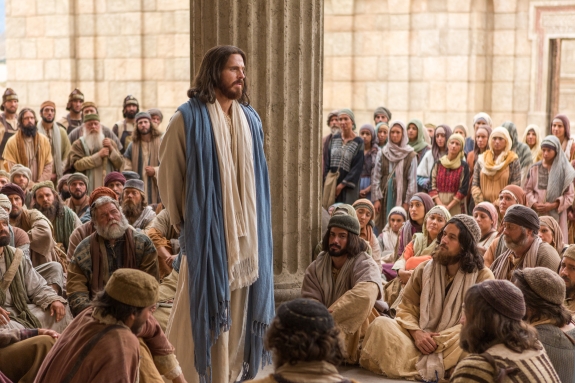
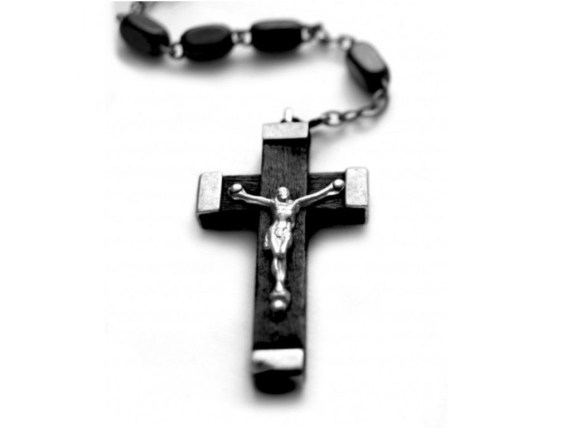
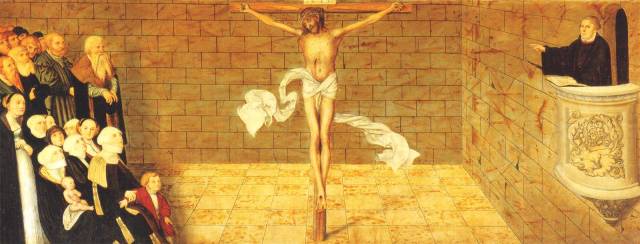


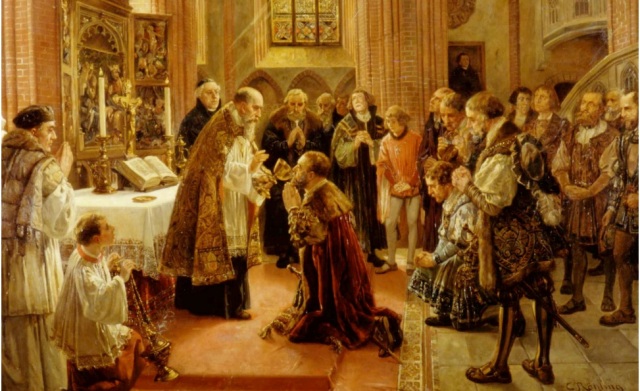

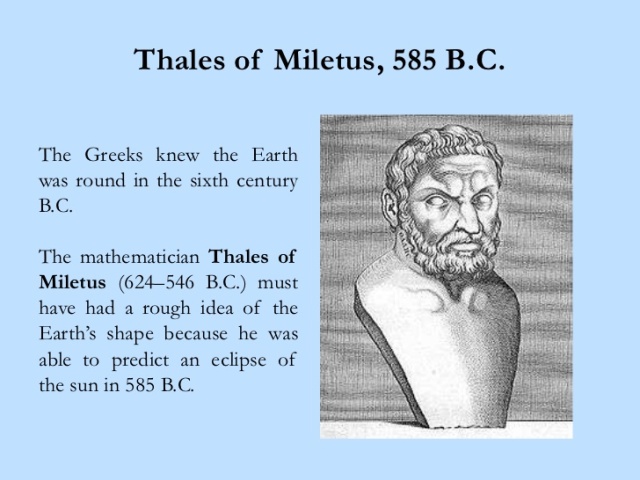
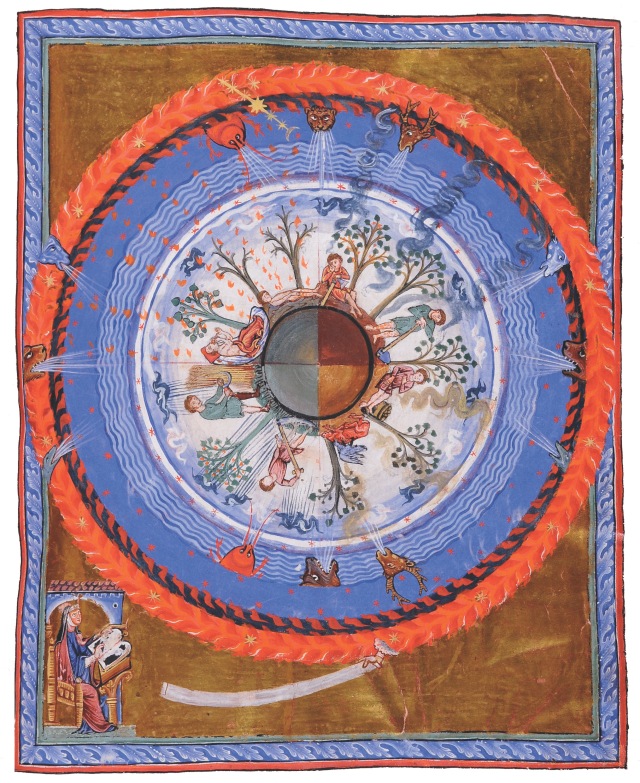



 Armchair Theologian